

You guys! When my mom tasted this recipe she said and I think that is one of the best things you have ever done! I have to say it is one of my top five favorites! A Sunday dinner experiment turned into the best Roast Chicken with Crispy Skin ever!
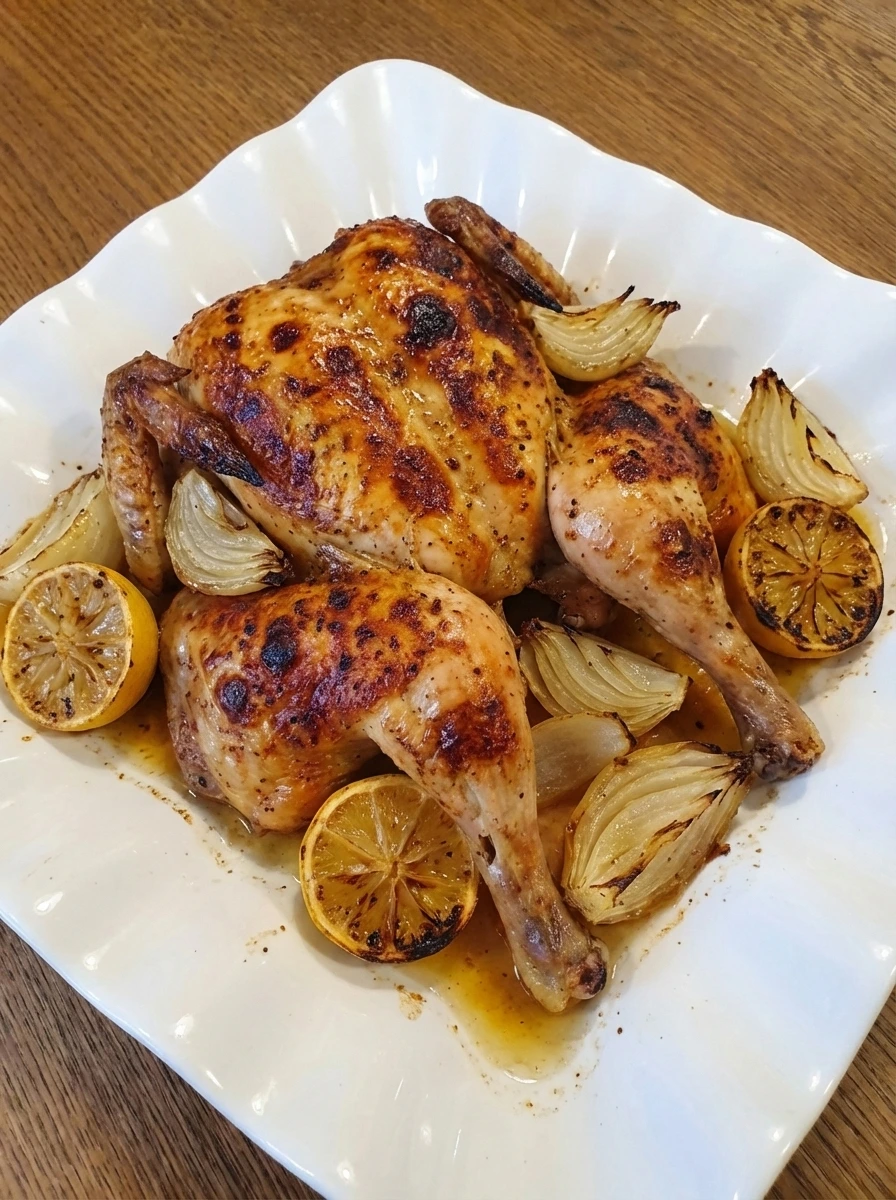
It has the same texture as the kind of roast chicken you dream about from a little market rotisserie yet it is made with simple ingredients and it comes out juicy and full of flavor. This chicken is seasoned with olive oil and kosher salt and a little smoked paprika and its base is a whole bird with a few fresh herbs and lemon tucked inside.
I think you all know I am a dessert lover and I have baked so many sweet things before and I rarely get this excited about a savory recipe that does not involve buttercream yet this is just to die for! The recipe serves 4 people and I typically like to make things in smaller batches since I do so much cooking and baking but if you have a bigger group or want to make more you can roast two chickens and feed a crowd.
This chicken can be a dinner and you can pair it with roasted vegetables and potatoes for a really cozy meal. It is also great for meal prep and if you want to make an extra batch store the leftovers in the fridge and use them for lunches during the week.
Ingredients
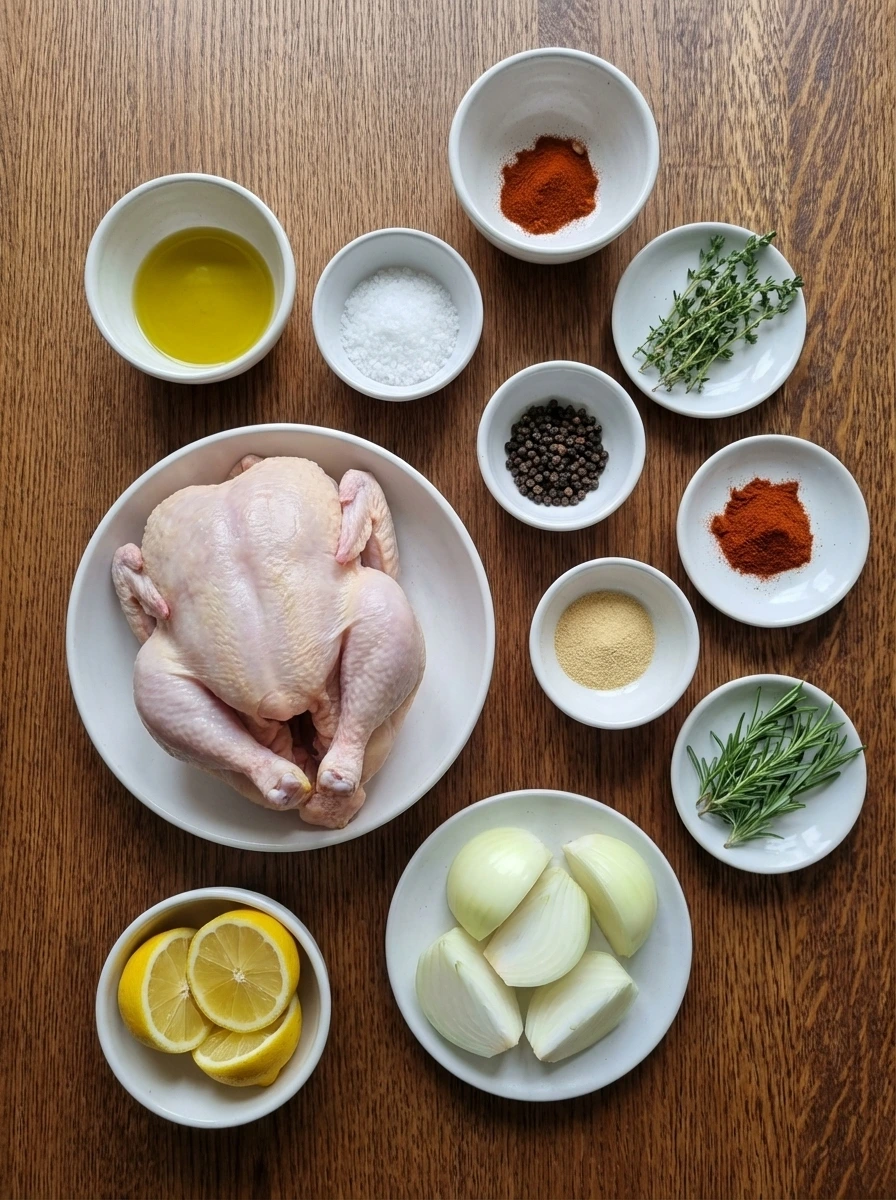
Here’s what I use for this recipe and you can always make substitutions if you prefer.
- whole chicken: Main protein for juicy roasted meat and crisp skin.
- olive oil: Helps the skin brown and turn glossy before it crisps.
- kosher salt: Seasons the meat and helps dry the skin for better crisping.
- black pepper: Adds mild heat and savory depth.
- smoked paprika: Adds warm color and subtle smoky flavor.
- garlic powder: Builds savory seasoning across the skin.
- fresh thyme: Adds herbal aroma inside the chicken.
- fresh rosemary: Adds piney fragrance and roast flavor.
- lemon: Brightens the chicken from the inside while roasting.
- yellow onion: Roasts under the chicken and adds sweet savory juices.
Tools You’ll Need
- natural white roasting dish: Holds the chicken and catches flavorful juices.
- carving knife: Slices the rested chicken into serving pieces.
- cutting board: Supports safe carving and serving prep.
Instructions
Step 1: Rub the chicken with oil and seasonings
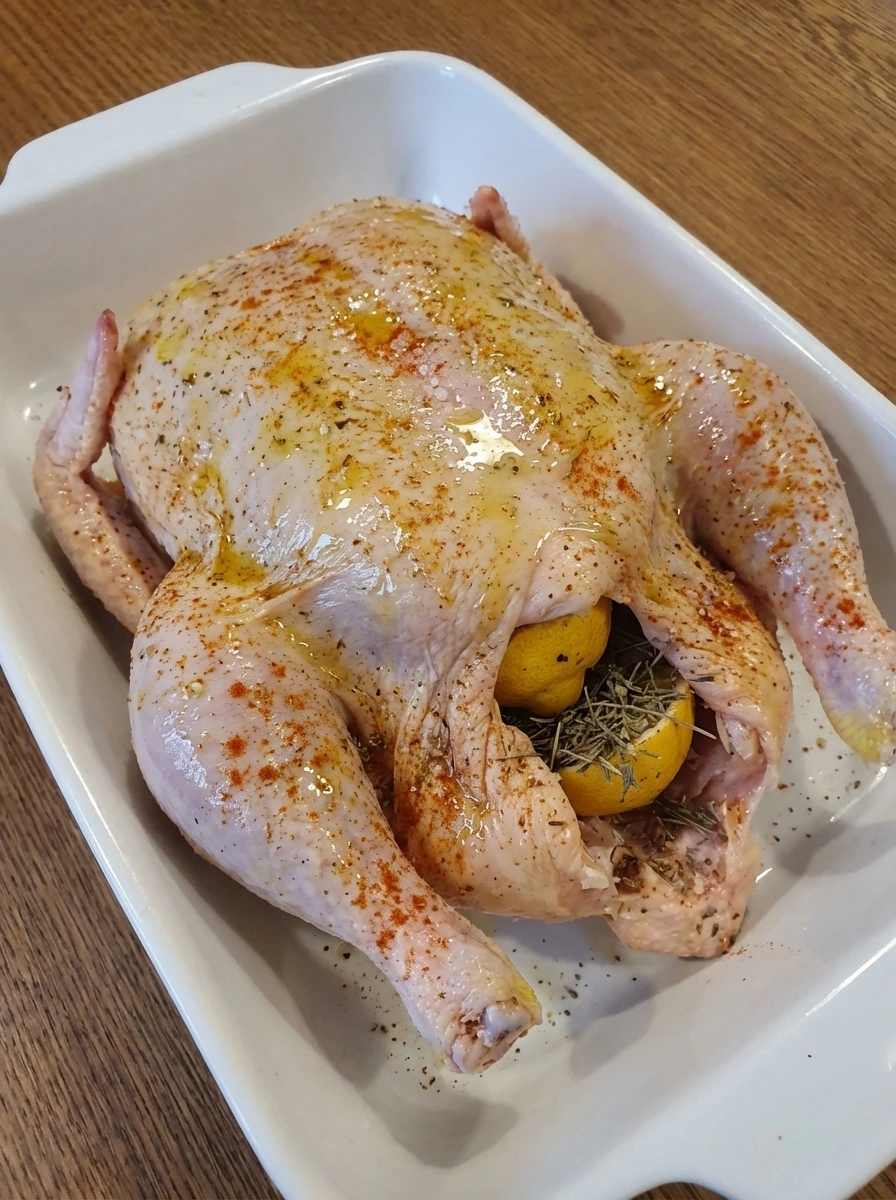
The chicken changes from plain and slightly dull to glossy and well coated as the olive oil carries the salt and spices across the skin. The surface looks speckled with paprika and pepper and the color shifts from pale to lightly rusted with a few thicker patches of seasoning around the legs and wings.
Tip: Make sure the seasoning reaches every curve so the color and crispness develop evenly enough while still looking natural.
Step 2: Let the skin dry and tighten
After resting the coated chicken looks less slick and more tacky as the skin starts to dry on the surface. The seasoning settles into the skin and the bird looks slightly tighter and a little more matte with herbs and lemon still peeking out unevenly.
Tip: A short rest helps the surface lose excess moisture which supports better browning later.
Step 3: Roast until the skin turns pale golden
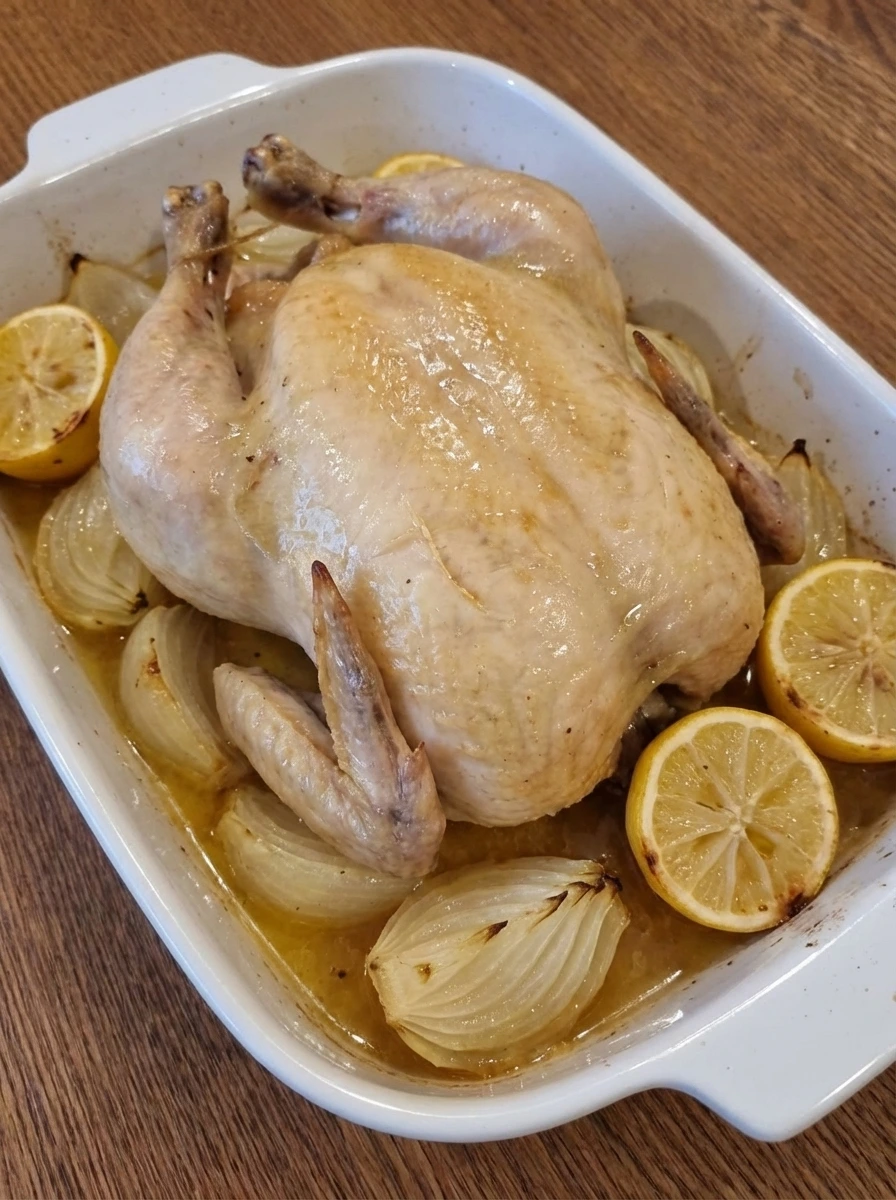
The first roast transforms the bird from raw to visibly cooking as the skin tightens and turns pale golden. Fat begins to render and gather around the chicken while the onion wedges soften and slump and the lemon edges start to look slightly translucent and caramel stained.
Tip: This stage sets the color base so do not rush it even if the skin is only lightly golden at first.
Step 4: Continue roasting until the skin blisters and deepens
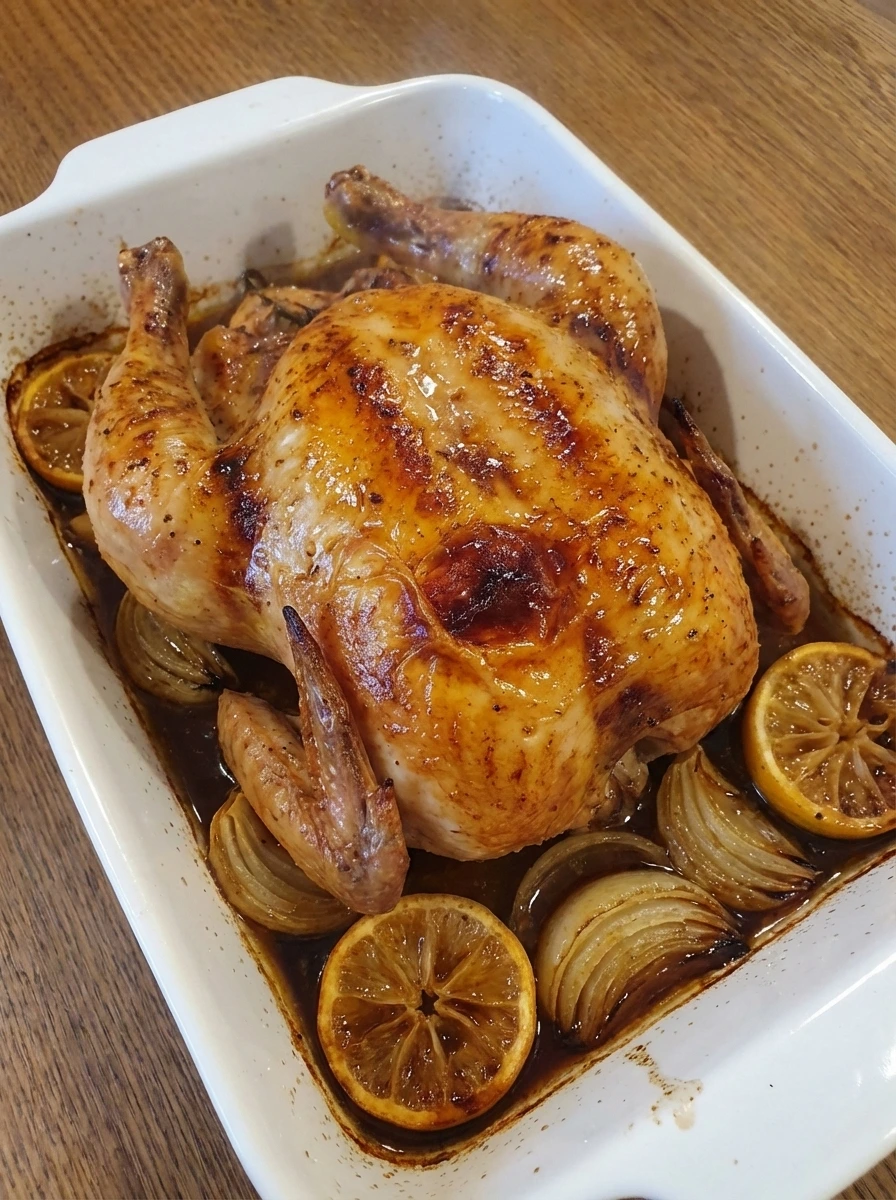
The chicken develops its most dramatic change here as the skin deepens from pale gold to rich amber with darker blistered spots and crinkled edges. The onion wedges collapse further into the juices and the lemons darken in patches while the whole dish looks more caramelized and uneven in the best homemade way.
Tip: Look for a mix of golden areas and darker blistered spots rather than one flat color.
Step 5: Rest and carve the chicken
Once carved the structure changes completely as the whole bird becomes a platter of uneven slices and pieces with crisp skin still attached in jagged sections. The meat inside looks moist and lighter in color against the darker skin while a few juices run into the onions and around the cut pieces.
Tip: Resting before carving helps the meat stay juicy instead of losing all of its juices at once.
Step 6: Plate the chicken with roasted onions and lemon
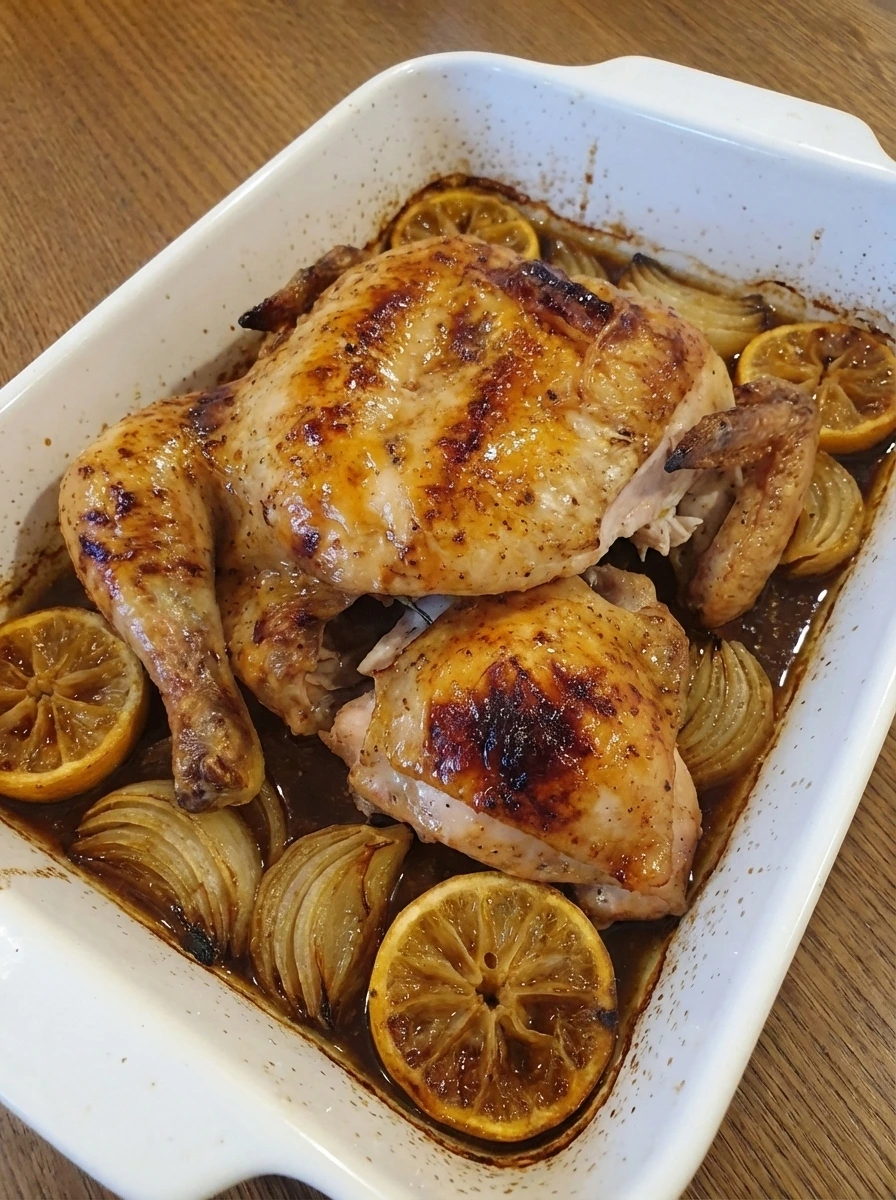
The final dish comes together as the carved pieces are loosely arranged with slight overlap and natural gaps on the plate. The skin shows uneven browning from amber to darker brown and the onions look soft and jammy while the lemon halves appear wrinkled and deeply roasted for a finished homemade look.
Tip: Leave the arrangement slightly casual so the crispy skin and roasted edges stay visible.
Pro Tips
- Patting the chicken very dry before adding oil helps the skin crisp instead of steam.
- Salt the skin thoroughly and evenly so the browning looks rich and the flavor reaches every bite.
- Let the chicken rest before carving so the meat stays juicy and the skin stays attached in crisp pieces.
- Roast the onions under and around the chicken so they soften into the drippings and become part of the final dish.
Storage Instructions
Let the roast chicken cool until just warm and then store the carved pieces with a spoonful of juices in a tightly covered container. The meat will keep well in the fridge for up to 4 days and the flavor actually deepens a little by the next day. For longer storage freeze the chicken in portions and thaw in the fridge before reheating. Warm it gently until hot and if you want the skin to crisp back up place the pieces in a single layer so the surface can dry and brown again.
Frequently Asked Questions
How do I get the skin extra crispy?
Dry skin is the biggest key so make sure the chicken is not wet before seasoning and give it a short rest after rubbing it with oil and salt. Roasting until you see blistered golden patches also matters more than stopping at a flat light color.
Can I use dried herbs instead of fresh?
Yes and the chicken will still taste great. Use a smaller amount since dried herbs are more concentrated and add them right into the seasoning so they cling to the skin instead of sitting in large clumps.
How do I know when the chicken is fully cooked?
The juices should run clear near the thickest part and the meat should no longer look glossy or pink. The legs will also move more easily and the skin will look deeply roasted and firm rather than soft.
Can I make this ahead for meal prep?
Yes and it reheats well. Carve the chicken after resting and store the meat with a little of the roasting juices so it stays moist through the week.
Final Thoughts
If you try this recipe I really hope you love it as much as my family does. It has become one of those dinners we just keep coming back to no matter the season.
Drop a comment below and let me know how yours turned out. And if you are looking for more easy dinner ideas make sure to bookmark this page.
I am always adding new recipes that are simple satisfying and perfect for busy weeknights.
Print
Roast Chicken with Crispy Skin
- Total Time: 1 hour 40 minutes
- Yield: 4 servings 1x
Description
This Roast Chicken with Crispy Skin is the best mix of easy comfort and healthy homemade flavor for anyone who needs quick dinner ideas that still feel special. The simple seasoning creates juicy meat and crackly skin with very little fuss. It works for weeknight dinner and meal prep and even a holiday table or potluck and brunch spread or casual party when you want a reliable crowd pleasing favorite.
Ingredients
- 1 chicken about 4 to 4 1/2 pounds whole chicken
- 2 tablespoons olive oil
- 2 teaspoons kosher salt
- 1 teaspoon black pepper
- 1 teaspoon smoked paprika
- 1 teaspoon garlic powder
- 4 sprigs fresh thyme
- 1 sprig fresh rosemary
- 1 lemon halved lemon
- 1 small onion cut into wedges yellow onion
Instructions
- The chicken changes from plain and slightly dull to glossy and well coated as the olive oil carries the salt and spices across the skin. The surface looks speckled with paprika and pepper and the color shifts from pale to lightly rusted with a few thicker patches of seasoning around the legs and wings.
- After resting the coated chicken looks less slick and more tacky as the skin starts to dry on the surface. The seasoning settles into the skin and the bird looks slightly tighter and a little more matte with herbs and lemon still peeking out unevenly.
- The first roast transforms the bird from raw to visibly cooking as the skin tightens and turns pale golden. Fat begins to render and gather around the chicken while the onion wedges soften and slump and the lemon edges start to look slightly translucent and caramel stained.
- The chicken develops its most dramatic change here as the skin deepens from pale gold to rich amber with darker blistered spots and crinkled edges. The onion wedges collapse further into the juices and the lemons darken in patches while the whole dish looks more caramelized and uneven in the best homemade way.
- Once carved the structure changes completely as the whole bird becomes a platter of uneven slices and pieces with crisp skin still attached in jagged sections. The meat inside looks moist and lighter in color against the darker skin while a few juices run into the onions and around the cut pieces.
- The final dish comes together as the carved pieces are loosely arranged with slight overlap and natural gaps on the plate. The skin shows uneven browning from amber to darker brown and the onions look soft and jammy while the lemon halves appear wrinkled and deeply roasted for a finished homemade look.
Notes
Pro Tips:
- Patting the chicken very dry before adding oil helps the skin crisp instead of steam.
- Salt the skin thoroughly and evenly so the browning looks rich and the flavor reaches every bite.
- Let the chicken rest before carving so the meat stays juicy and the skin stays attached in crisp pieces.
- Roast the onions under and around the chicken so they soften into the drippings and become part of the final dish.
Storage: Let the roast chicken cool until just warm and then store the carved pieces with a spoonful of juices in a tightly covered container. The meat will keep well in the fridge for up to 4 days and the flavor actually deepens a little by the next day. For longer storage freeze the chicken in portions and thaw in the fridge before reheating. Warm it gently until hot and if you want the skin to crisp back up place the pieces in a single layer so the surface can dry and brown again.
- Prep Time: 20 minutes
- Cook Time: 1 hour 20 minutes
- Category: Dinner
- Cuisine: American