

I honestly havent really shared many baked chicken recipes on my blog but this Juicy Baked Chicken Breast was one I had to share. This recipe is inspired by simple home cooking and is easy to prepare and make.
It is a super tasty dish packed full of protein and is quite filling. When people think about chicken breast they probably avoid making it since it can turn out dry and bland.
But trust me on this when it is prepared in the right way it offers a rich and savory taste that is very satisfying. This recipe is super tasty and quick to make and I recommend this meal for those who want a reliable dinner that feels comforting.
Ingredients
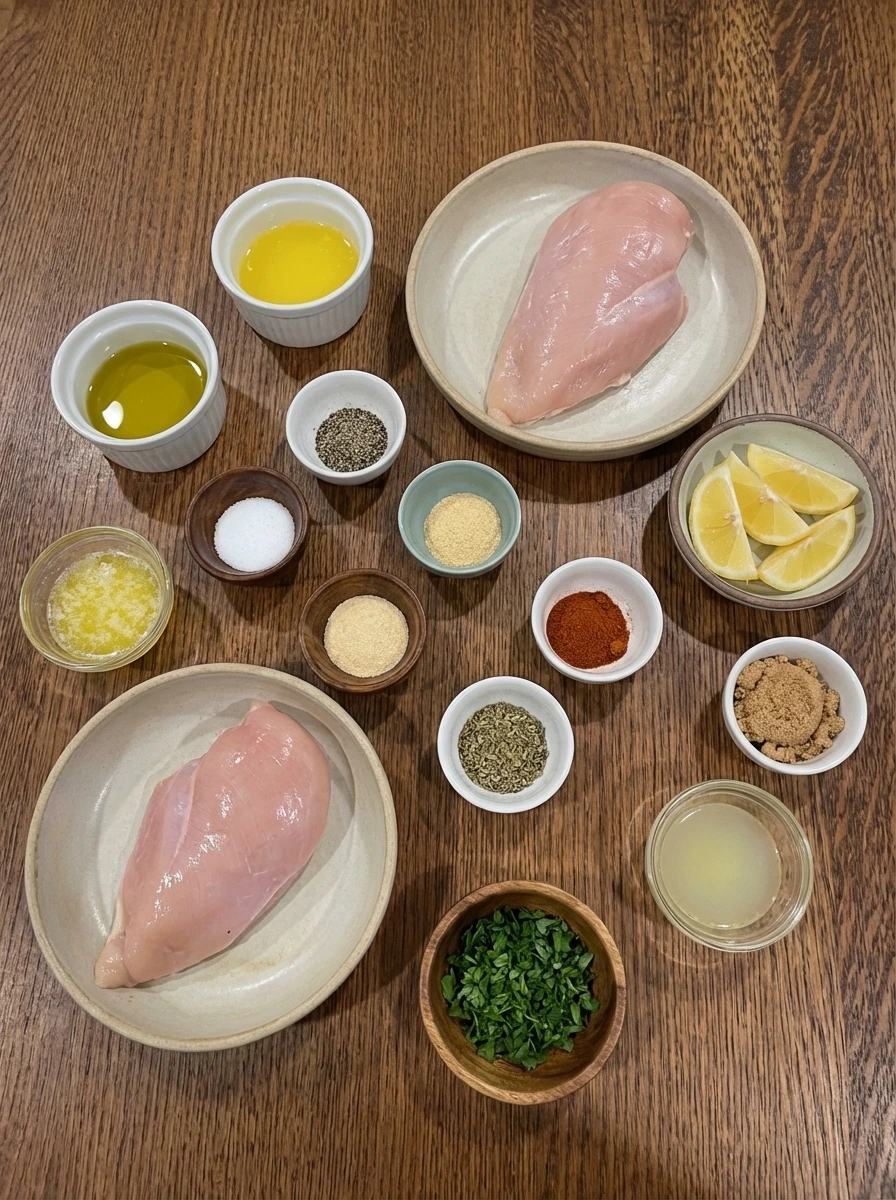
Here’s what I use for this recipe and you can always make substitutions if you prefer.
- boneless skinless chicken breasts: main protein that bakes up tender when evenly cut
- olive oil: helps the seasoning cling and keeps the surface moist
- unsalted butter: adds richness and helps create light golden spots
- kosher salt: seasons the chicken throughout
- black pepper: adds gentle warmth and contrast
- garlic powder: brings savory depth
- onion powder: rounds out the seasoning
- smoked paprika: adds color and subtle smoky flavor
- dried oregano: gives the chicken herby flavor
- brown sugar: balances the seasoning and encourages slight browning
- lemon juice: adds brightness and helps tenderize lightly
- fresh parsley: fresh garnish for the plated dish
- lemon wedges: optional bright finish for serving
Tools You’ll Need
- small mixing bowl: for combining the dry seasoning
- small bowl or ramekin: for mixing the olive oil butter and lemon juice
- shallow dish: for coating and marinating the chicken
- rectangular baking dish: holds the chicken in a loose single layer
Instructions
Step 1: Trim and cut the chicken
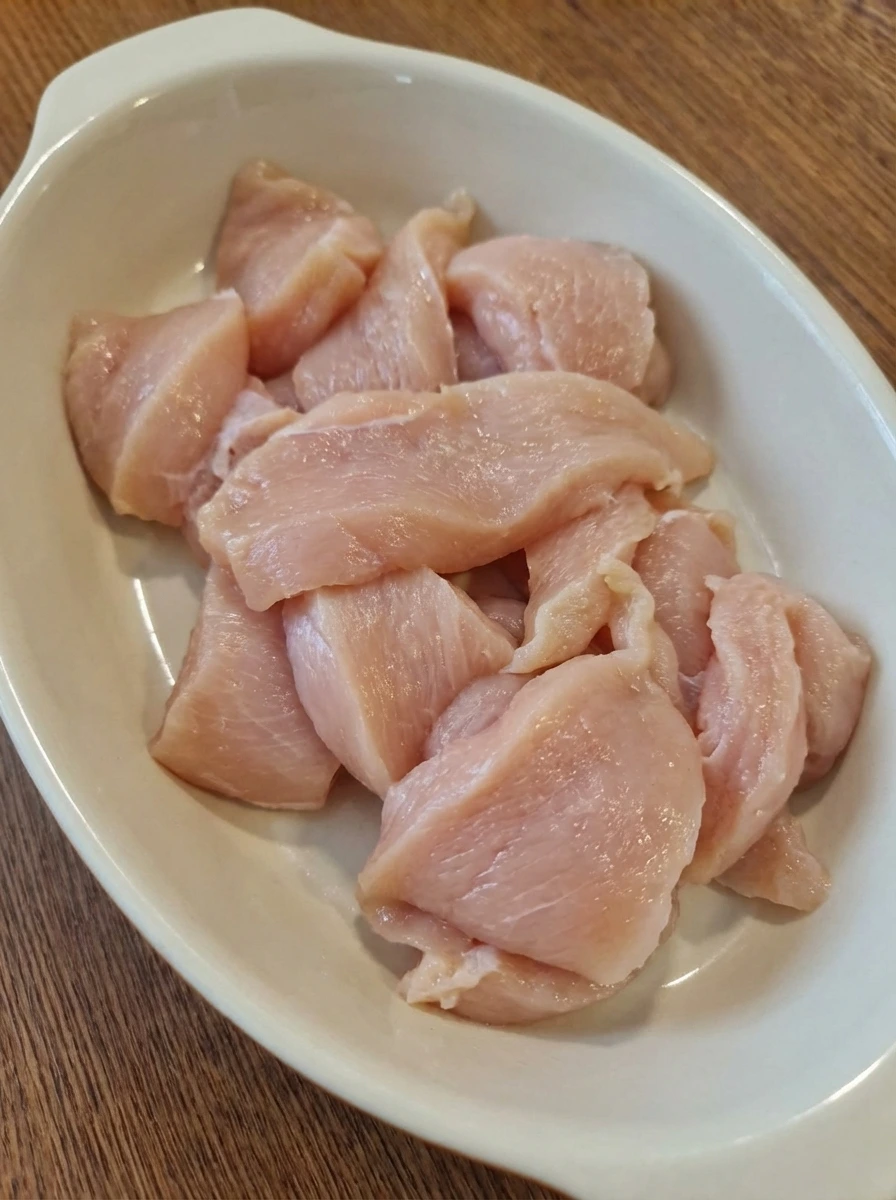
Place the raw chicken breasts in a shallow dish and trim away any loose bits. Slice the thicker breasts horizontally so the pieces are closer in thickness and look more even though still naturally imperfect. After cutting the chicken should look smoother and flatter with some pieces slightly larger and some slightly smaller. This first change helps the meat cook more evenly and keeps the finished texture juicier.
Tip: Do not cut every piece to the exact same shape because slight size variation looks natural and still cooks well.
Step 2: Measure and mix the seasoning
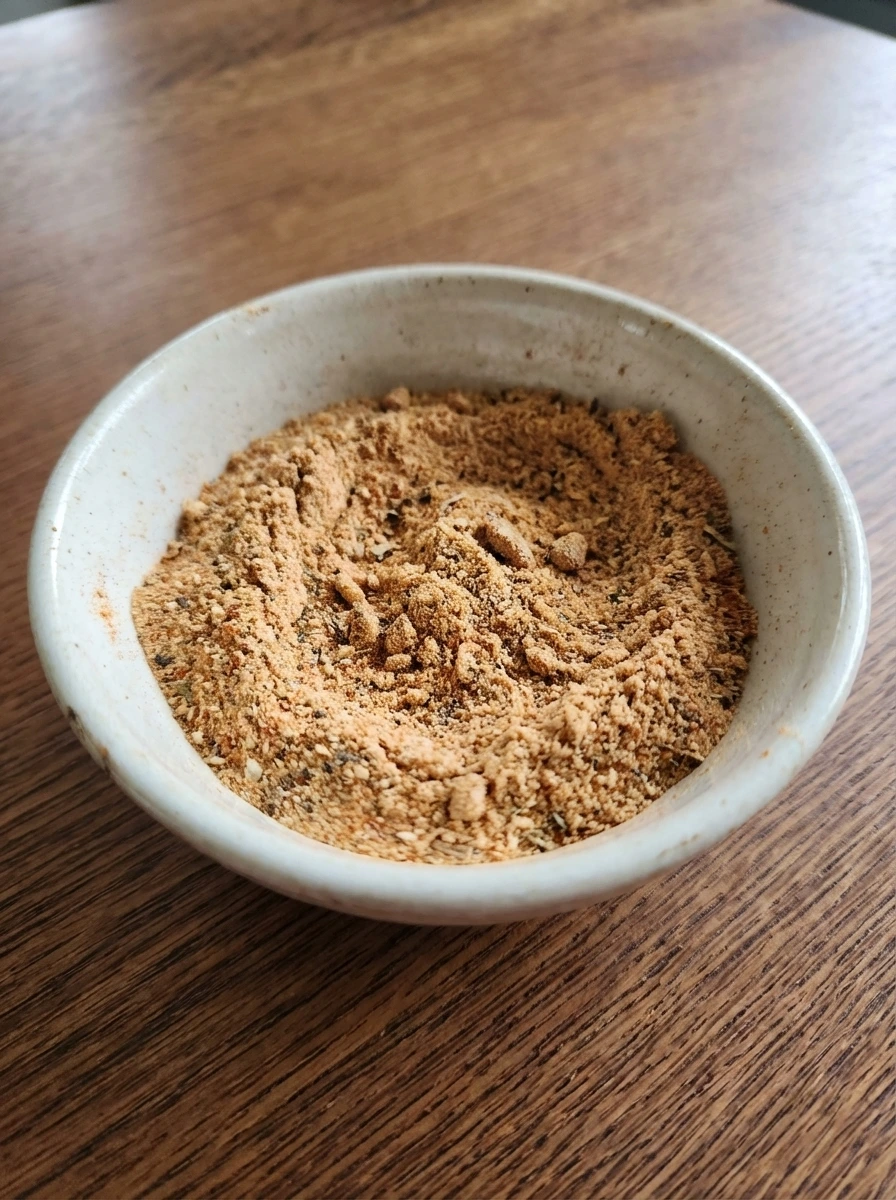
Add the salt and black pepper and garlic powder and onion powder and smoked paprika and dried oregano and brown sugar to a small bowl. Stir until the colors blend into a rusty tan mixture with darker specks running through it. The seasoning should change from separate little piles into one loose blend that looks evenly combined yet still textured. This makes the flavor easier to scatter over the chicken without heavy patches of just one spice.
Tip: Mix until the color looks consistent with no bright streaks of paprika or pale pockets of sugar left behind.
Step 3: Mix the wet marinade
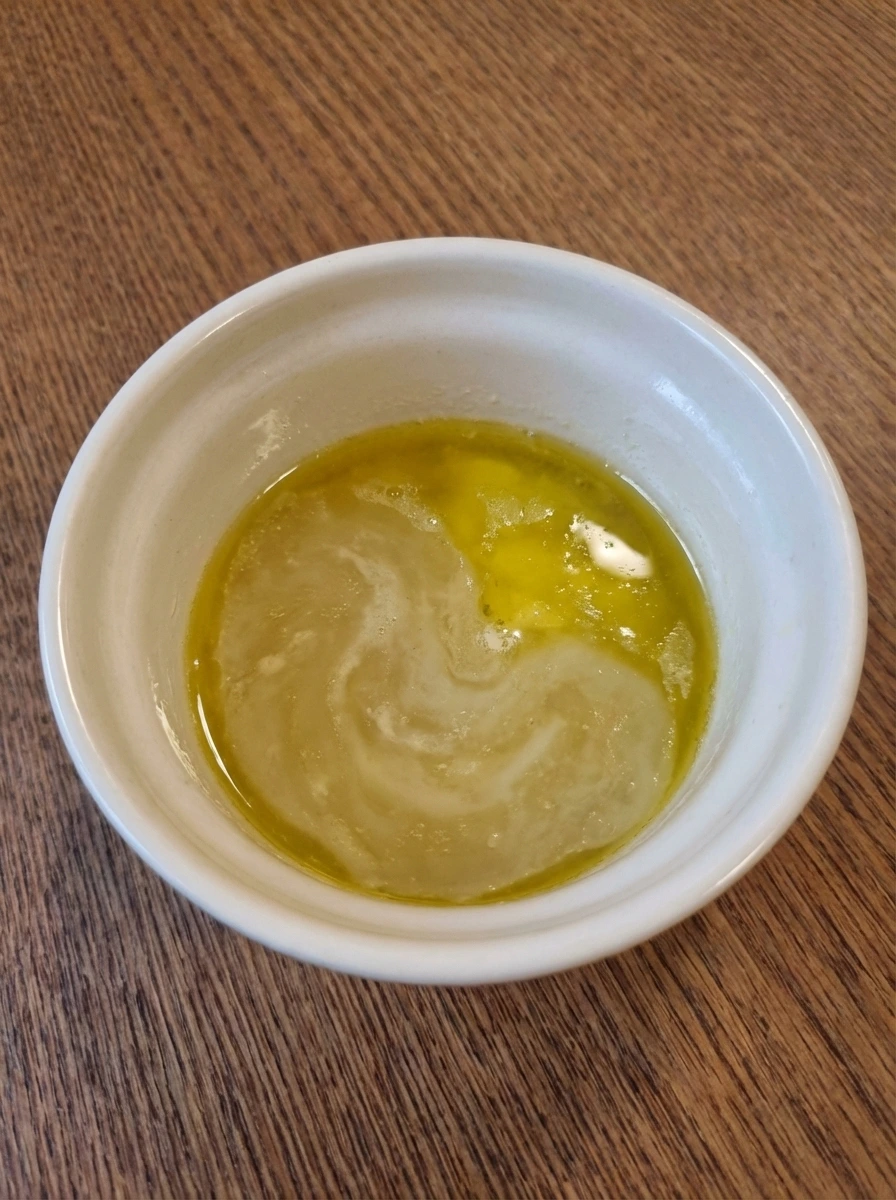
In another small bowl stir the olive oil and melted butter and lemon juice together. The mixture will look glossy and lightly clouded with the butter softening into the oil instead of sitting in separate layers. This stage gives the chicken a richer coating and helps the dry seasoning cling. The liquid should look smooth with a few natural streaks and not perfectly uniform.
Tip: If the butter begins to set just stir again until the mixture looks glossy and fluid.
Step 4: Coat the chicken with the wet mixture
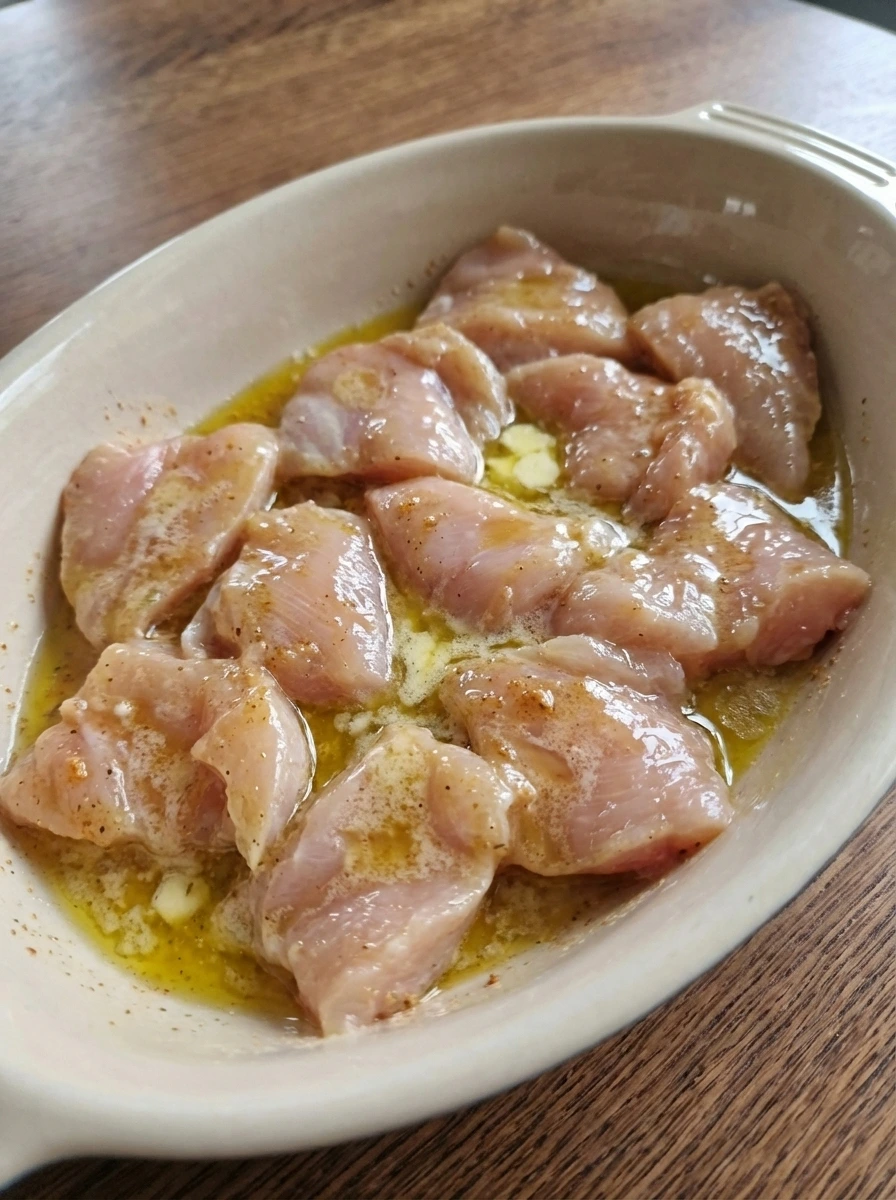
Pour the glossy mixture over the chicken in the shallow dish. Turn the pieces so the tops and sides become slick and lightly coated with a buttery sheen while small puddles gather in the low spots. The chicken should now look more hydrated and glossy than raw and plain. Some areas will have more coating than others and that uneven coverage is exactly what gives the dish a natural home cooked look.
Tip: Turn each piece well so no section stays dry and chalky looking.
Step 5: Season the chicken generously
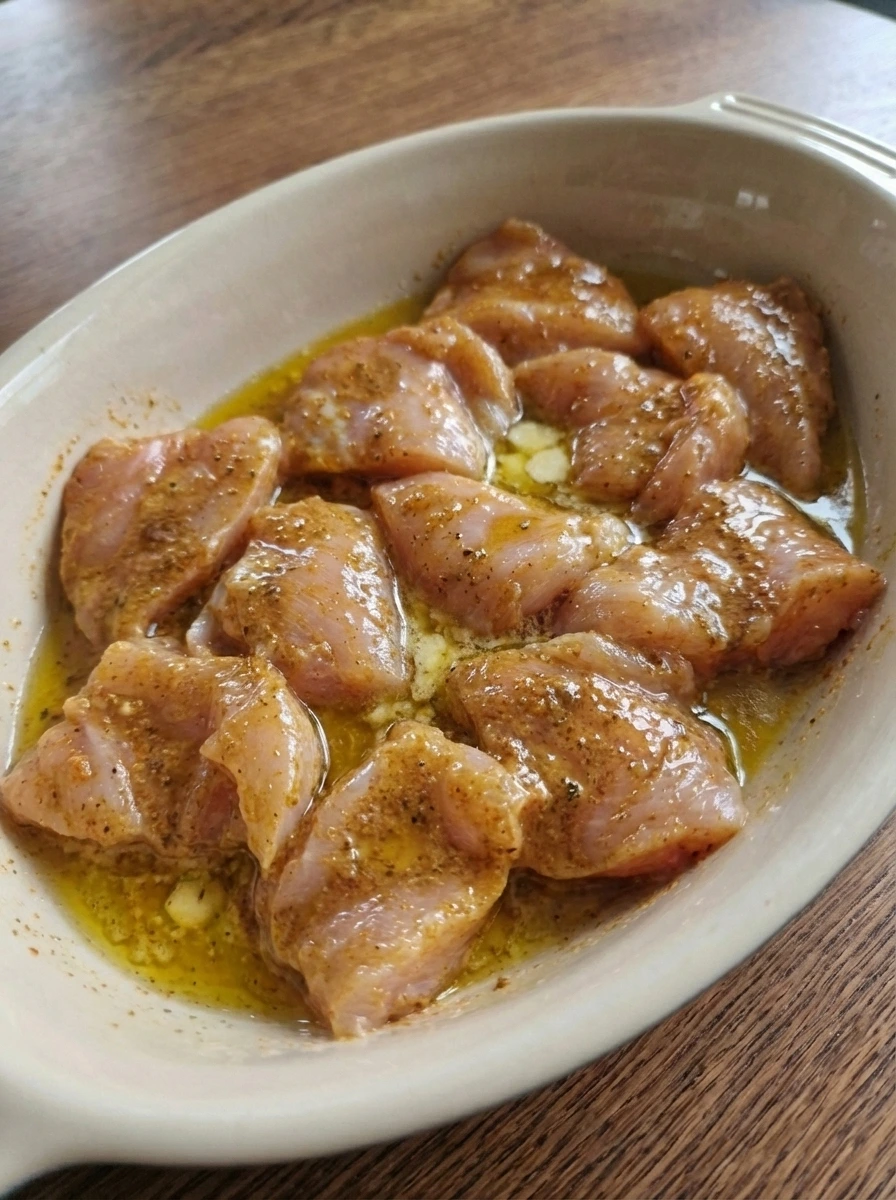
Scatter the mixed seasoning over the coated chicken and rub it in with your hands so the spice blend sticks to the surface. Flip the pieces and repeat until the chicken is fully seasoned with darker patches and lighter gaps that look casual instead of perfectly covered. The chicken should shift from glossy pale pink to a warm brick tinted surface with herb flecks all over. The spices will begin to melt slightly into the coating and form a deeper colored paste in spots.
Tip: Press the seasoning into the sides as well because thin edges can lose flavor fast while baking.
Step 6: Let the chicken marinate briefly
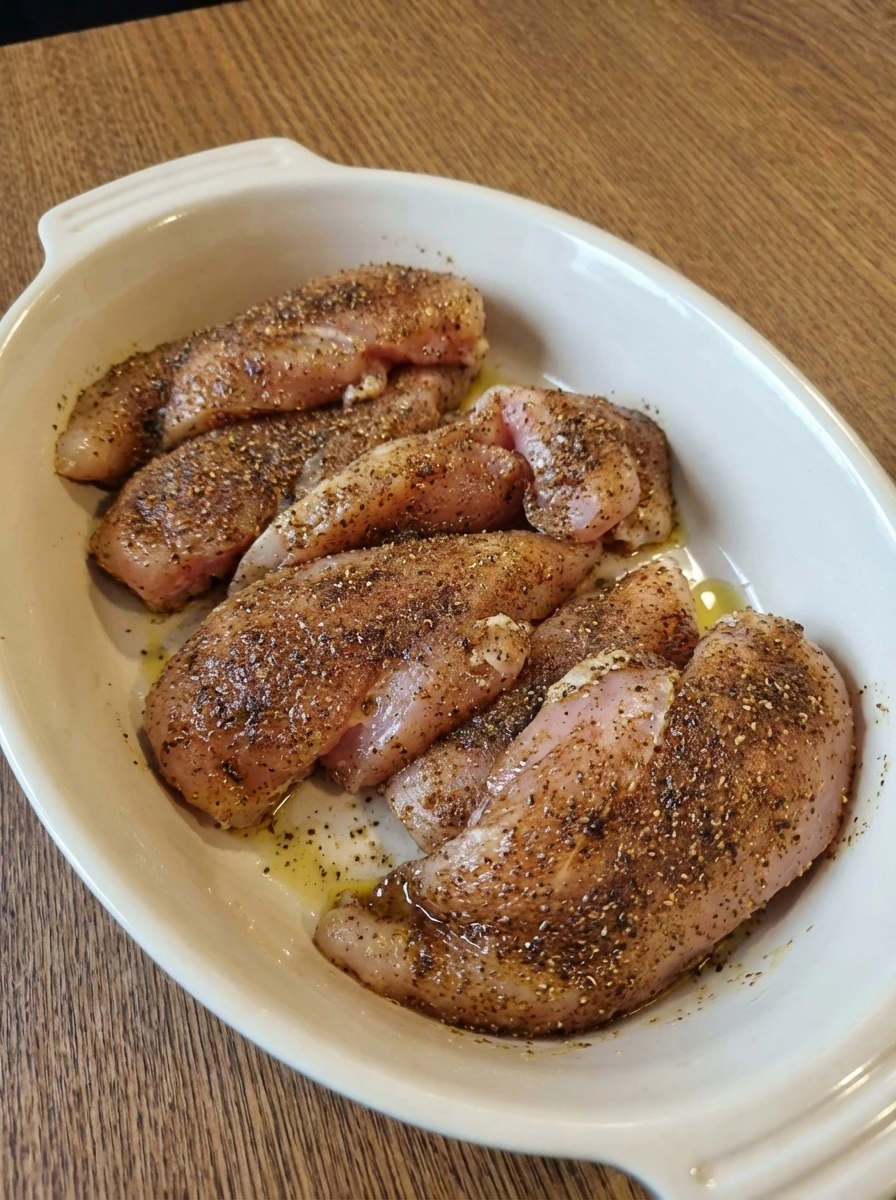
Leave the seasoned chicken in the dish so the coating can settle into the surface. As it rests the spice paste will darken slightly and the chicken will look less powdery and more evenly moistened. This short marinating stage helps the seasoning soften and cling better. The surface should look glossy in some spots and more matte in others with the color deepening naturally.
Tip: Even a short rest gives the coating time to bond and improves the final texture.
Step 7: Arrange the chicken for baking
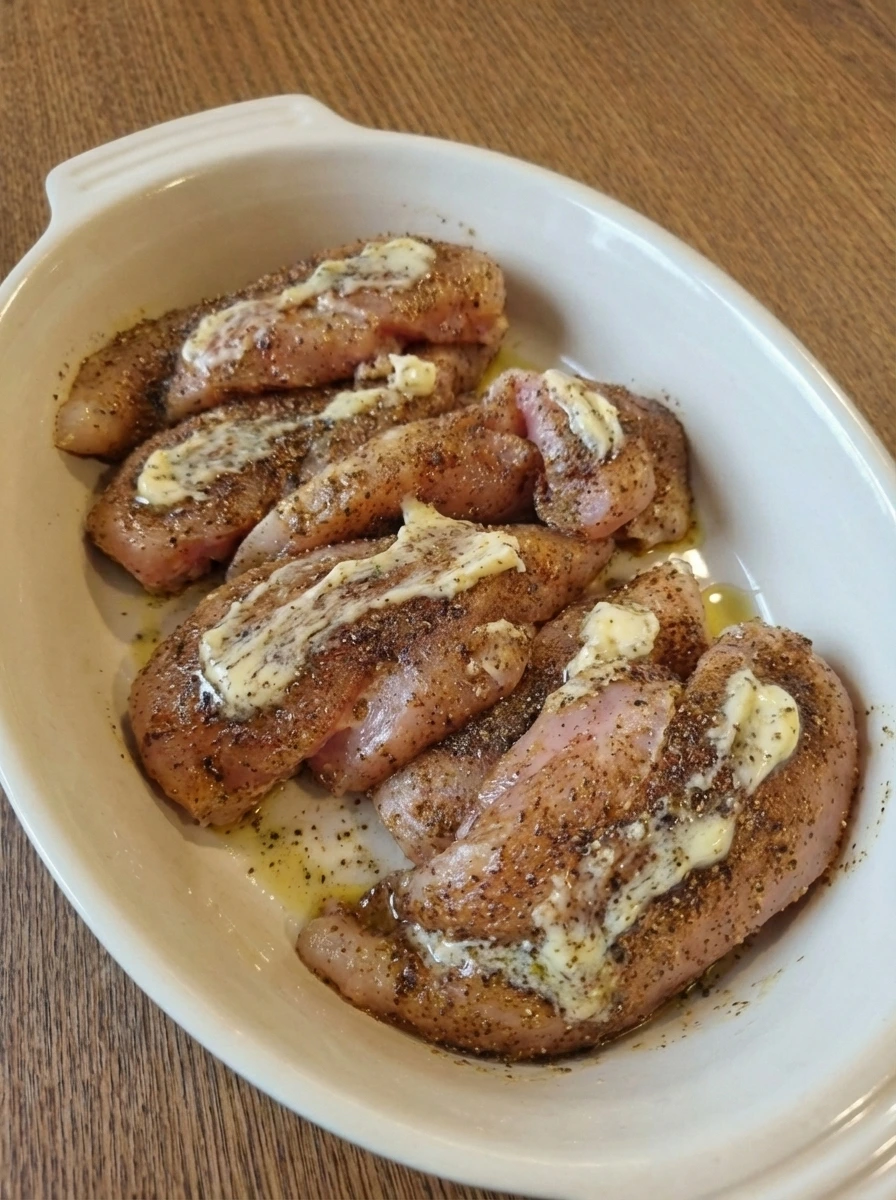
Transfer the chicken pieces into a rectangular white baking dish and arrange them in a loose single layer with small gaps between some pieces and slight overlap where the thinner ends fall naturally. Spoon any remaining seasoned butter from the dish over the top in uneven streaks. At this point the chicken should look fully assembled and ready to bake with a textured coating and glossy spots. Nothing should look perfectly lined up or evenly covered.
Tip: Leave a little space around most pieces so the edges can brown instead of steam.
Step 8: Bake until the surface softens and turns glossy
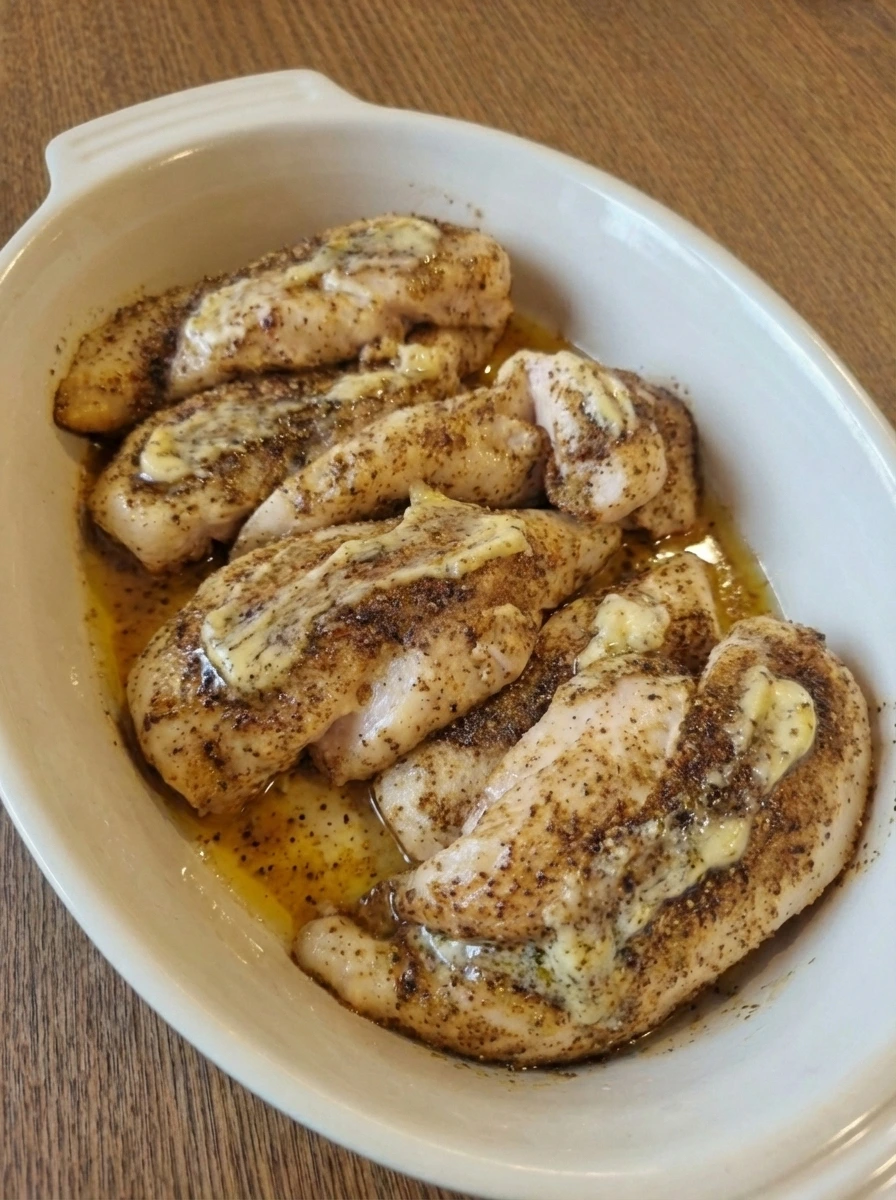
Bake the chicken until the coating begins to soften and the juices start to collect around the pieces. The surface will lose its raw look and become more opaque and slightly puffed with buttery juices moving into the dish. This is the first cooked transformation. The color deepens and the spice layer looks moist rather than dry while the chicken edges begin to firm up.
Tip: Watch for the moment when the meat turns opaque because that means the cooking is moving in the right direction without drying out.
Step 9: Finish baking until lightly browned
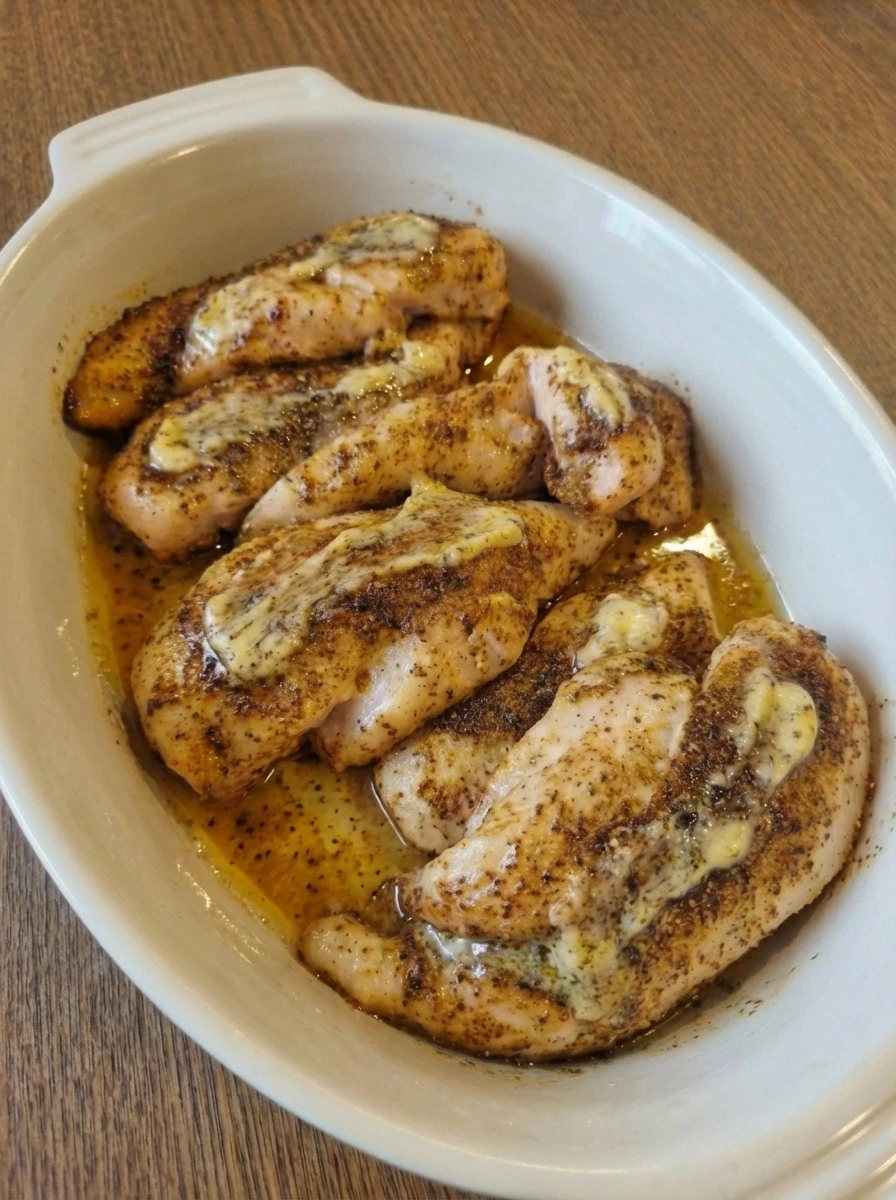
Continue baking until the tops show light golden brown patches and the edges look slightly darker than the centers. The juices in the dish will look richer and a little thicker while the chicken surface stays glossy in some places and gently browned in others. The final baked color should be appetizing and natural instead of perfectly even. Some pieces may brown more on the thinner edges while thicker sections stay a little lighter.
Tip: Pull the chicken once it is just cooked through so the center stays juicy and tender.
Step 10: Rest and plate with garnish
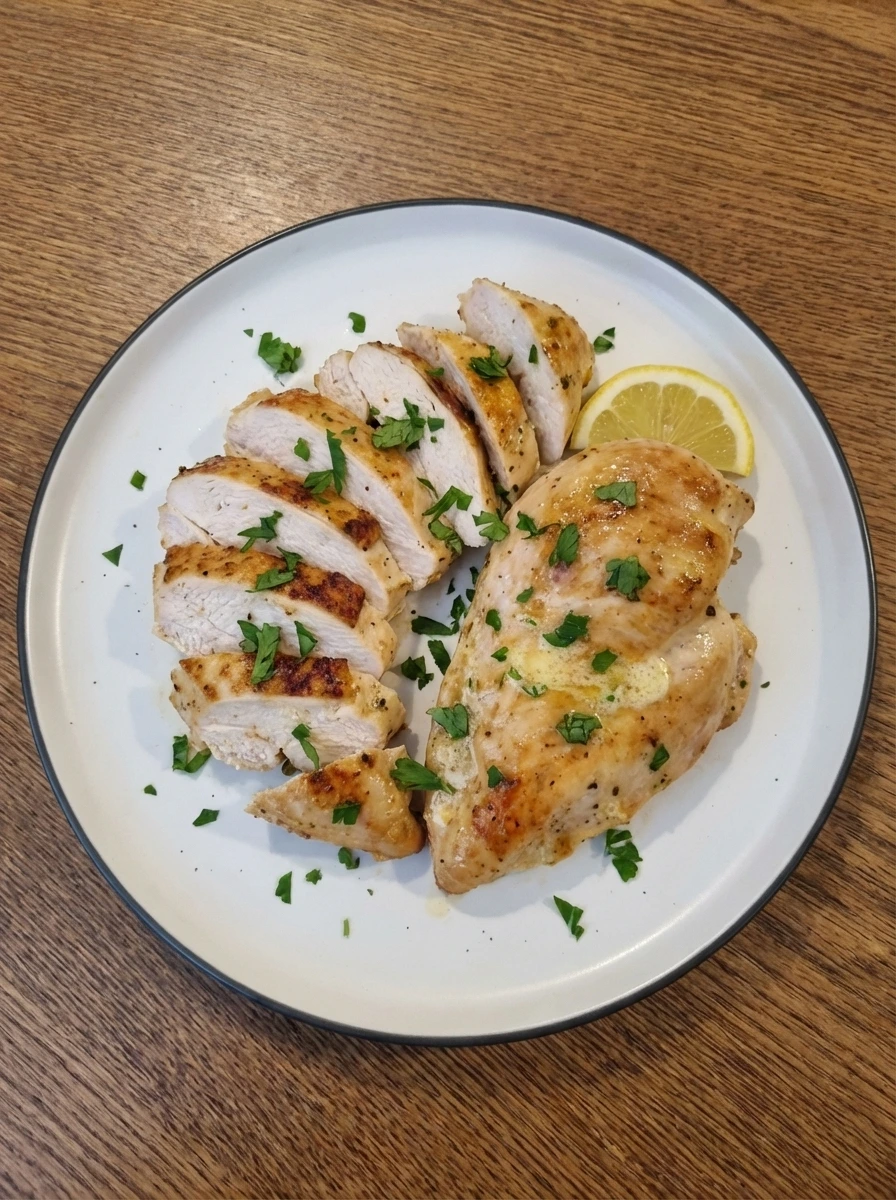
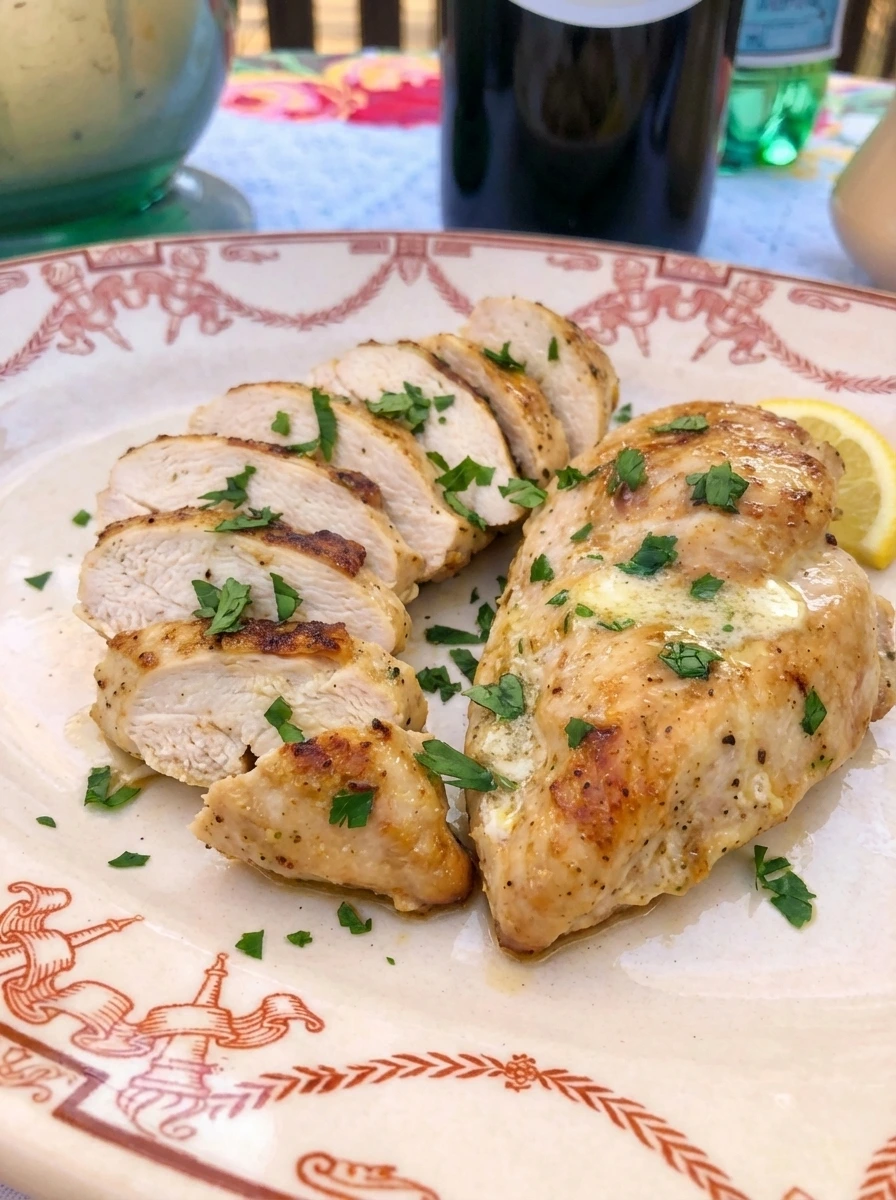
Let the chicken rest briefly so the juices settle back into the meat. Slice one or two pieces and leave the others whole then transfer them to a round white stoneware dinner plate with a thin charcoal rim. Spoon a little of the buttery pan juices over the top and scatter chopped parsley loosely so some sections stay bare. The finished dish should look fully cooked and juicy with uneven golden brown color and visible moisture along the slices. Add a lemon wedge on the side and serve right away while the chicken still looks glossy and tender.
Tip: Resting for a few minutes keeps the juices from running out too fast when you slice the chicken.
Pro Tips
- Slice thick breasts horizontally so the pieces cook more evenly and stay juicy.
- Let the seasoning sit on the chicken for a short rest so the coating softens and clings better.
- Spoon the pan juices back over the chicken before serving for extra moisture and flavor.
- Rest the baked chicken before slicing so more juices stay inside the meat.
Storage Instructions
Store cooled chicken in a sealed container in the refrigerator for up to 4 days. Keep a spoonful of the pan juices with it for better moisture. Reheat gently until warmed through.
Frequently Asked Questions
How do I keep baked chicken breast from drying out
Cutting thicker pieces to a more even thickness and coating them with oil and butter helps a lot. Pull the chicken as soon as it is cooked through and let it rest before slicing.
Can I marinate the chicken longer
Yes you can let it sit longer in the seasoning and wet mixture for deeper flavor. A short rest works well and a longer rest in the refrigerator also gives tender results.
Can I make this recipe for meal prep
Yes this chicken works very well for meal prep. Slice it after resting and store it with a little of the pan juice so it stays moist when reheated.
What can I serve with juicy baked chicken breast
It pairs well with roasted vegetables and mashed potatoes and rice and salad. The simple flavor also works nicely with pasta or warm dinner rolls.
Final Thoughts
This is the kind of recipe I wish I had found years ago. It would have saved me so many stressful dinner nights.
But now that I have it I make it all the time and I think you will too. If you enjoyed this check out some of my other popular recipes on the blog.
And leave a comment. I read every single one and it really makes my day.
Print
Juicy Baked Chicken Breast
- Total Time: 45 minutes
- Yield: 4 servings 1x
Description
Juicy Baked Chicken Breast is one of the best easy dinner ideas for busy nights when you need something quick and simple yet still healthy and filling. The chicken turns tender and flavorful with a light buttery finish and gentle browning. It works well for weeknight dinner and meal prep and also fits a holiday spread or potluck table. You can even slice it for brunch plates or serve it warm at a casual party with your favorite sides.
Ingredients
- 4 large pieces about 2 pounds boneless skinless chicken breasts
- 2 tablespoons olive oil
- 2 tablespoons melted unsalted butter
- 1 1/2 teaspoons kosher salt
- 3/4 teaspoon black pepper
- 1 teaspoon garlic powder
- 1 teaspoon onion powder
- 1 teaspoon smoked paprika
- 1 teaspoon dried oregano
- 1 teaspoon brown sugar
- 1 tablespoon lemon juice
- 2 tablespoons chopped fresh parsley
- 4 wedges lemon wedges
Instructions
- Place the raw chicken breasts in a shallow dish and trim away any loose bits. Slice the thicker breasts horizontally so the pieces are closer in thickness and look more even though still naturally imperfect. After cutting the chicken should look smoother and flatter with some pieces slightly larger and some slightly smaller. This first change helps the meat cook more evenly and keeps the finished texture juicier.
- Add the salt and black pepper and garlic powder and onion powder and smoked paprika and dried oregano and brown sugar to a small bowl. Stir until the colors blend into a rusty tan mixture with darker specks running through it. The seasoning should change from separate little piles into one loose blend that looks evenly combined yet still textured. This makes the flavor easier to scatter over the chicken without heavy patches of just one spice.
- In another small bowl stir the olive oil and melted butter and lemon juice together. The mixture will look glossy and lightly clouded with the butter softening into the oil instead of sitting in separate layers. This stage gives the chicken a richer coating and helps the dry seasoning cling. The liquid should look smooth with a few natural streaks and not perfectly uniform.
- Pour the glossy mixture over the chicken in the shallow dish. Turn the pieces so the tops and sides become slick and lightly coated with a buttery sheen while small puddles gather in the low spots. The chicken should now look more hydrated and glossy than raw and plain. Some areas will have more coating than others and that uneven coverage is exactly what gives the dish a natural home cooked look.
- Scatter the mixed seasoning over the coated chicken and rub it in with your hands so the spice blend sticks to the surface. Flip the pieces and repeat until the chicken is fully seasoned with darker patches and lighter gaps that look casual instead of perfectly covered. The chicken should shift from glossy pale pink to a warm brick tinted surface with herb flecks all over. The spices will begin to melt slightly into the coating and form a deeper colored paste in spots.
- Leave the seasoned chicken in the dish so the coating can settle into the surface. As it rests the spice paste will darken slightly and the chicken will look less powdery and more evenly moistened. This short marinating stage helps the seasoning soften and cling better. The surface should look glossy in some spots and more matte in others with the color deepening naturally.
- Transfer the chicken pieces into a rectangular white baking dish and arrange them in a loose single layer with small gaps between some pieces and slight overlap where the thinner ends fall naturally. Spoon any remaining seasoned butter from the dish over the top in uneven streaks. At this point the chicken should look fully assembled and ready to bake with a textured coating and glossy spots. Nothing should look perfectly lined up or evenly covered.
- Bake the chicken until the coating begins to soften and the juices start to collect around the pieces. The surface will lose its raw look and become more opaque and slightly puffed with buttery juices moving into the dish. This is the first cooked transformation. The color deepens and the spice layer looks moist rather than dry while the chicken edges begin to firm up.
- Continue baking until the tops show light golden brown patches and the edges look slightly darker than the centers. The juices in the dish will look richer and a little thicker while the chicken surface stays glossy in some places and gently browned in others. The final baked color should be appetizing and natural instead of perfectly even. Some pieces may brown more on the thinner edges while thicker sections stay a little lighter.
- Let the chicken rest briefly so the juices settle back into the meat. Slice one or two pieces and leave the others whole then transfer them to a round white stoneware dinner plate with a thin charcoal rim. Spoon a little of the buttery pan juices over the top and scatter chopped parsley loosely so some sections stay bare. The finished dish should look fully cooked and juicy with uneven golden brown color and visible moisture along the slices. Add a lemon wedge on the side and serve right away while the chicken still looks glossy and tender.
Notes
Pro Tips:
- Slice thick breasts horizontally so the pieces cook more evenly and stay juicy.
- Let the seasoning sit on the chicken for a short rest so the coating softens and clings better.
- Spoon the pan juices back over the chicken before serving for extra moisture and flavor.
- Rest the baked chicken before slicing so more juices stay inside the meat.
Storage: Store cooled chicken in a sealed container in the refrigerator for up to 4 days. Keep a spoonful of the pan juices with it for better moisture. Reheat gently until warmed through.
- Prep Time: 15 minutes
- Cook Time: 30 minutes
- Category: Dinner
- Cuisine: American
Nutrition
- Serving Size: 1 serving