

When you’re craving something different from classic salmon, this Fig Balsamic Salmon is a tasty change. The baked salmon comes out tender, flavorful and easy to make, so it’s great for cozy dinners or small gatherings.

Serve it for a quick weeknight meal, prep it ahead for the week or make it for a holiday dinner or casual dinner party. Fig preserves add a soft sweetness while balsamic vinegar gives the glaze a tangy bite and keeps everything balanced.
For another simple dinner, try this Chicken Fajita Bowl recipe. It’s a reliable choice when you want plenty of flavor without making your evening more complicated.
Ingredients
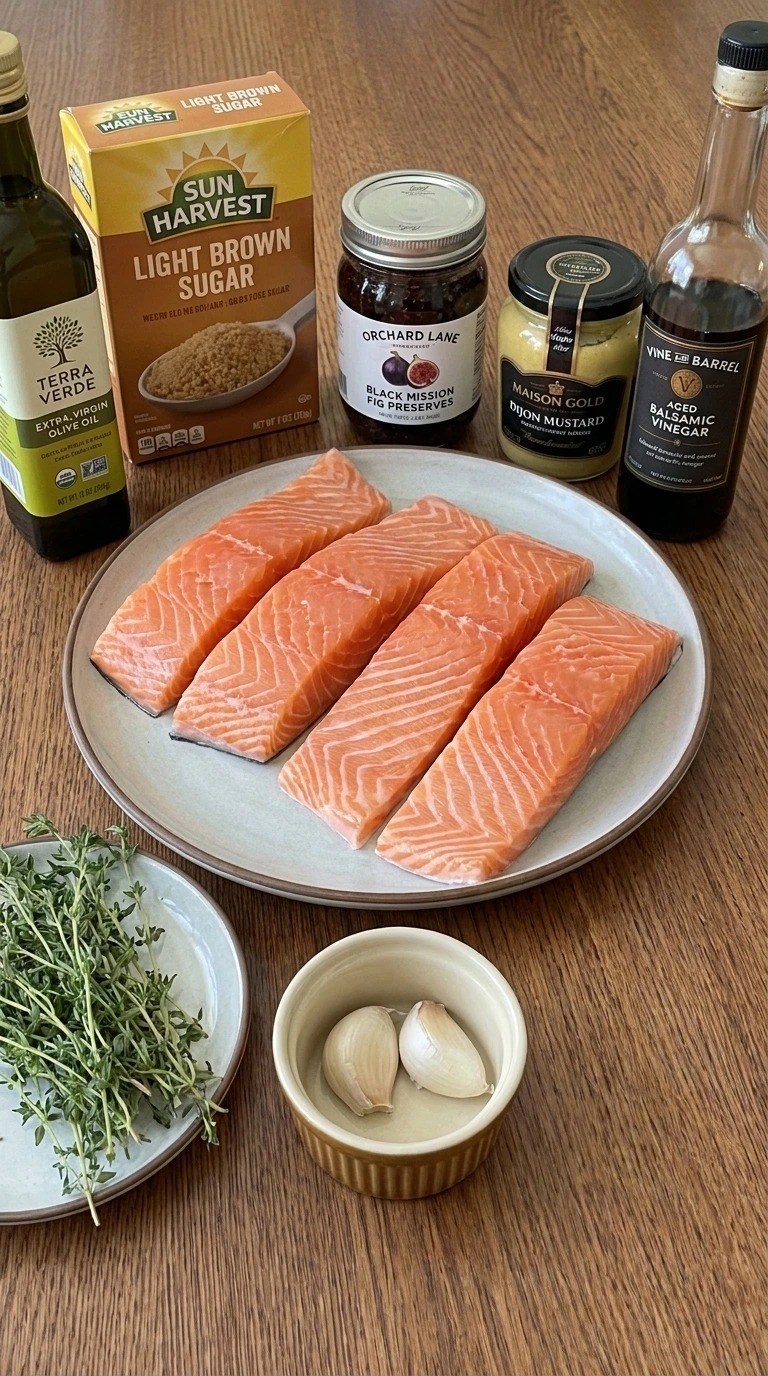
Here’s what I use for this recipe and you can always make substitutions if you prefer.
- center-cut Atlantic salmon fillet: Choose skinless fillets of similar thickness so they finish within the same two-minute window.
- Black Mission fig preserves: Use preserves with visible fruit pieces to build a textured glaze that clings to the fish.
- aged balsamic vinegar: Its acidity balances the preserves and reduces into a dark glossy base.
- light brown sugar: Packed firmly to deepen caramelization without making the glaze overly sweet.
- Dijon mustard: Whisked into the glaze to add tang and help the oil stay dispersed.
- extra-virgin olive oil: Adds a smooth finish and keeps the reduced glaze from becoming brittle.
- garlic clove: Minced finely so the pieces soften during the short reduction.
- fresh thyme: Strip about 1 tablespoon of leaves and reserve four small sprigs for plating.
- kosher salt: Divided evenly over both sides of the salmon for balanced seasoning.
- black peppercorn: Freshly ground just before seasoning for a sharper aroma.
- Black Mission fig: Quartered just before broiling so the cut surfaces stay moist and glossy.
Tools You’ll Need
- Small heavy-bottomed saucepan: A 1.5-quart stainless-steel saucepan reduces the glaze evenly, while a thin pan can create hot spots that scorch the fig sugars.
- Silicone spatula: A heatproof silicone spatula scrapes the saucepan clean every 30 seconds, while a rigid spoon can miss sticky sugar along the curved edge.
- Rimmed sheet pan: A dark 13×9-inch rimmed sheet pan contains the glaze and promotes edge caramelization, while a flat tray can spill sticky sauce into the oven.
- Instant-read thermometer: A fast digital thermometer confirms the salmon reaches 145°F, while a slow dial model can overcook the fish before the reading settles.
- Silicone pastry brush: A 1.5-inch silicone brush spreads a thin glaze without shedding bristles, while a wide brush can push too much sauce off the fillets.
- Two small heatproof bowls: Two 1-cup glass bowls keep the raw-fish glaze separate from the clean finishing glaze, while one shared bowl creates a cross-contamination risk.
- Flexible fish spatula: A thin slotted fish spatula lifts each 6-ounce fillet cleanly, while a thick turner can split the tender flakes during plating.
Instructions
Step 1: Reduce the fig balsamic glaze

Combine the fig preserves, balsamic vinegar, light brown sugar, Dijon mustard, minced garlic and extra-virgin olive oil in a small saucepan. Add half the thyme leaves. Cook over medium-low heat at about 4 on a 10-dial for 7 to 9 minutes.
Stir every 30 seconds and scrape the bottom in slow circles with a silicone spatula. Then watch for a deep ruby-brown glaze with softened fig pieces and slow bubbles around the edge. It should coat the back of a spoon and leave a clean line when swiped.
Go past 10 minutes and the sugar can scorch or turn bitter. Low heat lets the pectin thicken before the balsamic sugars burn.
Tip: Choose preserves with visible fig pieces and at least 45 percent fruit for a thicker glaze and stronger texture.
Step 2: Season and glaze the salmon
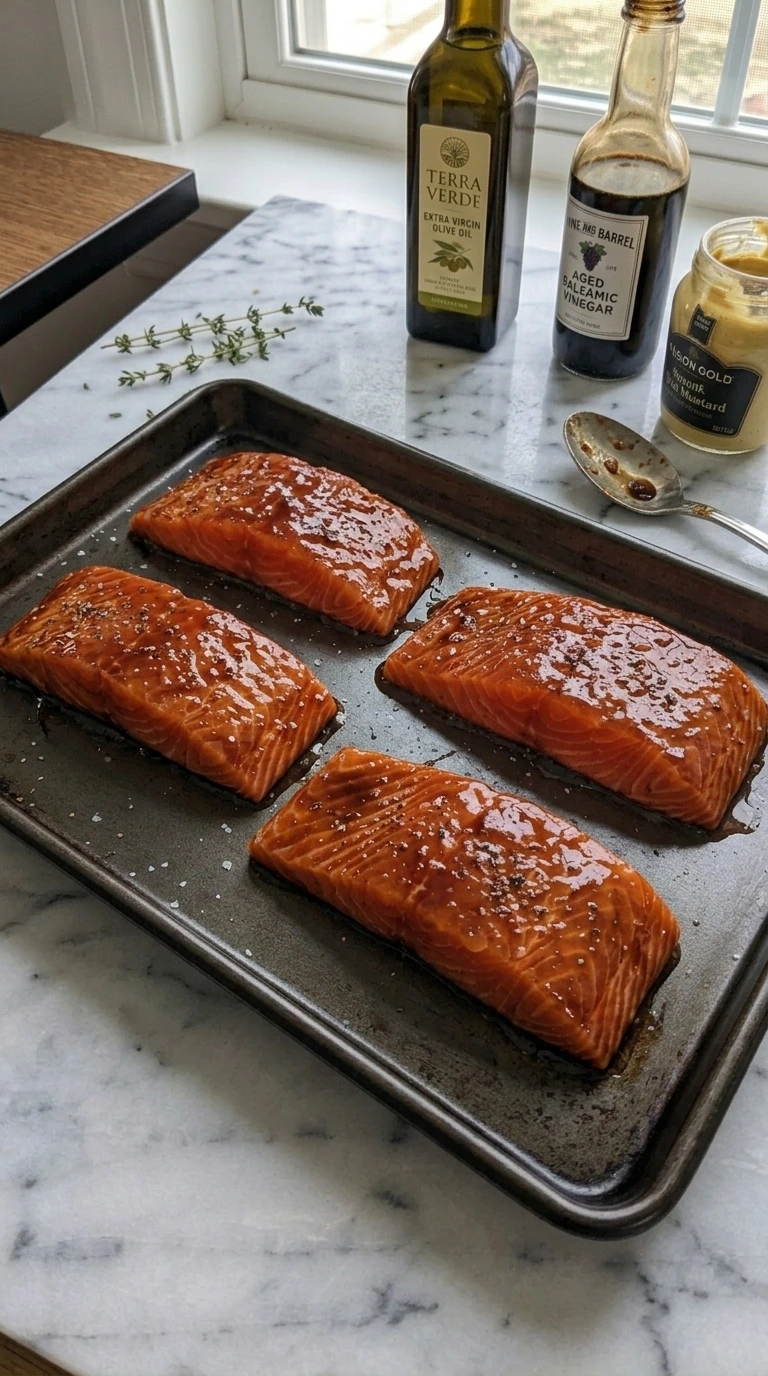
Place the four salmon fillets on the rimmed sheet pan with the thick ends facing outward. Season both sides with kosher salt and black pepper. Pour half the glaze into a separate bowl for raw-fish brushing and keep the rest untouched.
Brush each top with three light strokes from thick end to tapered end. Let the coated fish stand for 10 minutes while the oven reaches 400°F. Next, the raw coral-pink salmon with silver-white fat lines should hold a thin tacky mahogany coating.
The glaze shouldn’t pool heavily between the fillets. Rest longer than 20 minutes and the fish warms too much while the salt draws surface moisture. A brief rest helps the glaze cling without warming the fish too far.
Tip: Leave at least 1 inch between fillets so hot air reaches every edge and the glaze doesn’t steam.
Step 3: Bake until the centers turn opaque

Bake the glazed fillets at 400°F for 8 to 10 minutes. At minute 6, rotate the pan 180 degrees and nudge the thicker fillets toward the back corners. Check the thickest center with an instant-read thermometer.
Pull the pan when it reaches 130°F to 135°F because the broiler finishes the cooking. Meanwhile, look for pale opaque edges with a glossy coral center and a dark amber glaze. The surface should hiss softly but the sugar shouldn’t smoke.
Bake past 12 minutes and the fillets may reach 145°F before broiling, which leaves them dry. Stopping early preserves moisture for the final high-heat finish.
Tip: Insert the thermometer from the side into the thickest center for a truer reading and a cleaner top surface.
Step 4: Broil the final glaze
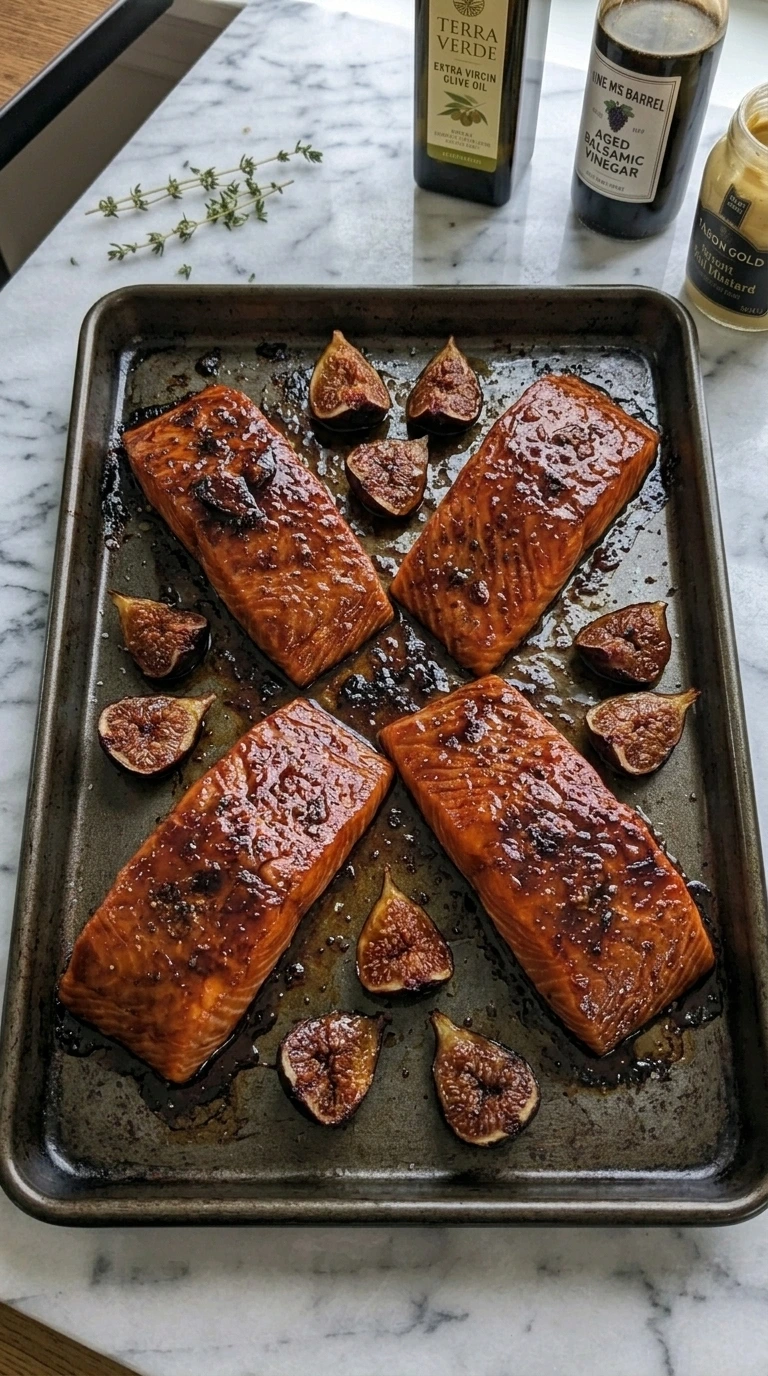
Brush the remaining glaze over all four fillets and place the quartered fresh figs between them. Set the broiler to 500°F. Broil 5 to 6 inches from the heat for 1 to 2 minutes. Rotate each fillet a quarter turn before broiling so the glaze colors unevenly like a home-cooked lacquer.
Watch continuously after the first 60 seconds. (I tested a full 3 minutes, the fig sugars blackened at the edges. ) Two minutes is the limit. The tops should show a glossy mahogany lacquer with caramelized dark patches and bubbling fig pieces.
Remove the pan when the thickest fillet reaches 145°F. Miss that window and the glaze burns before the fish can rest. Brief broiling caramelizes the sugars without drying the salmon.
Tip: Move any fig quarter that darkens before 90 seconds toward the pan edge so it stays soft instead of scorching.
Step 5: Rest and plate each portion

Rest the salmon on the pan for exactly 5 minutes. The centers should settle between 140°F and 145°F. Then slide one fillet onto each white plate without scraping away the lacquer. Spoon 1 tablespoon of warm fig glaze over each portion.
Add two roasted fig quarters plus one fresh thyme sprig. Tilt each fillet slightly so the thick center and flaky side remain visible. Finally, each portion should show fully opaque moist flakes, glossy mahogany lacquer and uneven caramelized edges. The glaze should pool lightly beside the fish instead of flooding the plate.
Skip the rest and the first forkful releases moisture onto the plate. Five minutes lets the proteins relax so the flakes stay juicy.
Tip: Warm the plates at 170°F for 5 minutes so the thin glaze stays fluid while everyone sits down.
Pro Tips
- Choose fillets between 1.25 and 1.5 inches thick so all four reach 145°F within the same broiling window.
- Pat the salmon dry for 20 seconds per fillet before seasoning because surface water makes the fig glaze slide off.
- Reserve at least 1/3 cup glaze before brushing raw fish, and never dip that brush back into the clean portion.
- Use preserves with visible fig pieces and at least 45 percent fruit for a glaze that thickens within 9 minutes.
- Start checking the glaze at minute 7 because a heavy saucepan can keep reducing it after the heat turns off.
- Keep the broiler rack 5 to 6 inches from the element so the sugar caramelizes before the salmon dries.
- Finish each plate with exactly 1 tablespoon warm glaze because more can hide the salmon’s crisp caramelized edges.
- Replace the thyme with 2 teaspoons chopped fresh rosemary and add 1 teaspoon orange zest for a woodsy citrus version.
- Stir 1/4 teaspoon crushed red pepper into the glaze for gentle heat that cuts through the sweet fig preserves.
- Roast 12 ounces trimmed asparagus for 5 minutes before adding the salmon, then finish both together on the same pan.
- Scatter 1/4 cup chopped toasted pecans over the fillets during the final 30 seconds for a crisp nutty topping.
Storage Instructions
Cool leftover salmon within 2 hours and place each fillet in a shallow airtight glass container. Refrigerate it for up to 3 days. Freeze portions for up to 2 months by wrapping each fillet tightly in parchment and then foil. Store the extra glaze in a separate freezer-safe cup so the fish surface doesn’t become soggy during thawing.
Label every package with the freezing date. Reheat refrigerated salmon covered at 325°F for 10 to 12 minutes and add 1 tablespoon reserved glaze before serving. The center should reach 165°F for safe reheating. Thaw frozen portions overnight before warming.
Discard salmon with a sour smell, sticky slime or dull gray patches because those changes signal spoilage. Don’t reheat the same portion more than once because repeated warming dries the flakes.
Print
Fig Balsamic Salmon
- Total Time: 35 minutes
- Yield: 4 servings 1x
Description
This easy Fig Balsamic Salmon is one of my best ideas for a quick and simple healthy weeknight dinner. Each fillet turns tender and flaky while the glaze becomes glossy and dark with sweet fig pieces and a sharp balsamic finish. The trick is reducing the sauce before it touches the fish, so it clings instead of running off. It also works for meal prep, a holiday dinner or a small party when you want something polished without extra fuss at the table.
Ingredients
- 4 fillets (6 ounces each) center-cut Atlantic salmon fillet
- 1/2 cup Black Mission fig preserves
- 1/3 cup aged balsamic vinegar
- 1 tablespoon light brown sugar
- 2 teaspoons Dijon mustard
- 1 tablespoon extra-virgin olive oil
- 2 large cloves garlic clove
- 1 small bunch fresh thyme
- 1 teaspoon kosher salt
- 1/2 teaspoon black peppercorn
- 2 medium Black Mission fig
Instructions
- Combine the fig preserves, balsamic vinegar, light brown sugar, Dijon mustard, minced garlic and extra-virgin olive oil in a small saucepan. Add half the thyme leaves. Cook over medium-low heat at about 4 on a 10-dial for 7 to 9 minutes. Stir every 30 seconds and scrape the bottom in slow circles with a silicone spatula. Then watch for a deep ruby-brown glaze with softened fig pieces and slow bubbles around the edge. It should coat the back of a spoon and leave a clean line when swiped. Go past 10 minutes and the sugar can scorch or turn bitter. Low heat lets the pectin thicken before the balsamic sugars burn.
- Place the four salmon fillets on the rimmed sheet pan with the thick ends facing outward. Season both sides with kosher salt and black pepper. Pour half the glaze into a separate bowl for raw-fish brushing and keep the rest untouched. Brush each top with three light strokes from thick end to tapered end. Let the coated fish stand for 10 minutes while the oven reaches 400°F. Next, the raw coral-pink salmon with silver-white fat lines should hold a thin tacky mahogany coating. The glaze shouldn’t pool heavily between the fillets. Rest longer than 20 minutes and the fish warms too much while the salt draws surface moisture. A brief rest helps the glaze cling without warming the fish too far.
- Bake the glazed fillets at 400°F for 8 to 10 minutes. At minute 6, rotate the pan 180 degrees and nudge the thicker fillets toward the back corners. Check the thickest center with an instant-read thermometer. Pull the pan when it reaches 130°F to 135°F because the broiler finishes the cooking. Meanwhile, look for pale opaque edges with a glossy coral center and a dark amber glaze. The surface should hiss softly but the sugar shouldn’t smoke. Bake past 12 minutes and the fillets may reach 145°F before broiling, which leaves them dry. Stopping early preserves moisture for the final high-heat finish.
- Brush the remaining glaze over all four fillets and place the quartered fresh figs between them. Set the broiler to 500°F. Broil 5 to 6 inches from the heat for 1 to 2 minutes. Rotate each fillet a quarter turn before broiling so the glaze colors unevenly like a home-cooked lacquer. Watch continuously after the first 60 seconds. (I tested a full 3 minutes, the fig sugars blackened at the edges.) Two minutes is the limit. The tops should show a glossy mahogany lacquer with caramelized dark patches and bubbling fig pieces. Remove the pan when the thickest fillet reaches 145°F. Miss that window and the glaze burns before the fish can rest. Brief broiling caramelizes the sugars without drying the salmon.
- Rest the salmon on the pan for exactly 5 minutes. The centers should settle between 140°F and 145°F. Then slide one fillet onto each white plate without scraping away the lacquer. Spoon 1 tablespoon of warm fig glaze over each portion. Add two roasted fig quarters plus one fresh thyme sprig. Tilt each fillet slightly so the thick center and flaky side remain visible. Finally, each portion should show fully opaque moist flakes, glossy mahogany lacquer and uneven caramelized edges. The glaze should pool lightly beside the fish instead of flooding the plate. Skip the rest and the first forkful releases moisture onto the plate. Five minutes lets the proteins relax so the flakes stay juicy.
Notes
Pro Tips:
- Choose fillets between 1.25 and 1.5 inches thick so all four reach 145°F within the same broiling window.
- Pat the salmon dry for 20 seconds per fillet before seasoning because surface water makes the fig glaze slide off.
- Reserve at least 1/3 cup glaze before brushing raw fish, and never dip that brush back into the clean portion.
- Use preserves with visible fig pieces and at least 45 percent fruit for a glaze that thickens within 9 minutes.
- Start checking the glaze at minute 7 because a heavy saucepan can keep reducing it after the heat turns off.
- Keep the broiler rack 5 to 6 inches from the element so the sugar caramelizes before the salmon dries.
- Finish each plate with exactly 1 tablespoon warm glaze because more can hide the salmon’s crisp caramelized edges.
Storage: Cool leftover salmon within 2 hours and place each fillet in a shallow airtight glass container. Refrigerate it for up to 3 days. Freeze portions for up to 2 months by wrapping each fillet tightly in parchment and then foil. Store the extra glaze in a separate freezer-safe cup so the fish surface doesn’t become soggy during thawing. Label every package with the freezing date. Reheat refrigerated salmon covered at 325°F for 10 to 12 minutes and add 1 tablespoon reserved glaze before serving. The center should reach 165°F for safe reheating. Thaw frozen portions overnight before warming. Discard salmon with a sour smell, sticky slime or dull gray patches because those changes signal spoilage. Don’t reheat the same portion more than once because repeated warming dries the flakes.
- Prep Time: 15 minutes
- Cook Time: 20 minutes
- Category: Dinner
- Cuisine: American
Nutrition
- Serving Size: 1 serving (of 4)
- Calories: 441
- Sugar: 26g
- Sodium: 779mg
- Fat: 26g
- Carbohydrates: 51g
- Fiber: 10g
- Cholesterol: 110mg
Frequently Asked Questions
Yes. Reduce the glaze up to 3 days ahead and refrigerate it in a sealed glass jar. Rewarm it over low heat for 3 to 4 minutes, then stir in 1 teaspoon water if it looks too thick to brush.
Use four 6-ounce frozen fillets after thawing them safely in the refrigerator for 12 to 18 hours. Pat every surface dry before glazing, then bake at 400°F and rely on the 145°F internal target instead of adding extra time automatically.
The sauce probably didn’t reduce long enough or the salmon carried too much surface moisture. Simmer until a spoon swipe leaves a clean line, then dry each fillet for about 20 seconds before brushing so the coating stays tacky during baking.
Use two 13×9-inch rimmed sheet pans and keep eight fillets in one properly uncrowded layer. Rotate the pans between racks at minute 6, then broil one pan at a time for 1 to 2 minutes so every fillet colors evenly.
Serve each fillet with 3/4 cup steamed jasmine rice and about 1 cup roasted asparagus or green beans. Add a crisp side salad with a sharp vinaigrette if you need more balanced contrast against the sweet fig and balsamic glaze.
After the first 8 minutes at 400°F, brush on the remaining glaze and raise the oven to 425°F. Bake for 3 to 4 more minutes until the center reaches 145°F, though the surface will look less lacquered and slightly softer.
Final Thoughts
So there you go. A recipe that is simple enough for a Tuesday night but good enough to serve at a gathering.
I’ve made this more times than I can count and the sticky fig glaze never disappoints. Save this one, share it with a friend and let me know in the comments if you made any fun changes.
For another cozy dinner, try our Rotel Pasta with Ground Beef. I’m always curious to see how people put their own spin on things.