


When you’re greedy like me and want proper savory-sweet sauce in every bite, not just a faint whiff of “vaguely tastes like takeout… maybe? ”, making Slow Cooker Lo Mein suddenly becomes harder than it sounds. I wanted glossy noodles, juicy chicken and vegetables that still looked alive. That shouldn’t be a ridiculous request. Yet the slow cooker seemed determined to make one part perfect while ruining another.
I really thought it would be simple: put chicken and noodles in the slow cooker, pour over sauce and walk away. But every option had problems. The noodles went soft if they cooked too long. The vegetables lost their color and the sauce turned watery when everything went in at once. Adding less liquid helped a little, but then the noodles clumped and the chicken tasted too salty around the edges.
The fix was cooking the chicken first and adding fresh noodles near the end. That keeps the strands springy and lets the peppers and snap peas stay bright. A quick cornstarch slurry catches the chicken juices instead of letting them pool underneath. And when you want another low-effort dinner, try our Crockpot Chicken Pot Pie next.
Ingredients
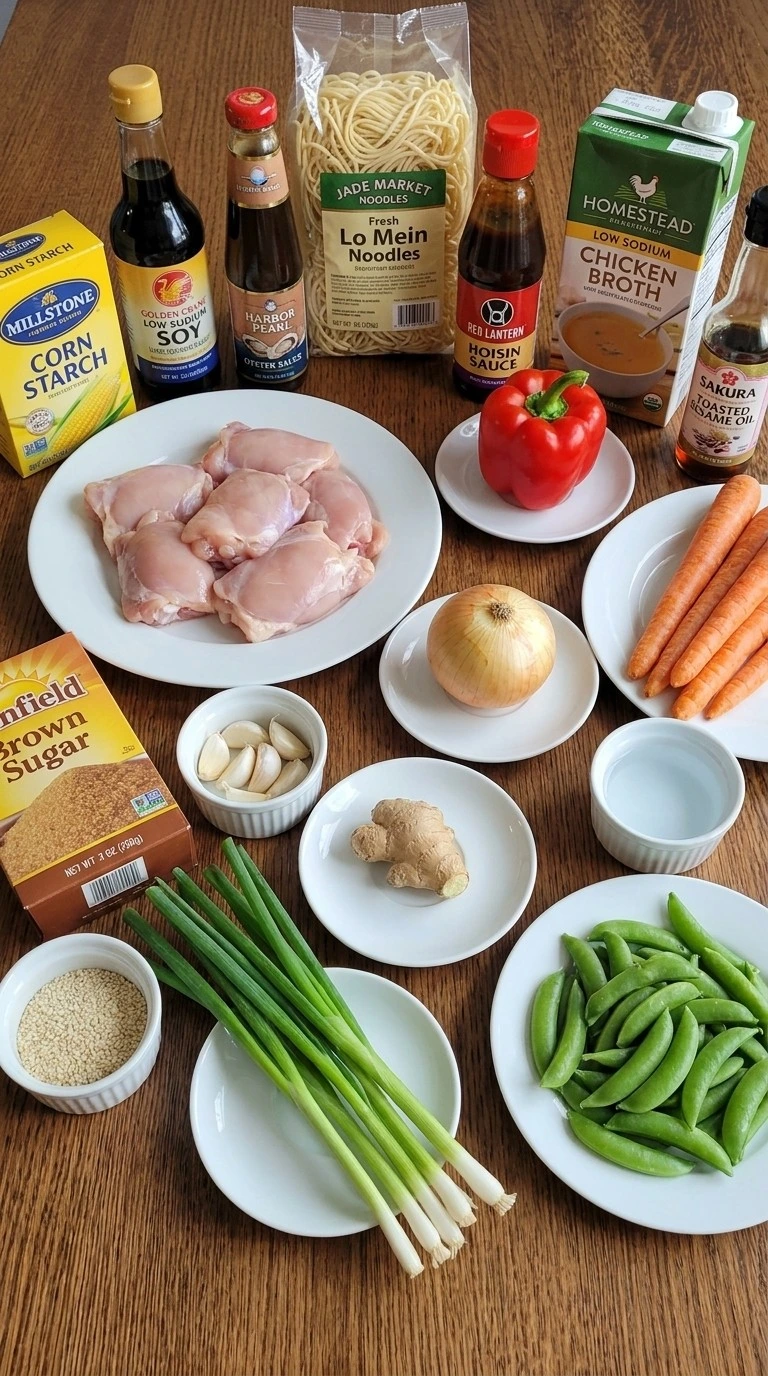
Here’s what I use for this recipe and you can always make substitutions if you prefer.
- boneless skinless chicken thighs: Trimmed and cut into irregular 1-inch pieces so they stay juicy during slow cooking.
- fresh lo mein noodles: Loosened before adding so the strands separate without tearing.
- low-sodium chicken broth: Adds enough moisture for slow cooking without making the finished sauce watery.
- low-sodium soy sauce: Provides the salty base while leaving room for oyster and hoisin sauces.
- oyster sauce: Adds deep savory flavor and helps the sauce cling to the noodles.
- hoisin sauce: Brings mild sweetness and body to the glossy sauce.
- toasted sesame oil: Added near the end so its nutty aroma stays noticeable.
- light brown sugar: Balances the salty sauces and supports a glossy finish.
- garlic cloves: Finely minced so the flavor spreads evenly through the sauce.
- fresh ginger: Finely grated for a warm sharp note that cuts through the sweet sauce.
- cornstarch: Mixed with cold water to thicken the sauce during the final cooking stage.
- cold water: Used to disperse the cornstarch before it reaches the hot sauce.
- carrots: Peeled and cut into thin 2-inch batons so they soften without disappearing.
- red bell pepper: Seeded and cut into short strips for bright color and gentle sweetness.
- yellow onion: Cut into narrow wedges that soften into the sauce without fully dissolving.
- sugar snap peas: Trimmed and left whole so they keep a crisp green bite.
- green onions: Thinly sliced and added after cooking for fresh onion flavor.
- sesame seeds: Sprinkled over the plated noodles for a lightly nutty finish.
Tools You’ll Need
- 6-quart slow cooker: A 6-quart oval cooker gives the chicken and noodles enough room to heat evenly, while a smaller model crowds the food and traps excess liquid.
- medium mixing bowl: A 2-quart bowl holds the full sauce without splashing, while a shallow cereal bowl makes thick sauces difficult to whisk smoothly.
- wire whisk: A medium balloon whisk dissolves the brown sugar and cornstarch quickly, while a fork can leave sticky lumps at the bottom.
- chef’s knife: An 8-inch sharp chef’s knife makes consistent chicken and vegetable cuts, while a dull blade crushes peppers and slips on raw meat.
- large cutting board: A board at least 12 by 18 inches keeps raw chicken separate from vegetables, while a cramped board increases cross-contamination and uneven cuts.
- instant-read thermometer: A fast digital thermometer confirms the chicken reaches 165°F, while judging only by color can miss undercooked centers.
Instructions
Step 1: Slice the chicken and vegetables
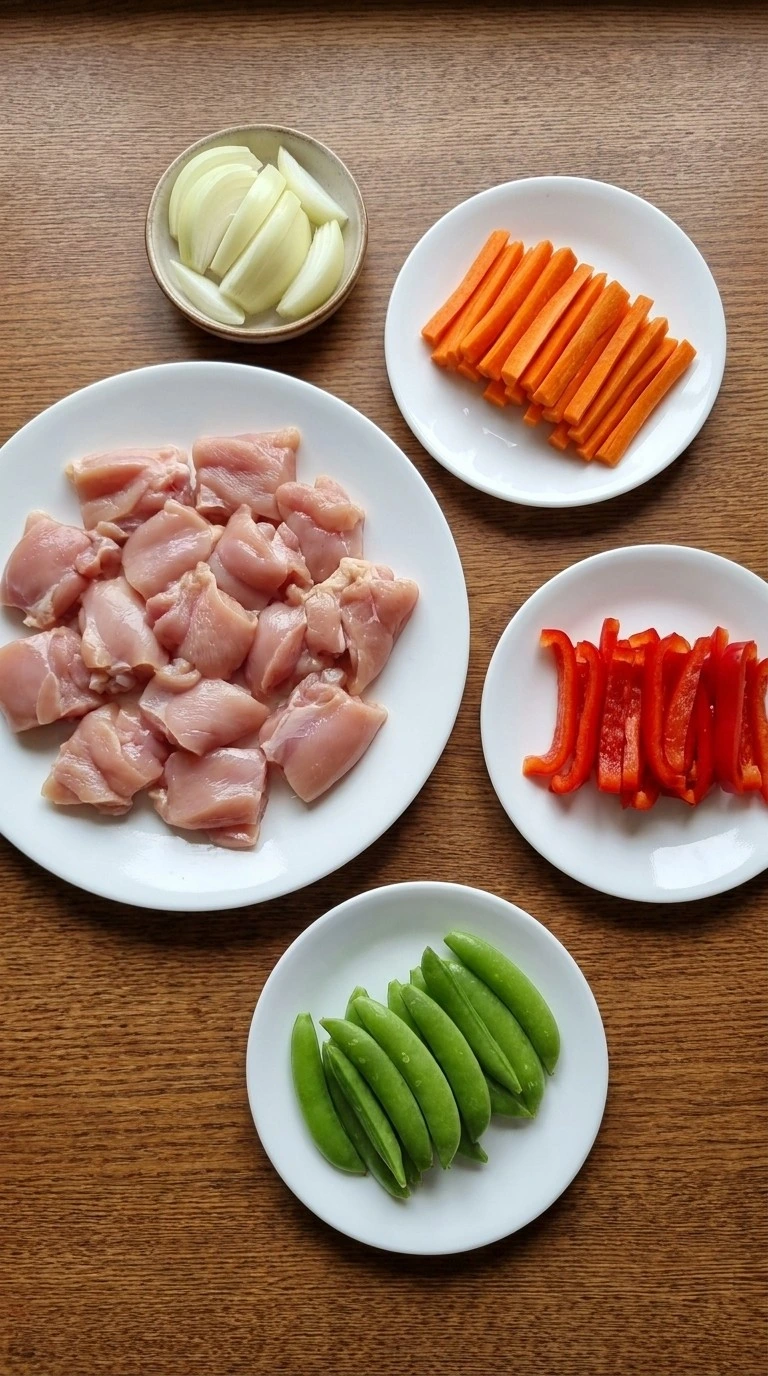
Keep the boneless skinless chicken thighs at 40°F or colder while you work. Cut them into irregular 1-inch pieces within 10 minutes. Then slice the carrots into thin 2-inch batons. Cut the red bell pepper into short strips and the yellow onion into narrow wedges.
Trim the sugar snap peas but leave them whole. The chicken pieces should look pale pink and slightly uneven. The vegetables should keep distinct shapes and bright raw color. If you cut the chicken much smaller, it can dry before the carrots soften.
Uniform thickness matters more than perfect shapes. Consistent cuts help every piece finish in the same window.
Tip: Use a separate board for the chicken and wash it with hot soapy water for at least 20 seconds afterward.
Step 2: Whisk the sauce and coat the chicken
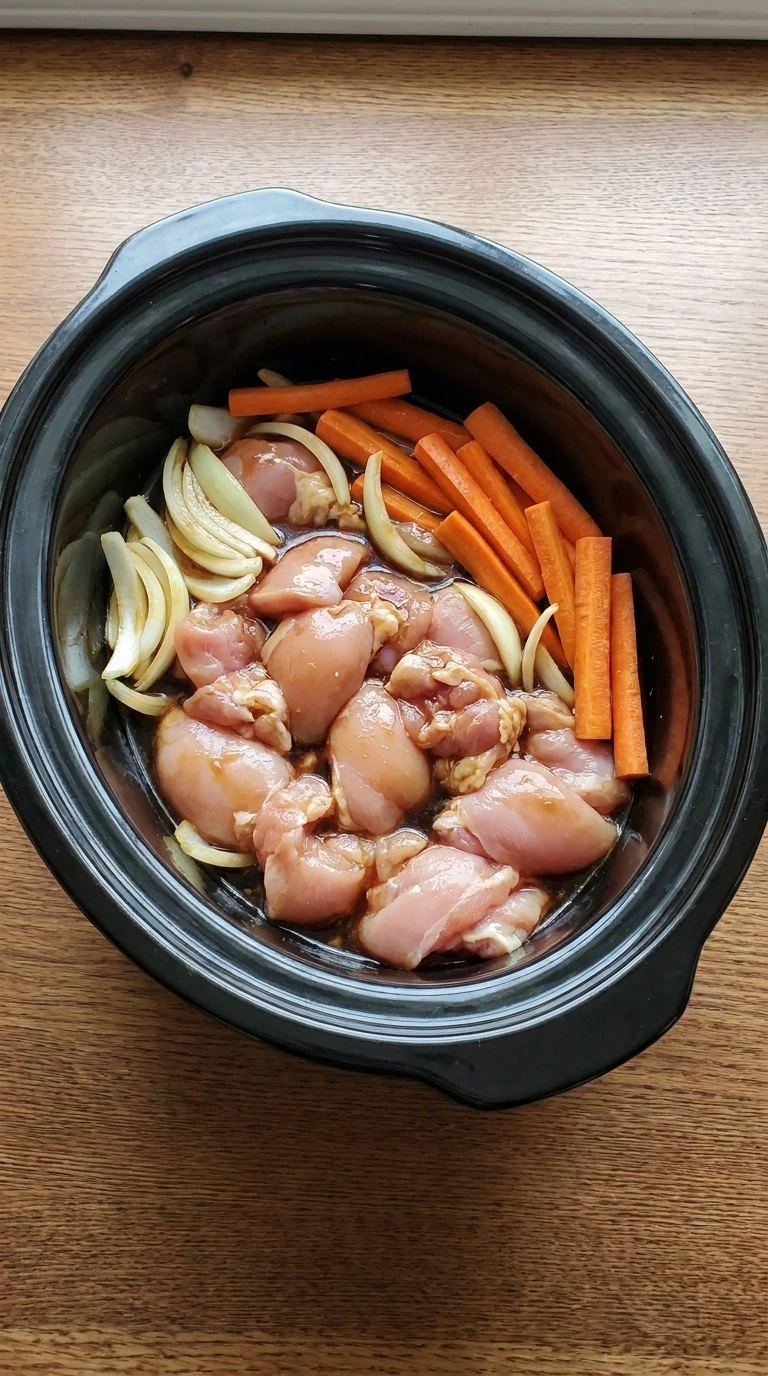
Whisk the low-sodium soy sauce, oyster sauce, hoisin sauce, chicken broth, brown sugar, garlic and ginger for 90 seconds. Keep the mixture near 40°F before cooking. Pour it over the chicken pieces with the carrots and onion.
Turn everything from the bottom upward for 30 seconds so each piece gets a thin coating. The sauce should look smooth and deep brown with no dry sugar at the bottom. You’ll smell fresh ginger and garlic before any heat reaches the mixture.
If streaks of hoisin remain, they can form salty pockets later. Thorough mixing distributes sugar and salt before the proteins begin tightening.
Tip: Measure sticky sauces with a lightly damp spoon so each tablespoon releases cleanly and the ratio stays accurate.
Step 3: Slow cook the chicken until tender
Cover and cook on LOW for 2 to 2 1/2 hours. The liquid should stay near 195°F and never boil hard. At hour two, check several chicken pieces with an instant-read thermometer. They must reach 165°F.
Gently shift the pieces from the outer edge toward the center once at the 90-minute mark. The chicken turns fully opaque with light amber edges. The carrots soften but still hold their baton shape and the onion becomes translucent. The sauce smells savory and slightly sweet.
Go past 3 hours and the chicken can tighten while the carrots collapse. Gentle heat keeps the thigh meat juicy as collagen softens.
Tip: Lift the lid only once because each opening can add about 15 minutes to the cooking time.
Step 4: Fold in the noodles and crisp vegetables
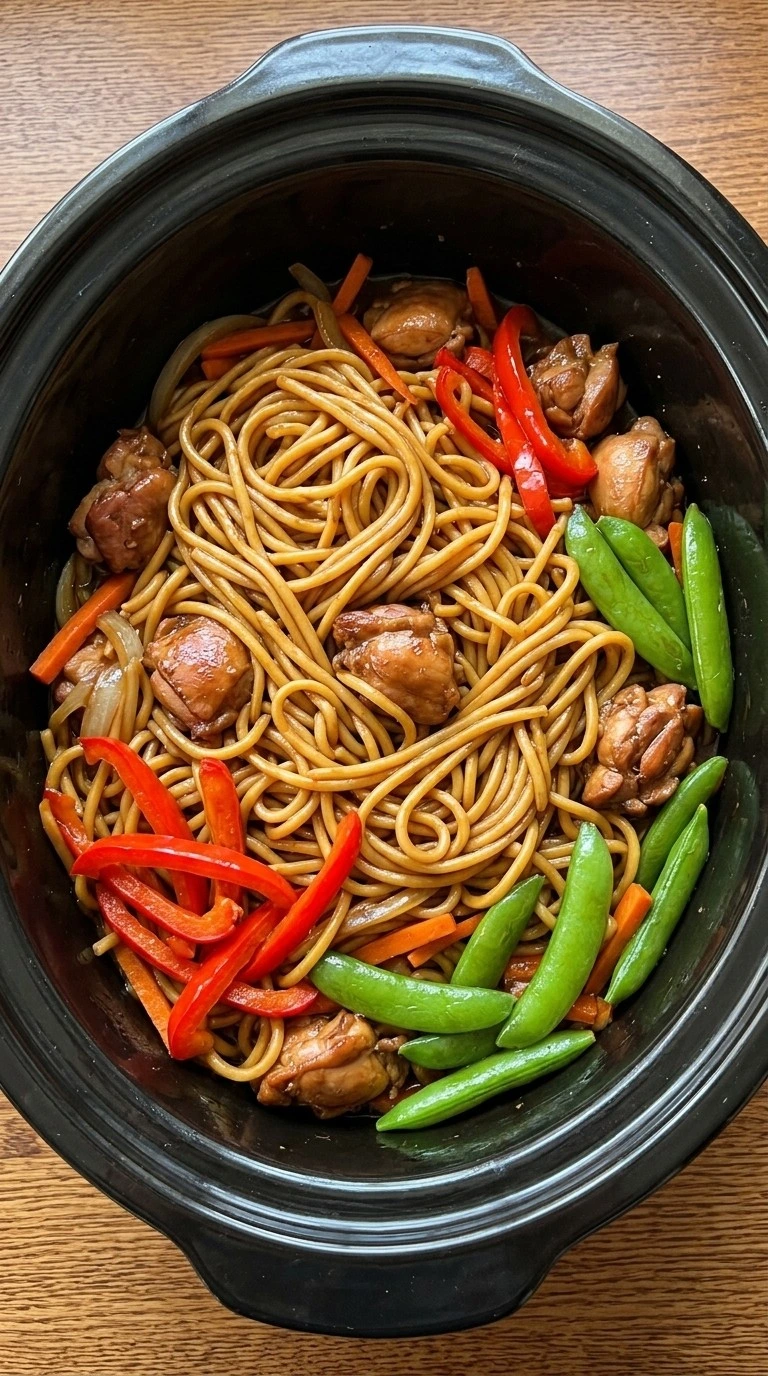
Turn the cooker to HIGH and let the sauce reach about 202°F. Stir cornstarch with cold water for 30 seconds. Fold in the fresh lo mein noodles, red bell pepper strips, whole sugar snap peas, slurry and toasted sesame oil. Lift and turn the noodles gently for 45 seconds.
Cover and cook for 18 to 22 minutes. The noodles should loosen into glossy strands and the sauce should cling without pooling. The peppers stay bright red and the peas remain green with softened edges. (I cooked my first batch for 35 minutes, the noodles turned heavy and dull.
) Miss the window and the starch keeps absorbing sauce. Short finishing heat thickens Slow Cooker Lo Mein without making the noodles mushy.
Tip: Separate the fresh noodles with your fingers before adding them so dense clumps don’t stay pale inside.
Step 5: Plate and finish with green onions
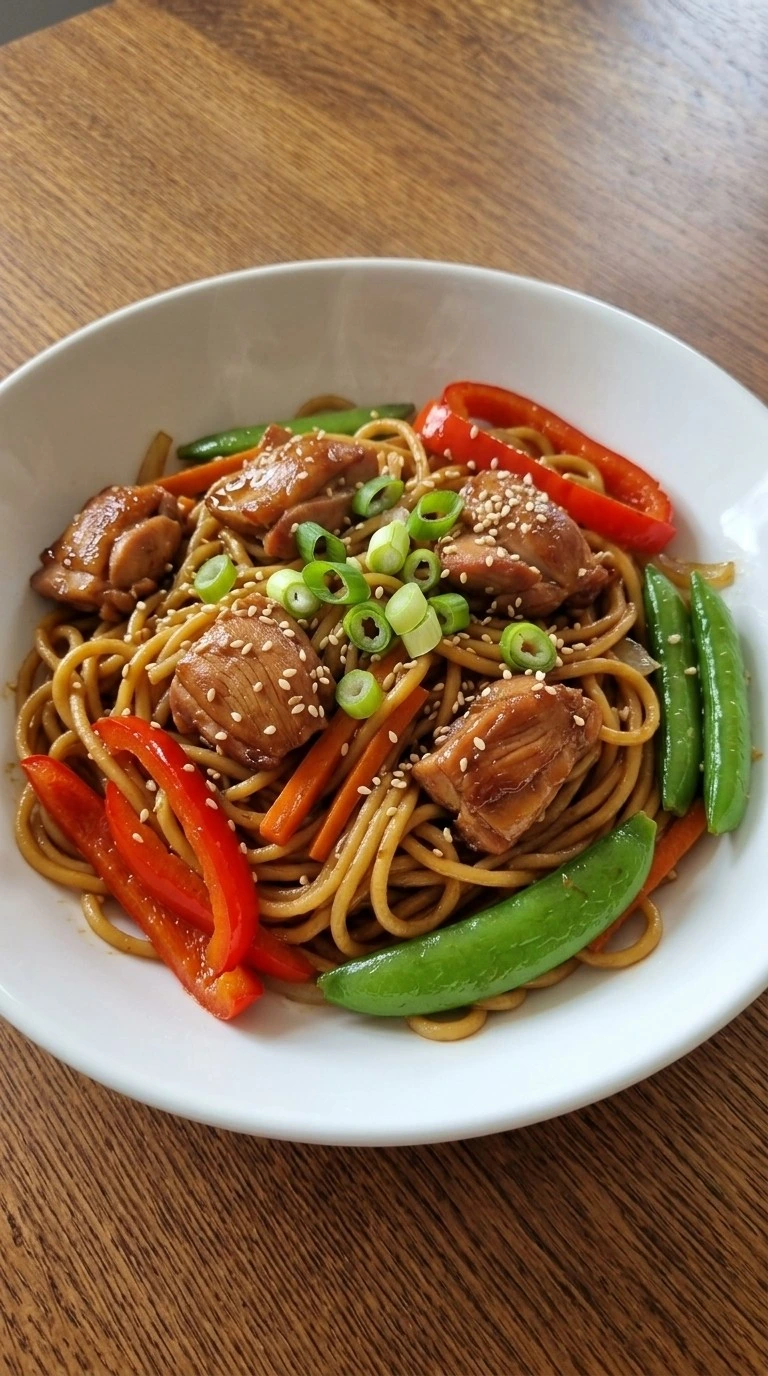
Let the noodles rest uncovered for 3 minutes at 140°F or warmer. Then lift one serving into a shallow bowl and turn the strands once to form a loose mound. Spoon several chicken pieces and vegetables over the top.
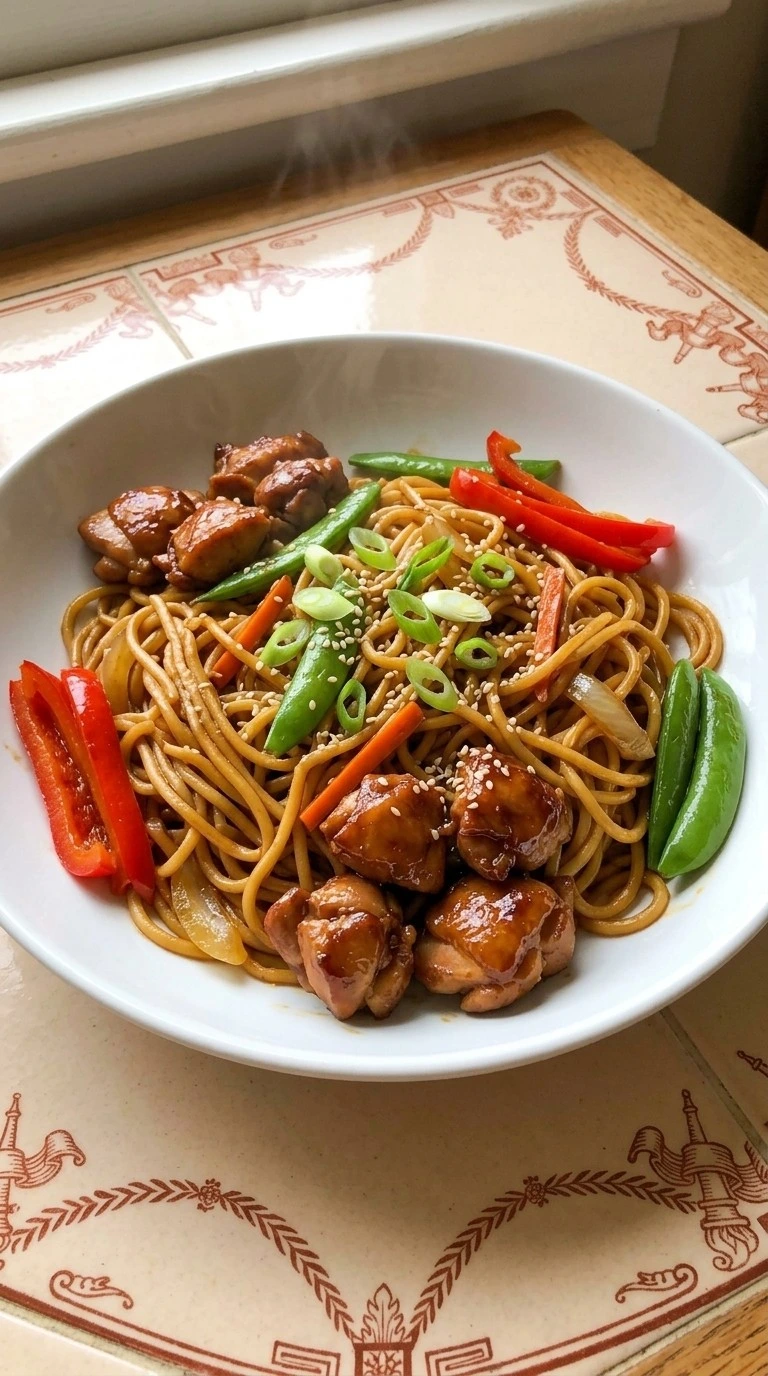
Finish with sliced green onions and sesame seeds. Serve within 10 minutes while the sauce still shines. The final bowl should show glossy amber noodles with bright red pepper and green snap peas.
The chicken looks mahogany and the sesame seeds cling unevenly. If the bowl waits longer than 15 minutes, the noodles absorb more sauce and lose their spring. Brief resting settles the glaze without letting the starch turn pasty.
Tip: Reserve 1 tablespoon of sliced green onions until the last second so they stay crisp and vivid.
Pro Tips
- Cut the chicken into 1-inch pieces so it reaches 165°F without drying before the carrots soften.
- Use fresh refrigerated lo mein noodles and cook them only 18 to 22 minutes on HIGH for the springiest texture.
- Keep the slow cooker no more than two-thirds full because overcrowding traps steam and makes the sauce thin.
- Whisk the cornstarch with exactly 2 tablespoons cold water before adding it or the hot sauce will create lumps.
- Open the lid only once during the first 2 hours because each peek can extend cooking by about 15 minutes.
- Add the toasted sesame oil during the final 20 minutes because long heat flattens its nutty aroma.
- Toast the sesame seeds for 2 to 3 minutes until fragrant, then scatter them over the noodles just before serving.
- Add 1 teaspoon crushed red pepper flakes with the sauce for a warm heat that builds without overpowering the ginger.
- Replace half the chicken with 8 ounces sliced cremini mushrooms and add them during the final 30 minutes.
- Stir in 1 cup shredded napa cabbage with the noodles for a softer vegetable layer and extra volume.
- Use 1 tablespoon chili crisp as a finishing swirl for a smoky spicy version with crunchy bits.
Storage Instructions
Store Slow Cooker Lo Mein in a shallow airtight container for up to 4 days at 40°F or colder. Cool it within 2 hours of cooking. The finished noodles don’t freeze well because they soften after thawing.
However, you can freeze the cooked chicken and sauce without noodles for 2 months. Press out excess air and label the container with the date. Reheat one serving over medium-low heat for 4 to 6 minutes with 1 tablespoon water.
Stir twice and stop when the center reaches 165°F. You can also microwave it at 70 percent power in 45-second bursts. Finally, discard leftovers if the sauce smells sour, the noodles feel slimy or the container has been warm for more than 2 hours.
Print
Slow Cooker Lo Mein
- Total Time: 2 hours 55 minutes
- Yield: 4 servings 1x
Description
This easy Slow Cooker Lo Mein is packed with tender chicken, glossy noodles and crisp vegetables for a quick weeknight dinner or simple meal prep. The smell of ginger and toasted sesame fills the kitchen while the sauce clings to every strand. The trick is adding fresh noodles near the end, so they stay springy instead of turning soft. It’s one of the best healthy dinner ideas for busy nights, potlucks or a casual party, and leftovers reheat beautifully for lunch.
Ingredients
- 1.5 pounds boneless skinless chicken thighs
- 16 ounces fresh lo mein noodles
- 1/2 cup low-sodium chicken broth
- 1/3 cup low-sodium soy sauce
- 3 tablespoons oyster sauce
- 2 tablespoons hoisin sauce
- 2 teaspoons toasted sesame oil
- 1 tablespoon light brown sugar
- 4 large garlic cloves
- 1 tablespoon fresh ginger
- 1 tablespoon cornstarch
- 2 tablespoons cold water
- 2 medium carrots
- 1 large red bell pepper
- 1 small yellow onion
- 6 ounces sugar snap peas
- 3 medium green onions
- 1 tablespoon sesame seeds
Instructions
- Keep the boneless skinless chicken thighs at 40°F or colder while you work. Cut them into irregular 1-inch pieces within 10 minutes. Then slice the carrots into thin 2-inch batons. Cut the red bell pepper into short strips and the yellow onion into narrow wedges. Trim the sugar snap peas but leave them whole. The chicken pieces should look pale pink and slightly uneven. The vegetables should keep distinct shapes and bright raw color. If you cut the chicken much smaller, it can dry before the carrots soften. Uniform thickness matters more than perfect shapes. Consistent cuts help every piece finish in the same window.
- Whisk the low-sodium soy sauce, oyster sauce, hoisin sauce, chicken broth, brown sugar, garlic and ginger for 90 seconds. Keep the mixture near 40°F before cooking. Pour it over the chicken pieces with the carrots and onion. Turn everything from the bottom upward for 30 seconds so each piece gets a thin coating. The sauce should look smooth and deep brown with no dry sugar at the bottom. You’ll smell fresh ginger and garlic before any heat reaches the mixture. If streaks of hoisin remain, they can form salty pockets later. Thorough mixing distributes sugar and salt before the proteins begin tightening.
- Cover and cook on LOW for 2 to 2 1/2 hours. The liquid should stay near 195°F and never boil hard. At hour two, check several chicken pieces with an instant-read thermometer. They must reach 165°F. Gently shift the pieces from the outer edge toward the center once at the 90-minute mark. The chicken turns fully opaque with light amber edges. The carrots soften but still hold their baton shape and the onion becomes translucent. The sauce smells savory and slightly sweet. Go past 3 hours and the chicken can tighten while the carrots collapse. Gentle heat keeps the thigh meat juicy as collagen softens.
- Turn the cooker to HIGH and let the sauce reach about 202°F. Stir cornstarch with cold water for 30 seconds. Fold in the fresh lo mein noodles, red bell pepper strips, whole sugar snap peas, slurry and toasted sesame oil. Lift and turn the noodles gently for 45 seconds. Cover and cook for 18 to 22 minutes. The noodles should loosen into glossy strands and the sauce should cling without pooling. The peppers stay bright red and the peas remain green with softened edges. (I cooked my first batch for 35 minutes, the noodles turned heavy and dull.) Miss the window and the starch keeps absorbing sauce. Short finishing heat thickens Slow Cooker Lo Mein without making the noodles mushy.
- Let the noodles rest uncovered for 3 minutes at 140°F or warmer. Then lift one serving into a shallow bowl and turn the strands once to form a loose mound. Spoon several chicken pieces and vegetables over the top. Finish with sliced green onions and sesame seeds. Serve within 10 minutes while the sauce still shines. The final bowl should show glossy amber noodles with bright red pepper and green snap peas. The chicken looks mahogany and the sesame seeds cling unevenly. If the bowl waits longer than 15 minutes, the noodles absorb more sauce and lose their spring. Brief resting settles the glaze without letting the starch turn pasty.
Notes
Pro Tips:
- Cut the chicken into 1-inch pieces so it reaches 165°F without drying before the carrots soften.
- Use fresh refrigerated lo mein noodles and cook them only 18 to 22 minutes on HIGH for the springiest texture.
- Keep the slow cooker no more than two-thirds full because overcrowding traps steam and makes the sauce thin.
- Whisk the cornstarch with exactly 2 tablespoons cold water before adding it or the hot sauce will create lumps.
- Open the lid only once during the first 2 hours because each peek can extend cooking by about 15 minutes.
- Add the toasted sesame oil during the final 20 minutes because long heat flattens its nutty aroma.
- Toast the sesame seeds for 2 to 3 minutes until fragrant, then scatter them over the noodles just before serving.
Storage: Store Slow Cooker Lo Mein in a shallow airtight container for up to 4 days at 40°F or colder. Cool it within 2 hours of cooking. The finished noodles don’t freeze well because they soften after thawing. However, you can freeze the cooked chicken and sauce without noodles for 2 months. Press out excess air and label the container with the date. Reheat one serving over medium-low heat for 4 to 6 minutes with 1 tablespoon water. Stir twice and stop when the center reaches 165°F. You can also microwave it at 70 percent power in 45-second bursts. Finally, discard leftovers if the sauce smells sour, the noodles feel slimy or the container has been warm for more than 2 hours.
- Prep Time: 15 minutes
- Cook Time: 2 hours 40 minutes
- Category: Dinner
- Cuisine: Chinese-American
Nutrition
- Serving Size: 509g
- Calories: 381
- Sugar: 14g
- Sodium: 2453mg
- Fat: 21g
- Carbohydrates: 47g
- Fiber: 5g
- Cholesterol: 206mg
Frequently Asked Questions
Yes. Cut the chicken and vegetables up to 24 hours ahead and refrigerate them in separate sealed containers below 40°F. Whisk the sauce up to 3 days ahead, but keep the cornstarch slurry separate until the final cooking stage.
Chicken and vegetables release moisture during the first 2 hours. Mix 1 tablespoon cornstarch with 2 tablespoons cold water, then cook on HIGH for 18 to 22 minutes with the lid closed. If the sauce still pools heavily, uncover it for 5 minutes before serving.
Use gluten-free tamari and a certified gluten-free mushroom sauce. Replace the fresh wheat noodles with 12 ounces brown rice noodles, soak them for 6 minutes and cook them only 8 to 10 minutes in the hot sauce. Drain them thoroughly first so extra water doesn’t thin the glaze.
Only double it in an 8-quart model and keep the cooker below two-thirds full. The chicken may need 30 extra minutes to reach 165°F, while the noodle finishing time should stay near 20 minutes. A 6-quart cooker will crowd the ingredients and dilute the sauce.
Warm one serving with 1 tablespoon water in a covered skillet over medium-low heat for 4 to 6 minutes. Turn the noodles twice so the steam loosens the sauce. Slow Cooker Lo Mein can also be microwaved at 70 percent power in 45-second intervals.
Serve a 1 1/2-cup portion with a crisp vegetable side or a light cucumber salad. For a larger dinner, add Zucchini Roll-ups and keep the noodle portion closer to 1 cup per person. A cold fruit plate also balances the salty sauce.
Final Thoughts
Every time I make Slow Cooker Lo Mein I remember my first attempt, nervous about mushy noodles and convinced I’d fail. Turns out it’s one of those dishes that forgives you for being a beginner.
You can miss the timing by a few minutes, like I did, and the glossy sauce still saves dinner. If you try it, leave a comment below and make Zucchini Roll-ups or Banana Cake next.