Description
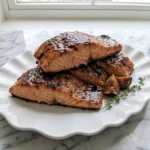
This easy Fig Balsamic Salmon is one of my best ideas for a quick and simple healthy weeknight dinner. Each fillet turns tender and flaky while the glaze becomes glossy and dark with sweet fig pieces and a sharp balsamic finish. The trick is reducing the sauce before it touches the fish, so it clings instead of running off. It also works for meal prep, a holiday dinner or a small party when you want something polished without extra fuss at the table.
Ingredients
- 4 fillets (6 ounces each) center-cut Atlantic salmon fillet
- 1/2 cup Black Mission fig preserves
- 1/3 cup aged balsamic vinegar
- 1 tablespoon light brown sugar
- 2 teaspoons Dijon mustard
- 1 tablespoon extra-virgin olive oil
- 2 large cloves garlic clove
- 1 small bunch fresh thyme
- 1 teaspoon kosher salt
- 1/2 teaspoon black peppercorn
- 2 medium Black Mission fig
Instructions
- Combine the fig preserves, balsamic vinegar, light brown sugar, Dijon mustard, minced garlic and extra-virgin olive oil in a small saucepan. Add half the thyme leaves. Cook over medium-low heat at about 4 on a 10-dial for 7 to 9 minutes. Stir every 30 seconds and scrape the bottom in slow circles with a silicone spatula. Then watch for a deep ruby-brown glaze with softened fig pieces and slow bubbles around the edge. It should coat the back of a spoon and leave a clean line when swiped. Go past 10 minutes and the sugar can scorch or turn bitter. Low heat lets the pectin thicken before the balsamic sugars burn.
- Place the four salmon fillets on the rimmed sheet pan with the thick ends facing outward. Season both sides with kosher salt and black pepper. Pour half the glaze into a separate bowl for raw-fish brushing and keep the rest untouched. Brush each top with three light strokes from thick end to tapered end. Let the coated fish stand for 10 minutes while the oven reaches 400°F. Next, the raw coral-pink salmon with silver-white fat lines should hold a thin tacky mahogany coating. The glaze shouldn’t pool heavily between the fillets. Rest longer than 20 minutes and the fish warms too much while the salt draws surface moisture. A brief rest helps the glaze cling without warming the fish too far.
- Bake the glazed fillets at 400°F for 8 to 10 minutes. At minute 6, rotate the pan 180 degrees and nudge the thicker fillets toward the back corners. Check the thickest center with an instant-read thermometer. Pull the pan when it reaches 130°F to 135°F because the broiler finishes the cooking. Meanwhile, look for pale opaque edges with a glossy coral center and a dark amber glaze. The surface should hiss softly but the sugar shouldn’t smoke. Bake past 12 minutes and the fillets may reach 145°F before broiling, which leaves them dry. Stopping early preserves moisture for the final high-heat finish.
- Brush the remaining glaze over all four fillets and place the quartered fresh figs between them. Set the broiler to 500°F. Broil 5 to 6 inches from the heat for 1 to 2 minutes. Rotate each fillet a quarter turn before broiling so the glaze colors unevenly like a home-cooked lacquer. Watch continuously after the first 60 seconds. (I tested a full 3 minutes, the fig sugars blackened at the edges.) Two minutes is the limit. The tops should show a glossy mahogany lacquer with caramelized dark patches and bubbling fig pieces. Remove the pan when the thickest fillet reaches 145°F. Miss that window and the glaze burns before the fish can rest. Brief broiling caramelizes the sugars without drying the salmon.
- Rest the salmon on the pan for exactly 5 minutes. The centers should settle between 140°F and 145°F. Then slide one fillet onto each white plate without scraping away the lacquer. Spoon 1 tablespoon of warm fig glaze over each portion. Add two roasted fig quarters plus one fresh thyme sprig. Tilt each fillet slightly so the thick center and flaky side remain visible. Finally, each portion should show fully opaque moist flakes, glossy mahogany lacquer and uneven caramelized edges. The glaze should pool lightly beside the fish instead of flooding the plate. Skip the rest and the first forkful releases moisture onto the plate. Five minutes lets the proteins relax so the flakes stay juicy.
Notes
Pro Tips:
- Choose fillets between 1.25 and 1.5 inches thick so all four reach 145°F within the same broiling window.
- Pat the salmon dry for 20 seconds per fillet before seasoning because surface water makes the fig glaze slide off.
- Reserve at least 1/3 cup glaze before brushing raw fish, and never dip that brush back into the clean portion.
- Use preserves with visible fig pieces and at least 45 percent fruit for a glaze that thickens within 9 minutes.
- Start checking the glaze at minute 7 because a heavy saucepan can keep reducing it after the heat turns off.
- Keep the broiler rack 5 to 6 inches from the element so the sugar caramelizes before the salmon dries.
- Finish each plate with exactly 1 tablespoon warm glaze because more can hide the salmon’s crisp caramelized edges.
Storage: Cool leftover salmon within 2 hours and place each fillet in a shallow airtight glass container. Refrigerate it for up to 3 days. Freeze portions for up to 2 months by wrapping each fillet tightly in parchment and then foil. Store the extra glaze in a separate freezer-safe cup so the fish surface doesn’t become soggy during thawing. Label every package with the freezing date. Reheat refrigerated salmon covered at 325°F for 10 to 12 minutes and add 1 tablespoon reserved glaze before serving. The center should reach 165°F for safe reheating. Thaw frozen portions overnight before warming. Discard salmon with a sour smell, sticky slime or dull gray patches because those changes signal spoilage. Don’t reheat the same portion more than once because repeated warming dries the flakes.
- Prep Time: 15 minutes
- Cook Time: 20 minutes
- Category: Dinner
- Cuisine: American
Nutrition
- Serving Size: 1 serving (of 4)
- Calories: 441
- Sugar: 26g
- Sodium: 779mg
- Fat: 26g
- Carbohydrates: 51g
- Fiber: 10g
- Cholesterol: 110mg