Description
This easy Thanksgiving Butternut Squash recipe brings simple holiday comfort with a quick and healthy side dish idea. The best version uses roasted butternut squash with a creamy texture and savory herbs that smell incredible from the oven. The secret is slow roasting for deeper flavor and golden edges. It works for a weeknight dinner, meal prep, holiday gathering, potluck or brunch party when you need a simple recipe that Search focus: thanksgiving butternut squash recipes.
Ingredients
- 2 medium butternut squash
- 2 tablespoons olive oil
- 1 teaspoon salt
- 1/2 teaspoon black pepper
- 2 teaspoons fresh thyme
- 1 cup ricotta cheese
- 3/4 cup parmesan cheese
- 2 cups spinach
- 2 cloves garlic
Instructions
- Preheat the oven to 375°F. Slice 2 medium butternut squash lengthwise and remove seeds using a spoon. Place the halves cut-side up and season with olive oil, salt, pepper and thyme. Roast at 375°F for 20 minutes after arranging the squash evenly. (I tried 400°F first, the edges softened too fast before the center cooked through.) The flesh will start turning bright orange with slightly softened edges. You’ll smell the thyme releasing its aroma and see moisture forming on the surface. Miss this window and the squash can dry before the filling goes in. Roast at 375°F for 20 minutes, gentle heat softens the flesh without collapsing the squash shape.
- Combine 1 cup ricotta cheese, 1/2 cup grated parmesan cheese, 2 cups chopped spinach and minced garlic in a bowl. Mix at room temperature for 5 minutes by folding gently with a spatula until combined. Keep the mixture thick so it stays inside the squash. The filling should look creamy with visible green spinach pieces throughout. You’ll notice the parmesan aroma and a soft texture when pressed. Skip the proper mixing time and the filling can separate during baking. Fold the filling for 5 minutes, even distribution keeps every bite balanced.
- Spoon the ricotta filling into the 2 roasted butternut squash halves and spread it unevenly across the cavities. Bake at 375°F for 15 to 18 minutes until the filling begins to set. Use the back of a spoon to press the filling into the roasted squash. The top will become lightly golden and the filling will look firm around the edges. You’ll hear gentle bubbling near the center and smell the baked herbs. Go past 18 minutes and the cheese filling may become dry. Bake at 375°F until the center sets, the proteins tighten without losing moisture.
- Top the filled squash halves with extra parmesan cheese and return them to a 375°F oven for 8 to 10 minutes. Sprinkle the cheese evenly using your fingers and rotate the tray halfway through baking for even color. The squash should stay intact while the topping melts. The cheese will turn golden with darker spots and the edges will look glossy. You’ll smell roasted herbs and hear tiny bubbles from the creamy filling. Miss the final bake and the topping stays pale instead of developing flavor. (I used too much cheese in my first batch and it covered the squash flavor. This amount keeps the balance.) Bake 8 to 10 minutes until golden, controlled heat creates browned flavor without drying the filling.
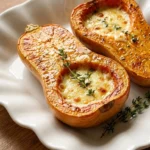
- Transfer one finished butternut squash half onto a white serving plate and add fresh thyme on top. Hold the portion at 45 degrees and slice slightly into the filling after resting for 5 minutes. Keep the natural uneven browned areas visible. The inside should show creamy layers with melted cheese and tender orange flesh. You’ll see irregular textures and golden edges from roasting. Cut too early and the warm filling may spread before serving. Rest 5 minutes before slicing, it allows the filling structure to settle.
Notes
Pro Tips:
- Choose butternut squash that feels heavy for its size and has firm skin. A 2-pound squash usually gives the best balance of tender flesh and sturdy roasted halves.
- Bake the squash cut-side up at 375°F because the cavity catches the filling later. Avoid over-roasting the first stage past 25 minutes or the shell may collapse.
- Mix the filling with room-temperature ricotta for about 5 minutes so the cheese spreads evenly. Cold ricotta can leave small lumps that don’t melt smoothly.
- Grate fresh parmesan from a block when possible because it melts better than pre-shredded cheese. You’ll notice a deeper aroma when the topping turns golden.
- Make the filling one day ahead and keep it covered for up to 24 hours. This saves time during holiday cooking without changing the final texture.
- Add fresh thyme after baking instead of before the final roast. The herb keeps a brighter flavor and won’t lose its aroma from prolonged heat.
Storage: Store any leftover Thanksgiving Butternut Squash in an airtight glass container and keep it in the refrigerator for up to 4 days. If you’d like to save it longer, you can freeze the baked squash for up to 2 months. Just wrap each half tightly with freezer-safe wrap, then place it in a sealed freezer bag. When you’re ready to enjoy it again, thaw it overnight in the fridge before reheating. Warm individual portions at 350°F for 12 to 15 minutes until the filling is heated through and the edges become slightly roasted again. For a fresh finishing touch, add a little sprinkle of parmesan before reheating. If the leftovers develop a sour smell, watery separation, or any unusual texture changes, it’s best to discard them.
- Prep Time: 15 minutes
- Cook Time: 30 minutes
- Category: Dinner
- Cuisine: American
Nutrition
- Serving Size: 350g
- Calories: 336
- Sugar: 3g
- Sodium: 1557mg
- Fat: 25g
- Carbohydrates: 27g
- Fiber: 7g
- Cholesterol: 60mg