

Seriously, no joke, these are the best patty pan squash savory pancakes. They’re the kind my family asks for every summer when the little scalloped squash start piling up. It’s a classic skillet recipe with simple and delicious ingredients. Grated squash is mixed with eggs, sharp cheddar, parsley and a lightly seasoned flour batter. Perfect with lemon wedges for breakfast, lunch or a quick dinner with something crisp on the side.

A batch of savory squash pancakes is one of my go-to easy breakfasts. Not only does it make a super satisfying meal, but it’s packed with vegetables and keeps me full for hours. Also, there aren’t any complicated methods or hard-to-find ingredients. And meal prep’s a cinch. I often make a batch on Sunday and reheat a few beside an Egg and Cheese Breakfast Sandwich on Monday or Tuesday.
With just a few basic ingredients probably already in the fridge and pantry, you can whip up a stack for brunch or tuck one into a sandwich or serve three with a salad. The crisp edges make them feel special, but the tender centers keep the whole thing cozy. And because patty pan squash has thin edible skin, there’s no peeling before you grate.
Ingredients
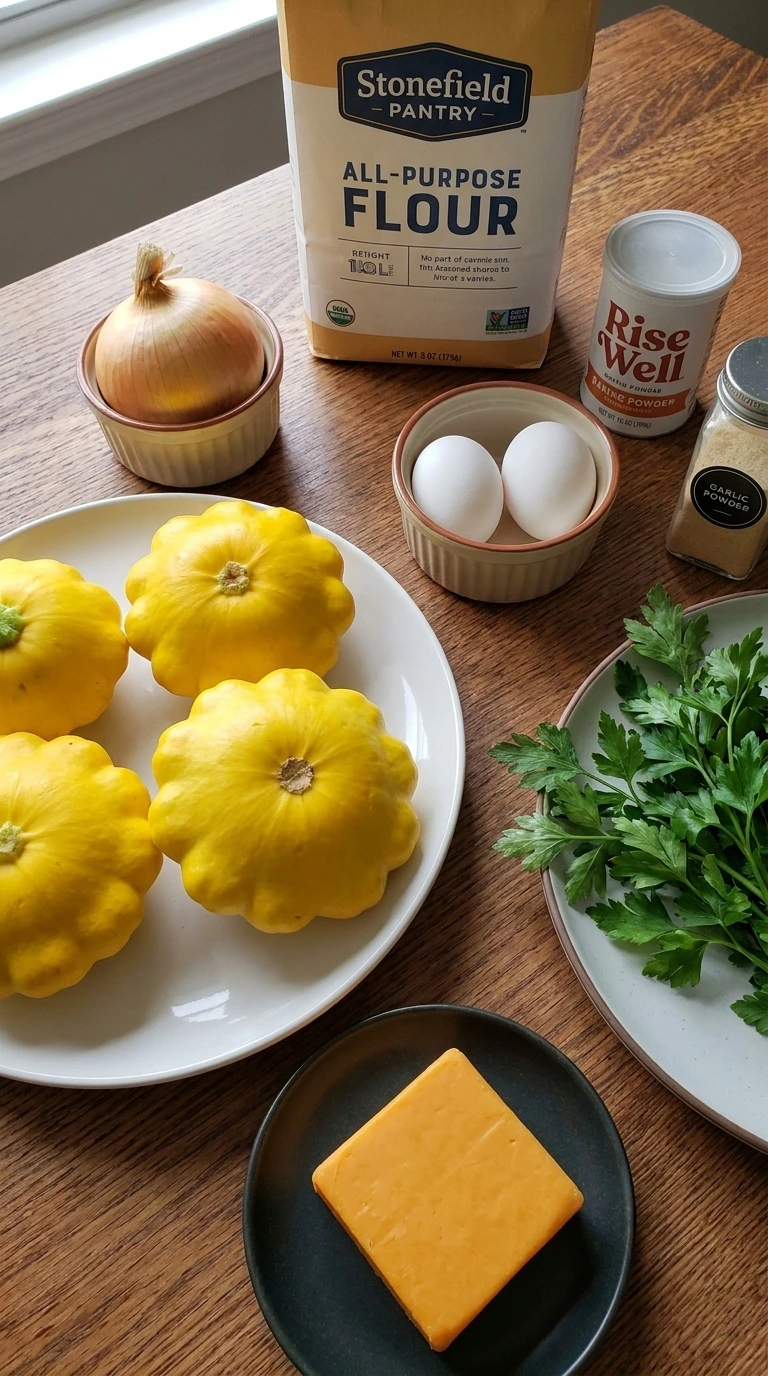
Here’s what I use for this recipe and you can always make substitutions if you prefer.
- yellow patty pan squash: Trimmed and grated on the large holes for coarse shreds that stay visible after frying.
- kosher salt: Divided to draw moisture from the squash and season the finished batter.
- yellow onion: Finely grated so it blends into the batter without leaving hard pieces.
- large egg: Beaten before folding to bind the squash shreds and flour.
- all-purpose flour: Spooned and leveled, with the extra amount reserved only if the batter stays loose.
- baking powder: Adds a small amount of lift so the pancakes aren’t heavy.
- sharp cheddar: Shredded finely to melt into the batter and create crisp savory edges.
- fresh flat-leaf parsley: Finely chopped and divided between the batter and final garnish.
- garlic powder: Distributes mild garlic flavor without adding extra moisture.
- smoked paprika: Adds warm color and a gentle smoky note.
- freshly ground black pepper: Adds a clean peppery finish without overpowering the squash.
- refined avocado oil: Used in small additions for frying because its neutral flavor and high smoke point suit 350°F heat.
- lemon: Zested for the batter and cut into eight wedges for serving.
Tools You’ll Need
- Large-hole box grater: A sturdy four-sided grater makes coarse squash shreds that keep their texture, while tiny holes create wet pulp that won’t crisp properly.
- Clean cotton kitchen towel: A tightly woven 24-inch towel wrings out the squash efficiently, while loose terry cloth traps shreds and leaves too much moisture behind.
- 4-quart mixing bowl: A wide 4-quart bowl gives room to fold without crushing the shreds, while a narrow bowl encourages overmixing and flour pockets.
- 12-inch cast-iron skillet: A heavy 12-inch skillet holds a steady 350°F surface for crisp crusts, while a thin pan hot-spots and burns the cheddar.
- Thin flexible spatula: A metal spatula about 3 inches wide slides under each crust cleanly, while a thick turner can tear the soft center during flipping.
Instructions
Step 1: Grate and squeeze the squash
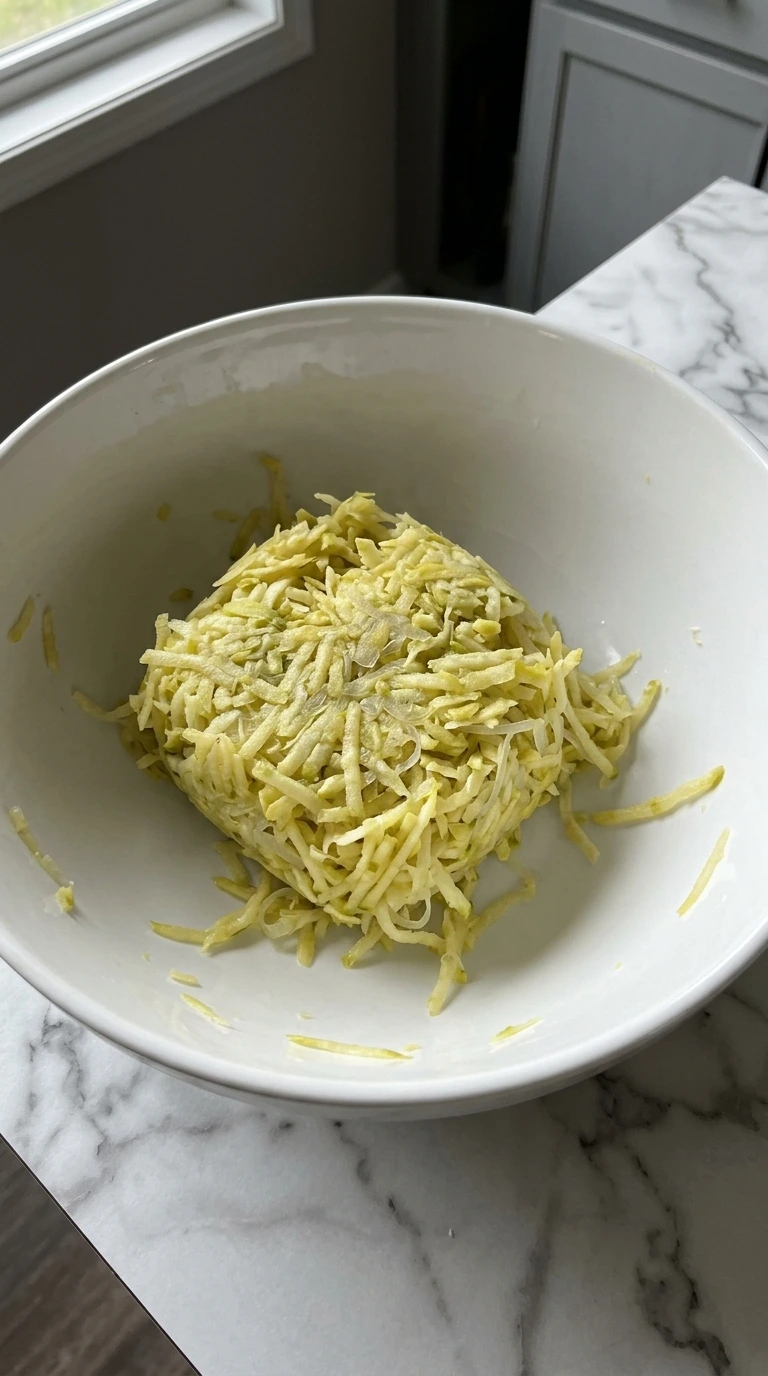
Use squash straight from a 40°F refrigerator so the flesh stays firm. Grate the trimmed patty pan squash and yellow onion with steady downward strokes. Toss the shreds with 3/4 teaspoon kosher salt and rest them for exactly 10 minutes. Then gather the mixture in a clean towel and twist hard for 60 seconds.
The volume should drop by about one-third. The shreds should look matte instead of glossy and they should clump when squeezed. You’ll hear liquid drip quickly at first and then slow to an occasional drop. Stop once the towel feels damp but the squash isn’t pulpy.
Skip this window and the pancakes spread into wet rings. Squeeze firmly because excess water weakens the flour and egg network.
Tip: Choose patty pan squash under 4 inches wide because larger squash can have tougher seeds and a wetter center.
Step 2: Fold the savory batter
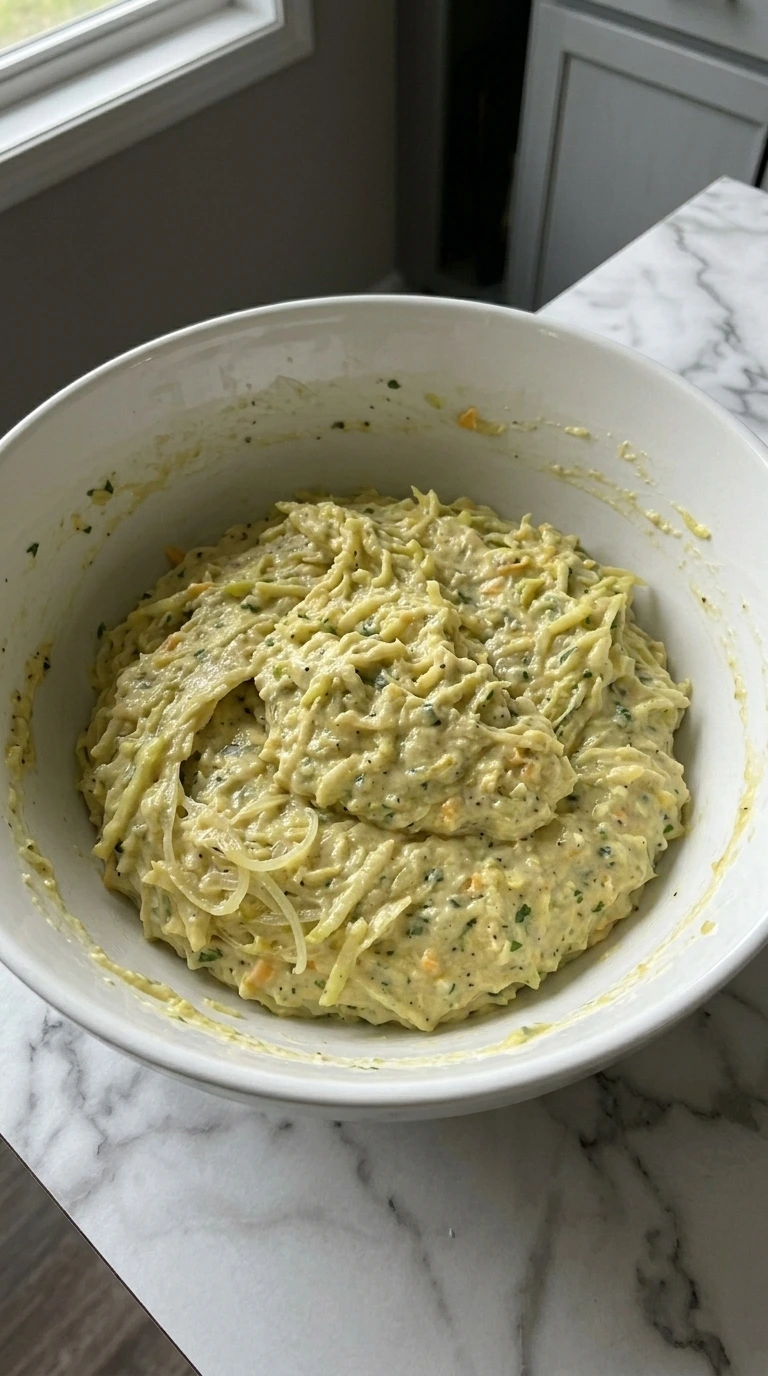
Keep the squeezed squash near 70°F and add the eggs, flour, baking powder and sharp cheddar. Add the parsley, lemon zest, garlic powder, smoked paprika, black pepper and remaining salt. Fold with a rubber spatula in a J-shaped motion for 45 seconds. Scrape the bowl once halfway through.
Then let the batter rest for 5 minutes before portioning. The batter should mound on the spatula and settle slowly rather than pour. Small cheddar pockets and green parsley flecks should stay visible through the pale yellow-green mixture. If it runs after 5 minutes, fold in 1 tablespoon flour and wait 2 more minutes.
Overmixing makes the pancakes tough. Resting hydrates the flour so each pancake holds its shape.
Tip: Measure flour with the spoon-and-level method because a packed 3/4 cup can add nearly 2 extra tablespoons.
Step 3: Brown the first sides
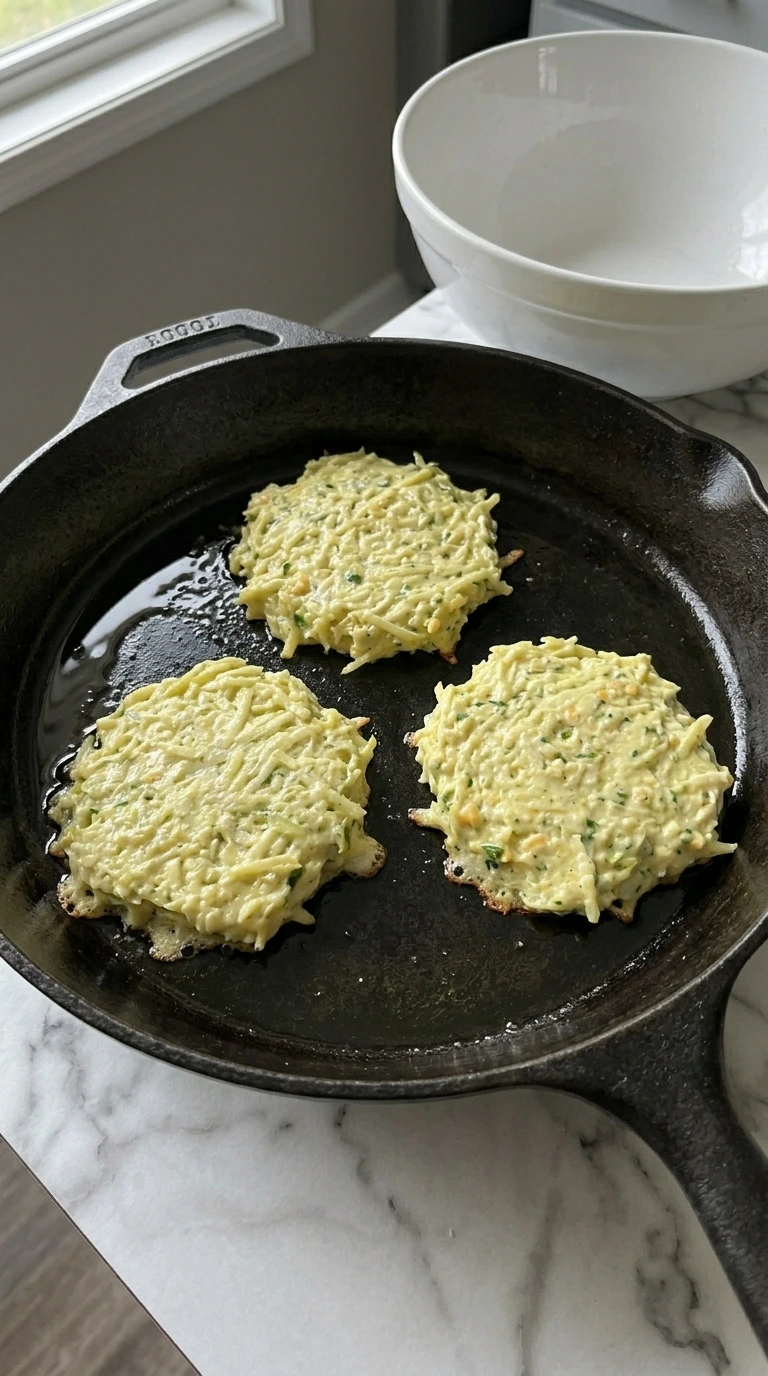
Set the skillet over medium heat, about 5 on a 10-dial, until the surface reaches 350°F. Add 1 tablespoon avocado oil and spoon in three 1/4-cup portions. Press each mound to a rough 4-inch round with uneven edges. Fry without moving for 3 to 4 minutes and leave at least 1 inch between pancakes.
The exposed tops should lose their wet shine while tiny bubbles open near the edges. Underneath, the crust should turn deep golden with darker amber freckles and smell lightly nutty. (I crowded four into the pan once, the centers steamed. They stayed gummy.
) Go past 4 minutes at 350°F and the bottoms taste bitter. Steady heat sets the center before the crust overdarkens.
Tip: Wipe out dark crumbs after every second batch because burnt cheese bits can blacken the next pancakes in under 2 minutes.
Step 4: Flip and crisp the pancakes
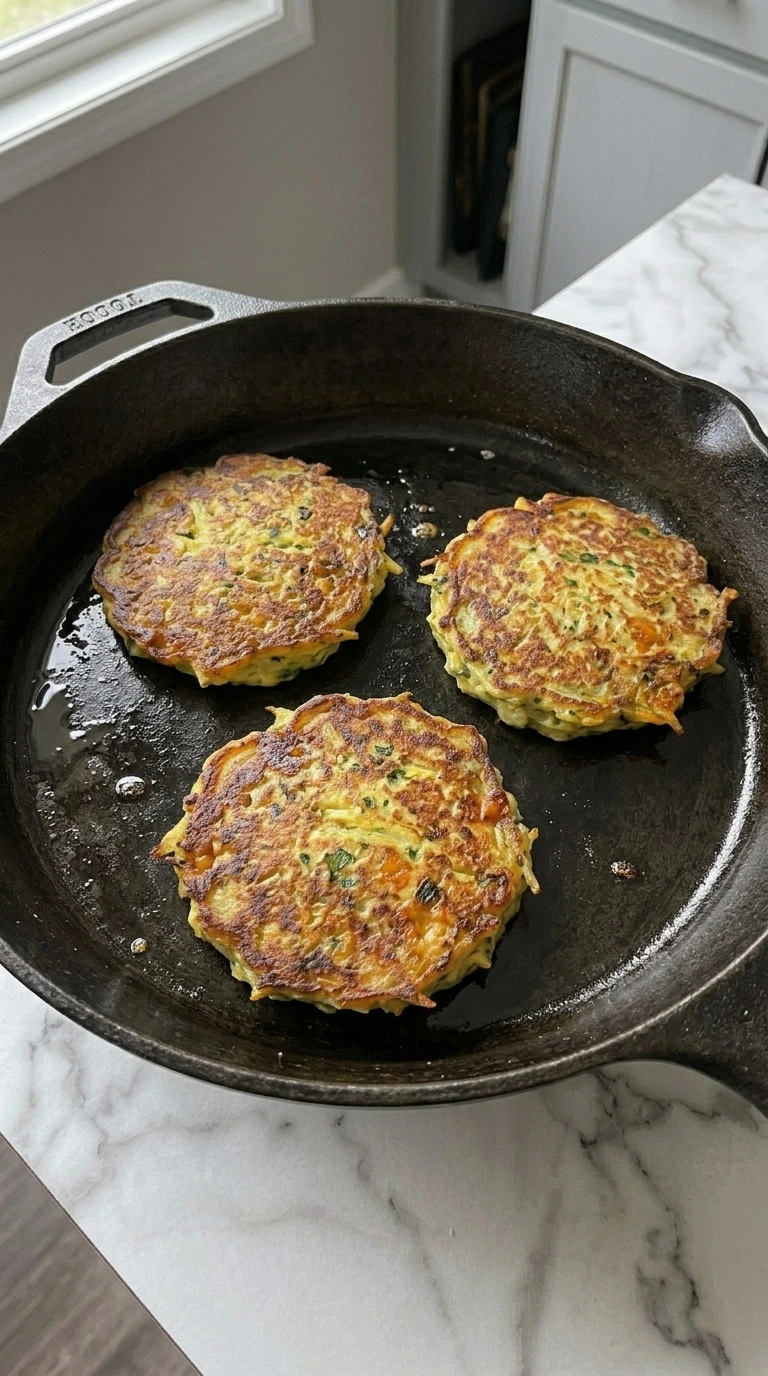
Slide a thin spatula fully under each pancake and flip in one quick motion. Shift the three pancakes toward the center where the heat is most even. Keep the skillet between 340°F and 350°F. Cook the second side for 2 to 3 minutes.
Press only once for 2 seconds to level any thick center. The second side should develop a mottled amber crust and the edges should feel crisp. The center should spring back gently and reach 160°F on an instant-read thermometer. If the pancake bends around the spatula, wait 30 seconds before lifting again.
Flip too early and the crust tears away. Full contact browns the underside while the egg network finishes setting.
Tip: Hold finished batches on a wire rack in a 225°F oven for no more than 20 minutes.
Step 5: Stack and finish with lemon
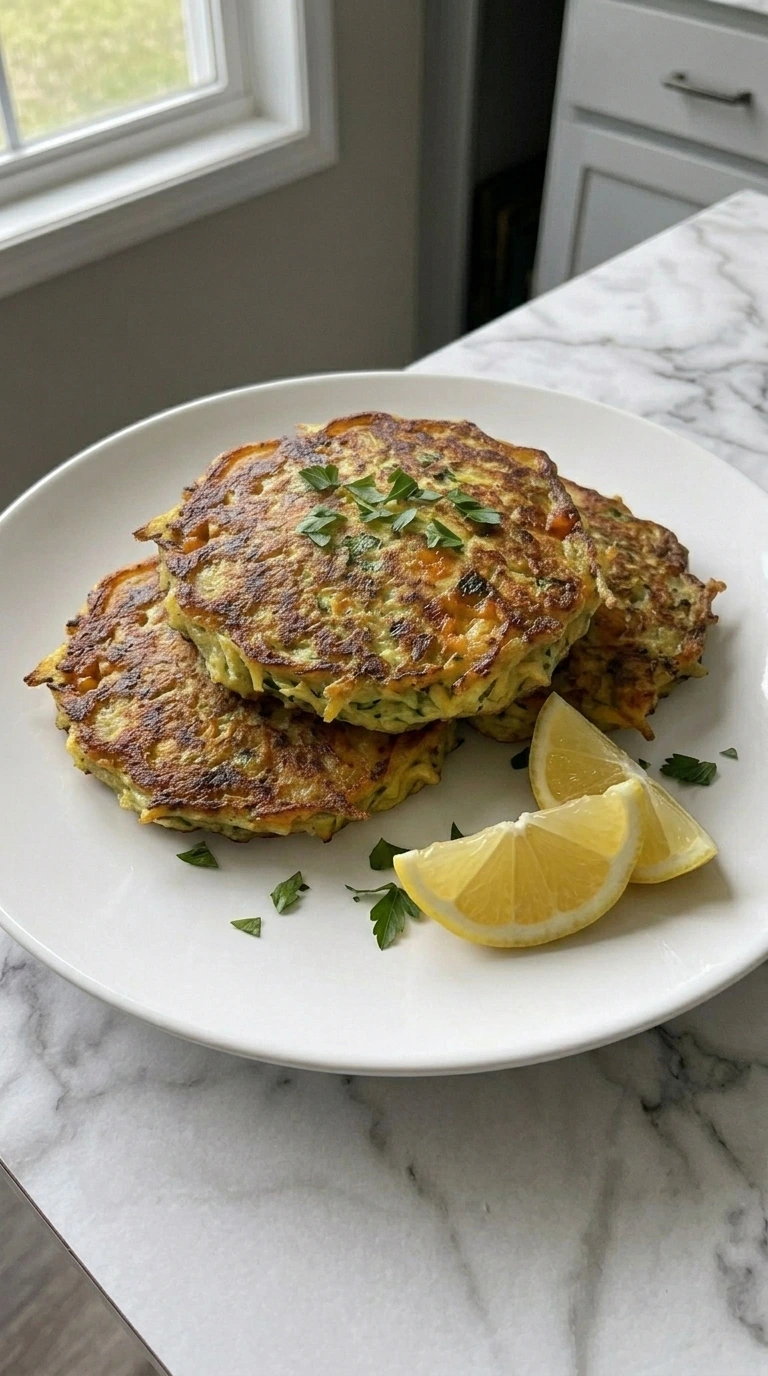
Let the pancakes stand for 2 minutes after frying while they remain above 140°F. Stack three pancakes slightly off-center on each plate so the crisp edges stay exposed. Tuck two lemon wedges beside each serving and scatter the reserved parsley over the top.
Keep the layers loose rather than pressing them into a tight tower. The stack should show uneven golden surfaces and bright yellow-green squash shreds between the layers. A little steam should escape from the center and the lemon should smell fresh when squeezed.
Stack them too soon and trapped steam softens every crust. Serve within 10 minutes for the sharpest contrast. Loose stacking protects the crisp edges from condensation.
Tip: Warm each plate for 5 minutes in a 200°F oven so the first pancake doesn’t cool before serving.
Pro Tips
- Choose patty pan squash between 2 and 4 inches wide because the skin stays tender and the seed cavity remains small.
- Weigh 1.5 pounds after trimming so the flour ratio stays accurate and the batter doesn’t turn dry.
- Squeeze until you collect about 1/3 cup liquid because visibly wet shreds will make the pancakes spread.
- Test the skillet at 350°F with an infrared thermometer or one teaspoon batter before cooking the first batch.
- Use exactly 1/4 cup batter per pancake and press to 4 inches so the center reaches 160°F before the crust darkens.
- Cook only three pancakes in a 12-inch skillet because crowding drops the heat and traps steam around the edges.
- Hold batches at 225°F for no longer than 20 minutes and keep them in one layer to protect the crust.
- Replace the sharp cheddar with 1/2 cup crumbled feta and add 2 tablespoons sliced scallions for a salty Mediterranean version.
- Add 1 finely chopped jalapeño and 1/4 teaspoon chipotle powder for a warmer pancake with a smoky finish.
- Fold in 1/2 cup thawed sweet corn and increase the flour by 2 tablespoons so the batter still holds together.
- Replace half the parsley with 1 tablespoon chopped basil for a softer summer-herb flavor that suits ripe tomato salad.
Storage Instructions
Cool the pancakes completely and refrigerate them within 2 hours. Layer them between parchment in a shallow airtight container and keep them for up to 4 days. For freezing, place the cold pancakes on a tray until firm for 1 hour. Then wrap each one and seal them in a freezer bag for up to 2 months.
The parchment keeps the tender centers from sticking together. Reheat refrigerated pancakes at 375°F for 8 to 10 minutes and turn them once at minute 5. Heat frozen pancakes at the same temperature for 12 to 14 minutes without thawing. A skillet at medium-low heat also works in 3 minutes per side.
Don’t microwave more than 45 seconds or the edges turn soft. Discard any pancake with a sour smell, slimy surface or gray patches.
Print
Patty Pan Squash Savory Pancakes
- Total Time: 45 minutes
- Yield: 4 servings 1x
Description
These Patty Pan Squash Savory Pancakes are an easy and healthy way to turn summer squash into a quick meal. Each pancake has crisp golden edges and a tender center with sharp cheddar and fresh parsley. The trick is salting and squeezing the squash before mixing, so the batter stays light instead of watery. They’re simple enough for a weeknight dinner and one of the best ideas for meal prep, brunch, a potluck or a casual party. Serve them hot with fresh lemon.
Ingredients
- 1.5 pounds yellow patty pan squash
- 1 teaspoon kosher salt
- 1/3 cup yellow onion
- 2 large egg
- 3/4 cup plus up to 2 tablespoons all-purpose flour
- 1/2 teaspoon baking powder
- 1/2 cup sharp cheddar
- 3 tablespoons fresh flat-leaf parsley
- 1 teaspoon garlic powder
- 1/2 teaspoon smoked paprika
- 1/4 teaspoon freshly ground black pepper
- 1/4 cup refined avocado oil
- 1 large lemon
Instructions
- Use squash straight from a 40°F refrigerator so the flesh stays firm. Grate the trimmed patty pan squash and yellow onion with steady downward strokes. Toss the shreds with 3/4 teaspoon kosher salt and rest them for exactly 10 minutes. Then gather the mixture in a clean towel and twist hard for 60 seconds. The volume should drop by about one-third. The shreds should look matte instead of glossy and they should clump when squeezed. You’ll hear liquid drip quickly at first and then slow to an occasional drop. Stop once the towel feels damp but the squash isn’t pulpy. Skip this window and the pancakes spread into wet rings. Squeeze firmly because excess water weakens the flour and egg network.
- Keep the squeezed squash near 70°F and add the eggs, flour, baking powder and sharp cheddar. Add the parsley, lemon zest, garlic powder, smoked paprika, black pepper and remaining salt. Fold with a rubber spatula in a J-shaped motion for 45 seconds. Scrape the bowl once halfway through. Then let the batter rest for 5 minutes before portioning. The batter should mound on the spatula and settle slowly rather than pour. Small cheddar pockets and green parsley flecks should stay visible through the pale yellow-green mixture. If it runs after 5 minutes, fold in 1 tablespoon flour and wait 2 more minutes. Overmixing makes the pancakes tough. Resting hydrates the flour so each pancake holds its shape.
- Set the skillet over medium heat, about 5 on a 10-dial, until the surface reaches 350°F. Add 1 tablespoon avocado oil and spoon in three 1/4-cup portions. Press each mound to a rough 4-inch round with uneven edges. Fry without moving for 3 to 4 minutes and leave at least 1 inch between pancakes. The exposed tops should lose their wet shine while tiny bubbles open near the edges. Underneath, the crust should turn deep golden with darker amber freckles and smell lightly nutty. (I crowded four into the pan once, the centers steamed. They stayed gummy.) Go past 4 minutes at 350°F and the bottoms taste bitter. Steady heat sets the center before the crust overdarkens.
- Slide a thin spatula fully under each pancake and flip in one quick motion. Shift the three pancakes toward the center where the heat is most even. Keep the skillet between 340°F and 350°F. Cook the second side for 2 to 3 minutes. Press only once for 2 seconds to level any thick center. The second side should develop a mottled amber crust and the edges should feel crisp. The center should spring back gently and reach 160°F on an instant-read thermometer. If the pancake bends around the spatula, wait 30 seconds before lifting again. Flip too early and the crust tears away. Full contact browns the underside while the egg network finishes setting.
- Let the pancakes stand for 2 minutes after frying while they remain above 140°F. Stack three pancakes slightly off-center on each plate so the crisp edges stay exposed. Tuck two lemon wedges beside each serving and scatter the reserved parsley over the top. Keep the layers loose rather than pressing them into a tight tower. The stack should show uneven golden surfaces and bright yellow-green squash shreds between the layers. A little steam should escape from the center and the lemon should smell fresh when squeezed. Stack them too soon and trapped steam softens every crust. Serve within 10 minutes for the sharpest contrast. Loose stacking protects the crisp edges from condensation.
Notes
Pro Tips:
- Choose patty pan squash between 2 and 4 inches wide because the skin stays tender and the seed cavity remains small.
- Weigh 1.5 pounds after trimming so the flour ratio stays accurate and the batter doesn’t turn dry.
- Squeeze until you collect about 1/3 cup liquid because visibly wet shreds will make the pancakes spread.
- Test the skillet at 350°F with an infrared thermometer or one teaspoon batter before cooking the first batch.
- Use exactly 1/4 cup batter per pancake and press to 4 inches so the center reaches 160°F before the crust darkens.
- Cook only three pancakes in a 12-inch skillet because crowding drops the heat and traps steam around the edges.
- Hold batches at 225°F for no longer than 20 minutes and keep them in one layer to protect the crust.
Storage: Cool the pancakes completely and refrigerate them within 2 hours. Layer them between parchment in a shallow airtight container and keep them for up to 4 days. For freezing, place the cold pancakes on a tray until firm for 1 hour. Then wrap each one and seal them in a freezer bag for up to 2 months. The parchment keeps the tender centers from sticking together. Reheat refrigerated pancakes at 375°F for 8 to 10 minutes and turn them once at minute 5. Heat frozen pancakes at the same temperature for 12 to 14 minutes without thawing. A skillet at medium-low heat also works in 3 minutes per side. Don’t microwave more than 45 seconds or the edges turn soft. Discard any pancake with a sour smell, slimy surface or gray patches.
- Prep Time: 15 minutes
- Cook Time: 30 minutes
- Category: Breakfast
- Cuisine: American
Nutrition
- Serving Size: 1 serving (of 4)
- Calories: 343
- Sugar: 6g
- Sodium: 878mg
- Fat: 30g
- Carbohydrates: 19g
- Fiber: 4g
- Cholesterol: 124mg
Frequently Asked Questions
Salt and squeeze the squash up to 24 hours ahead and refrigerate it in a covered container. Mix the batter no more than 2 hours before cooking because the onion and squash keep releasing water. Stir once before portioning and add 1 tablespoon flour only if the batter no longer mounds.
The squash probably needed a longer 10-minute salt rest or a firmer 60-second squeeze. The finished batter should sit in a mound and shouldn’t pour from the spoon. Fold in flour 1 tablespoon at a time and wait 2 minutes before deciding whether it needs more.
Use 3/4 cup of a cup-for-cup gluten-free baking blend that contains xanthan gum. Rest the batter for 8 minutes before frying because rice flour hydrates more slowly. Cook at 350°F and allow about 30 extra seconds on the first side if the edges still look pale.
Double every ingredient but keep each pancake at 1/4 cup. Use two 12-inch skillets or cook in eight small batches because an overcrowded pan loses heat. Hold finished pancakes at 225°F and serve within 20 minutes so the early batches stay crisp.
Freeze fully cooled pancakes in a single layer for 1 hour and then pack them between parchment for up to 2 months. Reheat from frozen at 375°F for 12 to 14 minutes and turn once. The oven restores the crust better than a microwave.
Serve three pancakes per person with eggs for breakfast or a crisp salad for lunch. For dinner, add roasted chicken and squeeze two lemon wedges over each stack. A cool yogurt dip also works, but keep it on the side so the crust doesn’t soften.
Final Thoughts
This is the kind of recipe I wish I had found years ago. It would’ve saved me so many stressful breakfast and dinner nights because the crisp edges and tender squash centers make it feel special.
But now that I’ve got it, I make it all summer and I think you’ll do the same. If you enjoyed this, check out my Chicken Fajita Bowl and Classic Turkey Club Sandwich on the blog and leave a comment because I read every single one and it really makes my day.