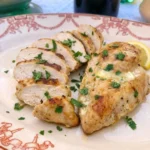


This Fig and Goat Cheese Stuffed Chicken recipe is packed with flavor and so easy to make. It’s a budget friendly recipe that you can make in 45 minutes or less! Make this sweet and savory chicken recipe for dinner tonight.
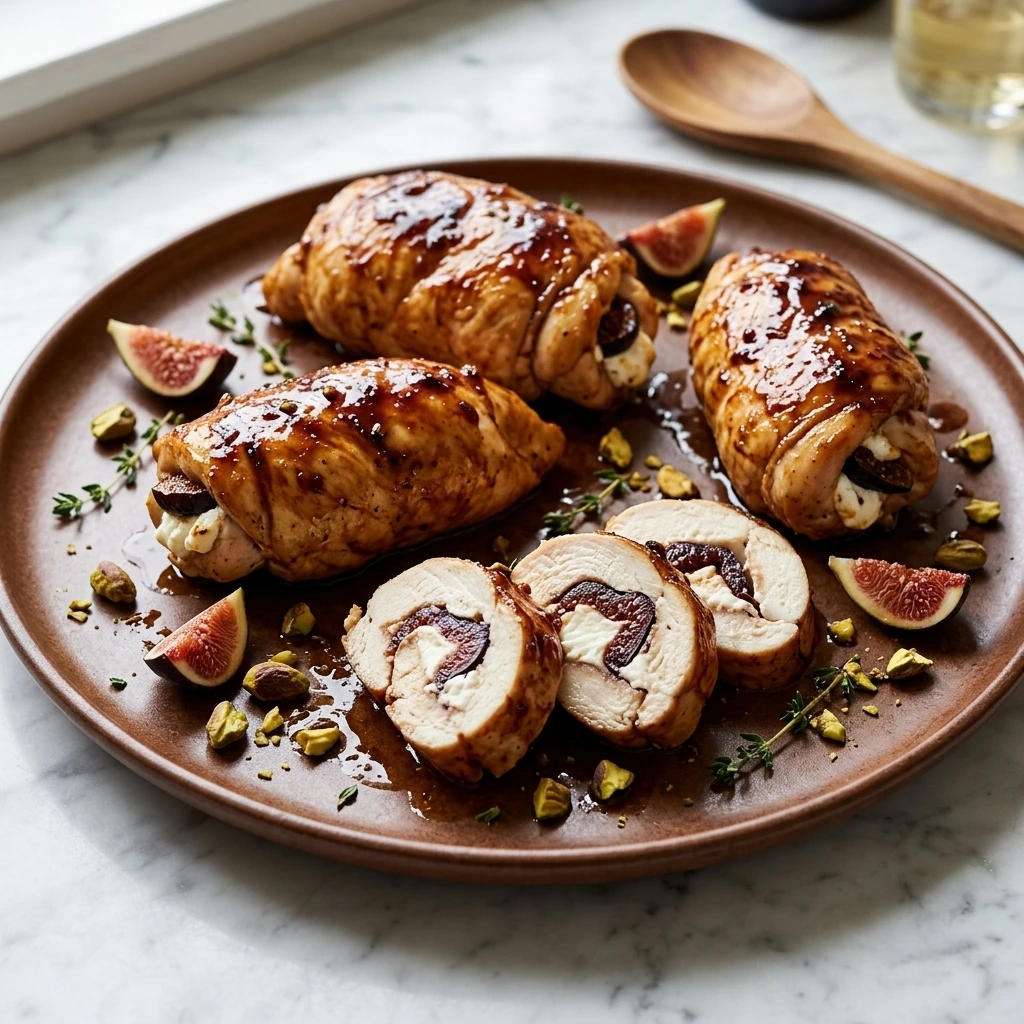
If you love sweet and savory recipes, you are going to love this Fig and Goat Cheese Stuffed Chicken recipe. It’s a low carb chicken recipe that is hearty, flavorful and addictive. With a glossy fig balsamic glaze like this, you’re going to want something to catch every single last drop.
If you’re looking for other easy chicken recipes like my stuffed chicken, why not also try this Chicken Fajita Bowl or Chicken Bacon Ranch Pasta. Both of these recipes are made for busy nights, making them perfect for a quick weeknight meal.
Ingredients
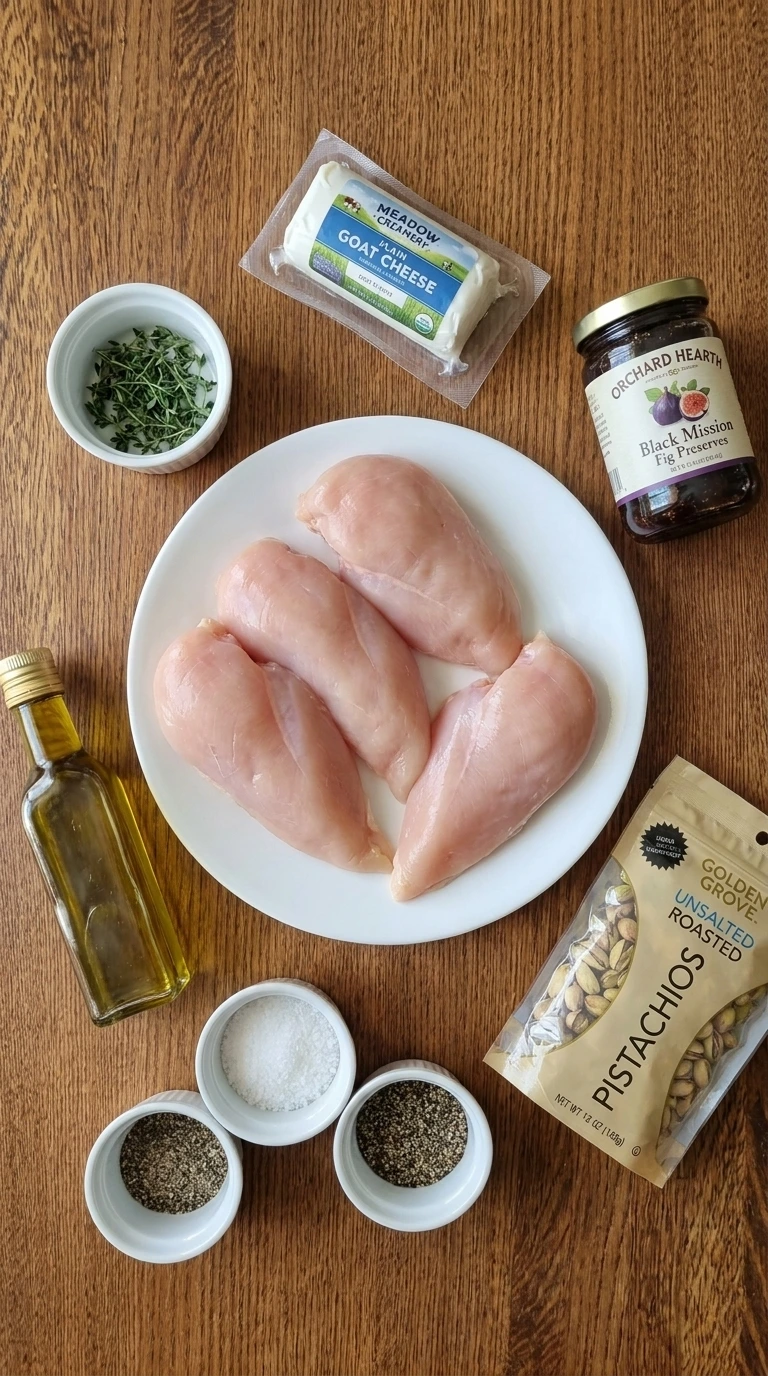
Here’s what I use for this recipe and you can always make substitutions if you prefer.
- Boneless skinless chicken breast: Keep chilled and cut a deep horizontal pocket into each breast without slicing through the far edge.
- Plain goat cheese: Soften for 10 minutes so it folds smoothly into the fig filling.
- Black Mission fig preserves: Divide evenly between the creamy filling and the glossy balsamic glaze.
- Unsalted roasted pistachios: Chop coarsely and divide between the filling and the final garnish.
- Fresh thyme leaves: Divide between the filling and the plated chicken for a fresh herbal finish.
- Diamond Crystal kosher salt: Season every side of the chicken just before it enters the skillet.
- Freshly ground black pepper: Scatter evenly over the chicken to balance the sweet fig preserves.
- Extra-virgin olive oil: Use enough to coat the skillet lightly and support even browning.
- Aged balsamic vinegar: Stir into the reserved fig preserves to create a dark tangy glaze.
- Fresh Black Mission fig: Quarter just before serving so the cut surfaces stay glossy and fresh.
Tools You’ll Need
- 12-inch oven-safe skillet: A heavy cast-iron or stainless skillet builds an even crust and moves safely into a 375°F oven, while a thin pan can scorch the fig glaze.
- Instant-read thermometer: A fast thermometer confirms the thickest breast reaches 165°F without repeated cutting, and a slow dial model can overshoot the target before settling.
- 8-inch chef’s knife: A sharp 8-inch blade cuts deep pockets and clean medallions, while a short dull knife tears the chicken and squeezes out the filling.
- Medium mixing bowl: A 2-quart bowl gives enough room to fold the filling evenly, while a shallow dish lets sticky fig preserves spill over the edge.
- Wooden toothpicks: Four sturdy wooden toothpicks hold the filled pockets closed during searing, while thin decorative picks can snap or loosen under heat.
Instructions
Step 1: Cut pockets and fold the filling
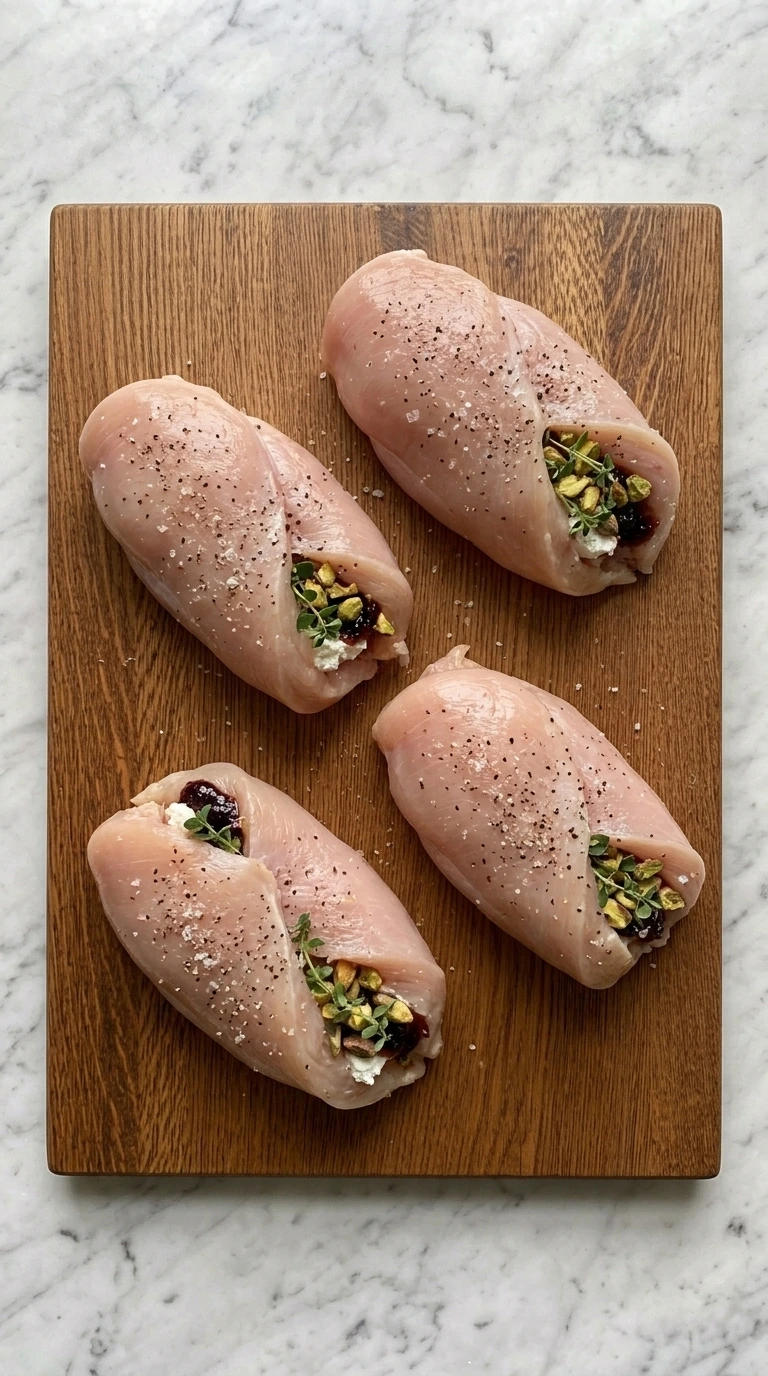
Keep 4 chicken breasts at 40°F or colder and finish this prep within 10 minutes. Cut a deep horizontal pocket through each breast without slicing through the far edge. Then fold 4 ounces plain goat cheese with 1/4 cup Black Mission fig preserves, 2 tablespoons unsalted roasted pistachios and 2 teaspoons fresh thyme leaves. Use a spoon to press one-quarter of the filling into each pocket.
Season every side with 1 teaspoon salt and 1/2 teaspoon pepper. Close each pocket firmly and secure the thickest opening with one wooden toothpick. The filled breasts should look plump and uneven, with small streaks of purple Black Mission fig preserves and white plain goat cheese visible. If the filling spills heavily, you’ve overpacked the pocket and it will burn during searing.
Keep the chicken cold and move straight to the skillet. Cold filling stays firm enough to remain inside.
Tip: Use chicken breasts between 6 and 8 ounces so all four finish within the same 4-minute window.
Step 2: Sear the stuffed chicken
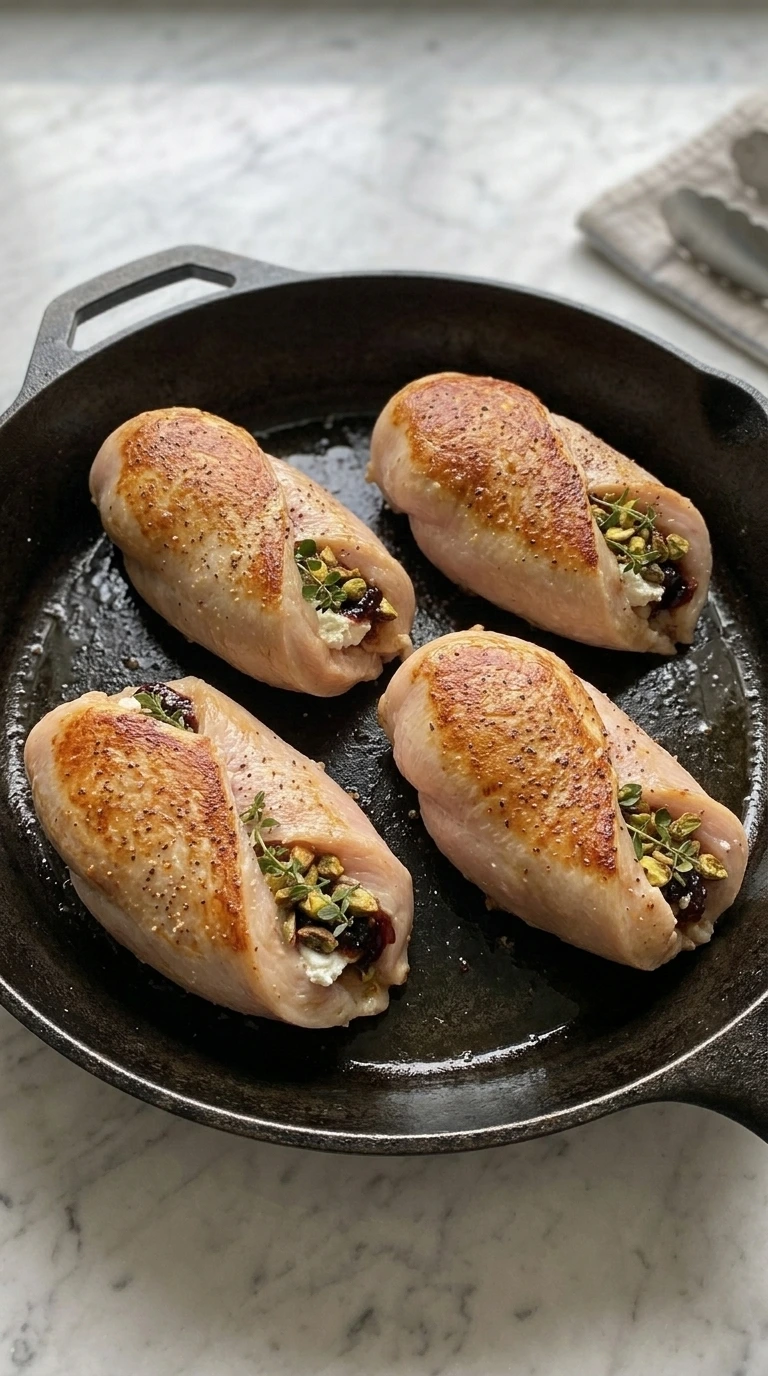
Heat 1 tablespoon extra-virgin olive oil in a 12-inch oven-safe skillet over medium-high heat for 2 minutes. Use about 7 on a 10-dial. Add all 4 stuffed breasts seam-side up, leaving uneven gaps between them. Sear without moving for 2 to 3 minutes.
Turn each piece once and sear the second side for another 2 minutes. You should hear a steady sharp sizzle, and the first side should develop a deep golden crust. The centers will still look pale at the edges, which is expected. If the pan smokes before minute 2, reduce the heat one notch or the Black Mission fig filling may scorch.
Don’t press the chicken, because that pushes the filling out. High heat builds flavor before the oven finishes the center.
Tip: Choose a heavy skillet at least 12 inches wide, because crowding traps steam and leaves the crust pale.
Step 3: Glaze and finish in the oven
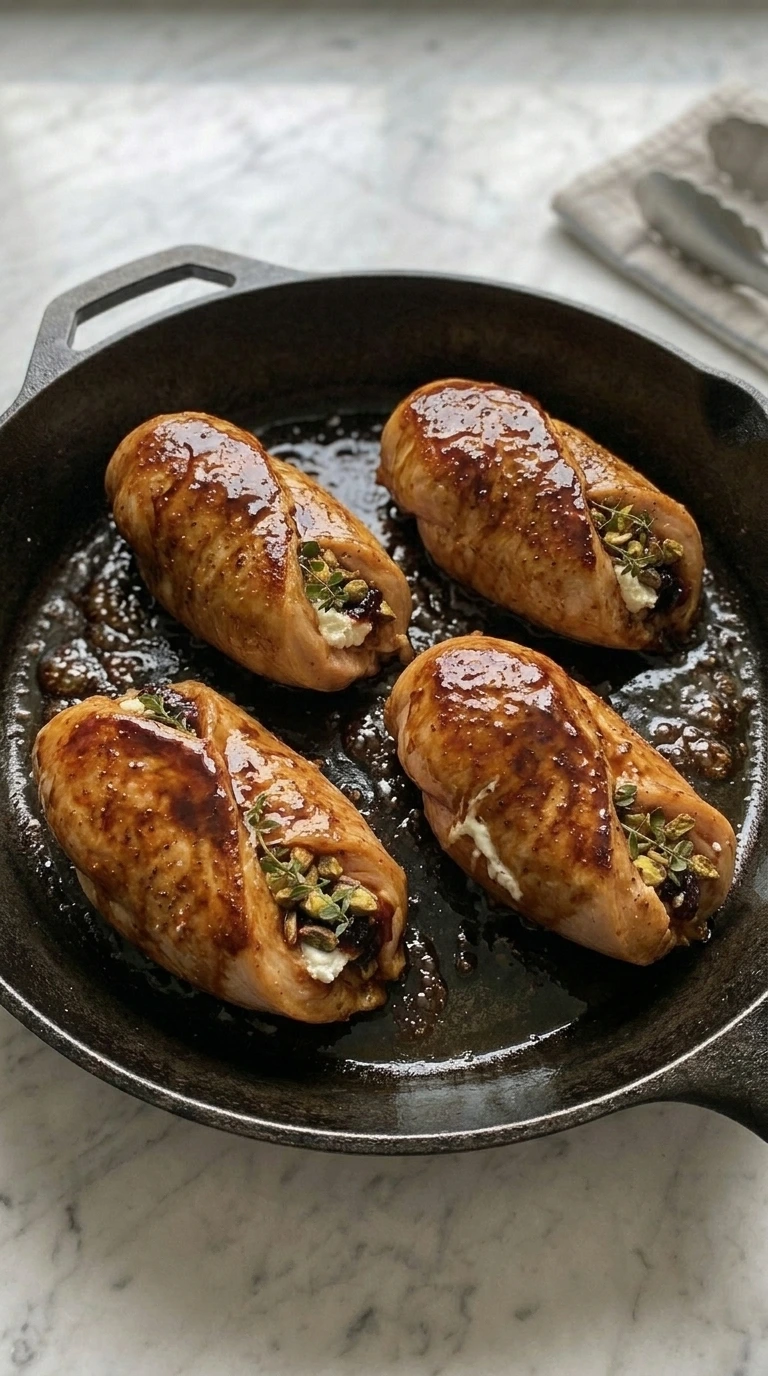
Lower the burner to medium-low, about 3 on a 10-dial. Stir the remaining 1/4 cup Black Mission fig preserves with 2 tablespoons aged balsamic vinegar in the skillet’s open spaces. Cook for 45 seconds. Spoon the glaze over all 4 breasts, then transfer the skillet to a 375°F oven.
Bake for 18 to 22 minutes. (I tried 400°F first, the glaze darkened before the center reached temperature. 375°F is the fix. ) At minute 18, check the thickest breast with an instant-read thermometer.
The center must reach 165°F, and the glaze should look glossy mahogany with small bubbles at the edges. If you go past 170°F, the meat dries and the plain goat cheese separates. The balsamic smell should soften from sharp to fruity. Moderate oven heat cooks the center before the glaze burns.
Tip: Rotate the skillet 180 degrees at minute 10 if your oven browns more strongly near the back.
Step 4: Rest, slice and plate
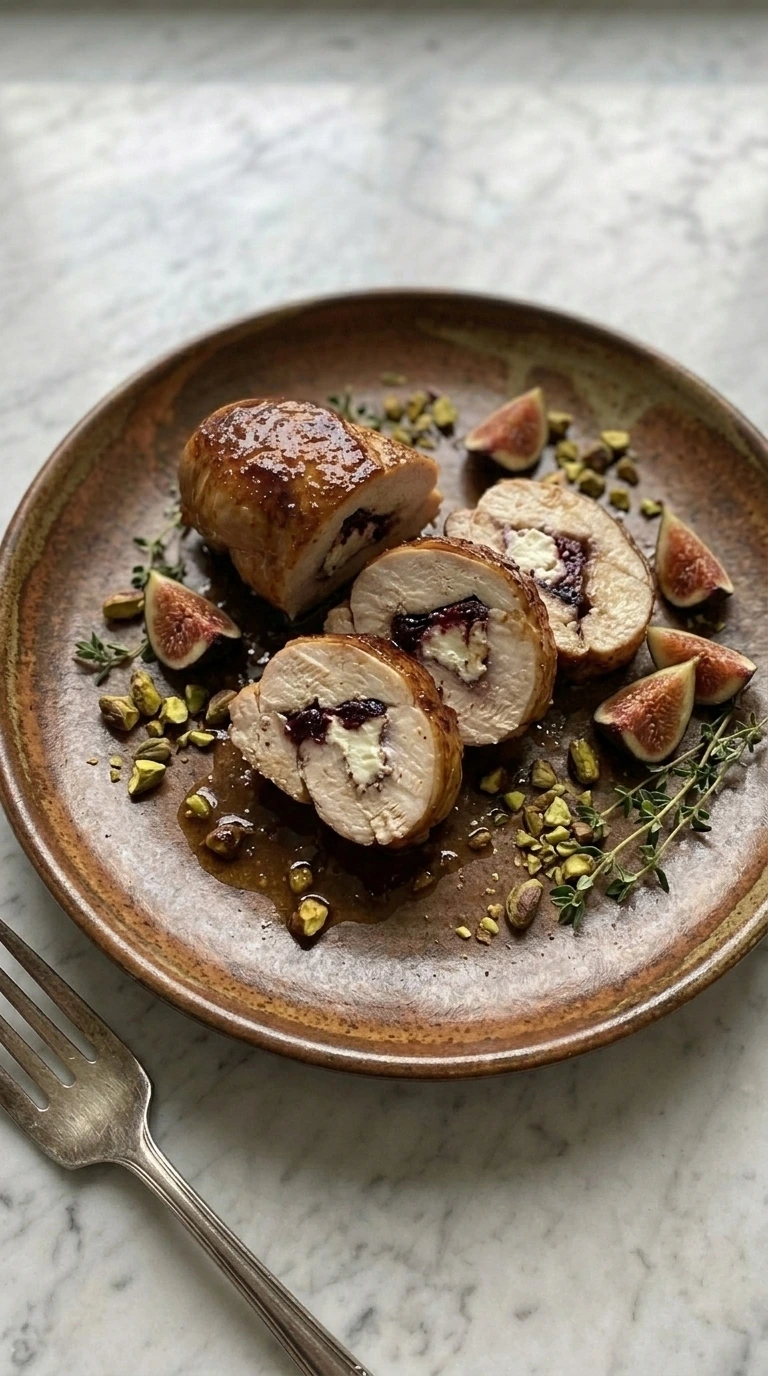
Move the 4 breasts from the skillet to a plate when they reach 165°F. Rest them for 7 minutes without cutting. Then remove every toothpick and slice one breast crosswise into 3 uneven medallions with a clean downward motion. Spoon 1 tablespoon of skillet glaze over that portion and keep the remaining breasts whole for serving.
Arrange 2 quartered fresh Black Mission figs beside the sliced portion. Scatter the remaining 2 tablespoons unsalted roasted pistachios and 1 teaspoon fresh thyme leaves over the sliced portion. The interior should look fully opaque and juicy, with soft white plain goat cheese and dark Black Mission fig ribbons holding inside. Slice before minute 7 and the juices will flood the plate.
Wait longer than 15 minutes and the glaze loses its shine. Resting lets the muscle fibers relax and retain moisture.
Tip: Warm the serving plate for 5 minutes in the turned-off oven so the goat cheese stays creamy longer.
Pro Tips
- Choose 6 to 8 ounce chicken breasts with a center thickness near 1 inch, because very thin pieces split before the filling fits.
- Chill the mixed filling for 15 minutes if your kitchen is above 75°F, because firmer goat cheese stays inside the pocket.
- Pat each breast dry for 20 seconds before seasoning, and the skillet will brown the surface instead of steaming it.
- Heat the empty skillet for 2 minutes at medium-high before adding oil, and look for a fluid shimmer rather than smoke.
- Insert the thermometer from the side into the thickest section, because a top-down angle can land directly in the hot filling.
- Rotate the skillet 180 degrees after 10 oven minutes if the back pieces darken faster than the front pieces.
- Warm leftover glaze for 30 seconds over low heat before spooning, and stop when it loosens enough to fall in a thick ribbon.
- Replace 2 tablespoons pistachios with chopped walnuts and add 1 teaspoon minced fresh rosemary for a deeper woodland flavor.
- Wrap each filled breast with 2 thin prosciutto slices before searing, then reduce the kosher salt to 1/2 teaspoon.
- Swap the fig preserves for apricot preserves and the goat cheese for 4 ounces feta to create a brighter Mediterranean version.
- Add 1 packed cup baby spinach to the filling after wilting it for 2 minutes and squeezing it completely dry.
Storage Instructions
Refrigerate leftover stuffed chicken within 2 hours and keep it in a shallow airtight glass container for up to 3 days. Store whole breasts when possible, because sliced edges lose moisture faster. Freeze cooled whole breasts individually in parchment and then in a freezer bag for up to 2 months.
Freeze the glaze in a small sealed cup beside the chicken rather than directly over it. Thaw frozen chicken overnight in the refrigerator. Reheat covered at 325°F for 18 to 22 minutes, and spoon 1 tablespoon glaze over each breast before warming.
For a single refrigerated portion, use 325°F for 12 to 15 minutes until the center reaches 165°F. Discard leftovers with a sour smell, a sticky surface or gray edges. Don’t reheat the same portion more than once.
Print
Fig and Goat Cheese Stuffed Chicken
- Total Time: 45 minutes
- Yield: 4 servings 1x
Description
Fig and Goat Cheese Stuffed Chicken is an easy dinner with juicy chicken breasts, tangy goat cheese, sweet fig preserves and crunchy pistachios. A quick sear builds a golden crust while a simple balsamic glaze turns glossy and fragrant in the oven. The trick is resting the chicken before slicing, so the filling stays creamy and the meat stays moist. It’s one of the best healthy ideas for a weeknight dinner, meal prep, a holiday table or a small party.
Ingredients
- 4 breasts, 6 to 8 ounces each Boneless skinless chicken breast
- 4 ounces Plain goat cheese
- 1/2 cup Black Mission fig preserves
- 1/4 cup Unsalted roasted pistachios
- 1 tablespoon Fresh thyme leaves
- 1 teaspoon Diamond Crystal kosher salt
- 1/2 teaspoon Freshly ground black pepper
- 1 tablespoon Extra-virgin olive oil
- 2 tablespoons Aged balsamic vinegar
- 2 large Fresh Black Mission fig
Instructions
- Keep 4 chicken breasts at 40°F or colder and finish this prep within 10 minutes. Cut a deep horizontal pocket through each breast without slicing through the far edge. Then fold 4 ounces plain goat cheese with 1/4 cup Black Mission fig preserves, 2 tablespoons unsalted roasted pistachios and 2 teaspoons fresh thyme leaves. Use a spoon to press one-quarter of the filling into each pocket. Season every side with 1 teaspoon salt and 1/2 teaspoon pepper. Close each pocket firmly and secure the thickest opening with one wooden toothpick. The filled breasts should look plump and uneven, with small streaks of purple Black Mission fig preserves and white plain goat cheese visible. If the filling spills heavily, you’ve overpacked the pocket and it will burn during searing. Keep the chicken cold and move straight to the skillet. Cold filling stays firm enough to remain inside.
- Heat 1 tablespoon extra-virgin olive oil in a 12-inch oven-safe skillet over medium-high heat for 2 minutes. Use about 7 on a 10-dial. Add all 4 stuffed breasts seam-side up, leaving uneven gaps between them. Sear without moving for 2 to 3 minutes. Turn each piece once and sear the second side for another 2 minutes. You should hear a steady sharp sizzle, and the first side should develop a deep golden crust. The centers will still look pale at the edges, which is expected. If the pan smokes before minute 2, reduce the heat one notch or the Black Mission fig filling may scorch. Don’t press the chicken, because that pushes the filling out. High heat builds flavor before the oven finishes the center.
- Lower the burner to medium-low, about 3 on a 10-dial. Stir the remaining 1/4 cup Black Mission fig preserves with 2 tablespoons aged balsamic vinegar in the skillet’s open spaces. Cook for 45 seconds. Spoon the glaze over all 4 breasts, then transfer the skillet to a 375°F oven. Bake for 18 to 22 minutes. (I tried 400°F first, the glaze darkened before the center reached temperature. 375°F is the fix.) At minute 18, check the thickest breast with an instant-read thermometer. The center must reach 165°F, and the glaze should look glossy mahogany with small bubbles at the edges. If you go past 170°F, the meat dries and the plain goat cheese separates. The balsamic smell should soften from sharp to fruity. Moderate oven heat cooks the center before the glaze burns.
- Move the 4 breasts from the skillet to a plate when they reach 165°F. Rest them for 7 minutes without cutting. Then remove every toothpick and slice one breast crosswise into 3 uneven medallions with a clean downward motion. Spoon 1 tablespoon of skillet glaze over that portion and keep the remaining breasts whole for serving. Arrange 2 quartered fresh Black Mission figs beside the sliced portion. Scatter the remaining 2 tablespoons unsalted roasted pistachios and 1 teaspoon fresh thyme leaves over the sliced portion. The interior should look fully opaque and juicy, with soft white plain goat cheese and dark Black Mission fig ribbons holding inside. Slice before minute 7 and the juices will flood the plate. Wait longer than 15 minutes and the glaze loses its shine. Resting lets the muscle fibers relax and retain moisture.
Notes
Pro Tips:
- Choose 6 to 8 ounce chicken breasts with a center thickness near 1 inch, because very thin pieces split before the filling fits.
- Chill the mixed filling for 15 minutes if your kitchen is above 75°F, because firmer goat cheese stays inside the pocket.
- Pat each breast dry for 20 seconds before seasoning, and the skillet will brown the surface instead of steaming it.
- Heat the empty skillet for 2 minutes at medium-high before adding oil, and look for a fluid shimmer rather than smoke.
- Insert the thermometer from the side into the thickest section, because a top-down angle can land directly in the hot filling.
- Rotate the skillet 180 degrees after 10 oven minutes if the back pieces darken faster than the front pieces.
- Warm leftover glaze for 30 seconds over low heat before spooning, and stop when it loosens enough to fall in a thick ribbon.
Storage: Refrigerate leftover stuffed chicken within 2 hours and keep it in a shallow airtight glass container for up to 3 days. Store whole breasts when possible, because sliced edges lose moisture faster. Freeze cooled whole breasts individually in parchment and then in a freezer bag for up to 2 months. Freeze the glaze in a small sealed cup beside the chicken rather than directly over it. Thaw frozen chicken overnight in the refrigerator. Reheat covered at 325°F for 18 to 22 minutes, and spoon 1 tablespoon glaze over each breast before warming. For a single refrigerated portion, use 325°F for 12 to 15 minutes until the center reaches 165°F. Discard leftovers with a sour smell, a sticky surface or gray edges. Don’t reheat the same portion more than once.
- Prep Time: 15 minutes
- Cook Time: 30 minutes
- Category: Dinner
- Cuisine: Modern American
Nutrition
- Serving Size: 1 serving (of 4)
- Calories: 324
- Sugar: 21g
- Sodium: 799mg
- Fat: 21g
- Carbohydrates: 33g
- Fiber: 3g
- Cholesterol: 71mg
Frequently Asked Questions
Yes. Fill and secure the chicken up to 12 hours ahead, then keep it covered below 40°F. Let the skillet preheat while the chicken stays refrigerated, because cold filling leaks less when the surface meets the hot pan. Take it straight from the refrigerator to the skillet rather than letting it sit out.
Store cooked chicken in a shallow airtight container for up to 3 days. Refrigerate it within 2 hours of cooking, and keep the glaze in the same container so the sliced meat doesn’t dry around the edges. Use the oldest portion first and discard anything with a sticky surface.
Use 4 ounces full-fat block cream cheese and chill the mixed filling for 20 minutes. The center will taste milder and feel denser, so add 1 extra teaspoon fresh thyme leaves for more contrast against the sweet figs. Avoid whipped cream cheese because it loosens too quickly in the hot skillet.
The pocket was probably cut through the far edge or packed with more than one-quarter of the filling. Use one toothpick at the widest opening and sear seam-side up first for 2 to 3 minutes. That timing lets the outer proteins set before you flip the chicken.
Double every ingredient and use two separate 12-inch skillets, because eight breasts will steam in one pan. Bake both skillets at 375°F and start checking at minute 20, then confirm every thick piece reaches 165°F. Rotate the skillets between oven racks at minute 10 for even browning.
Serve it with roasted green beans, zucchini or a crisp salad to balance the sweet glaze. A warm grain also works, but keep the serving near 1/2 cup because the chicken already has a rich plain goat cheese center. Roasted potatoes are another good choice when you want a heartier plate.
Freeze whole cooked breasts for up to 2 months after cooling completely. Thaw overnight, cover loosely and reheat at 325°F for 18 to 22 minutes with 1 tablespoon glaze spooned over each breast. Check for 165°F in the center before serving, because thick portions warm more slowly.
Final Thoughts
If you try this recipe, I really hope you love it as much as my family does. The glossy fig glaze and tangy goat cheese have made it one of those dishes we just keep coming back to, no matter the season.
Drop a comment below and let me know how yours turned out. And if you’re looking for more easy dinner ideas, make sure to bookmark this page and try our Creamy Pasta Salad alongside it.
I’m always adding new recipes that are simple, satisfying and perfect for busy weeknights.