

This Raspberry Sweet Rolls recipe is an easy, comforting breakfast that comes together with soft homemade dough! With juicy raspberries, fluffy spirals and a bright lemon cream cheese glaze.
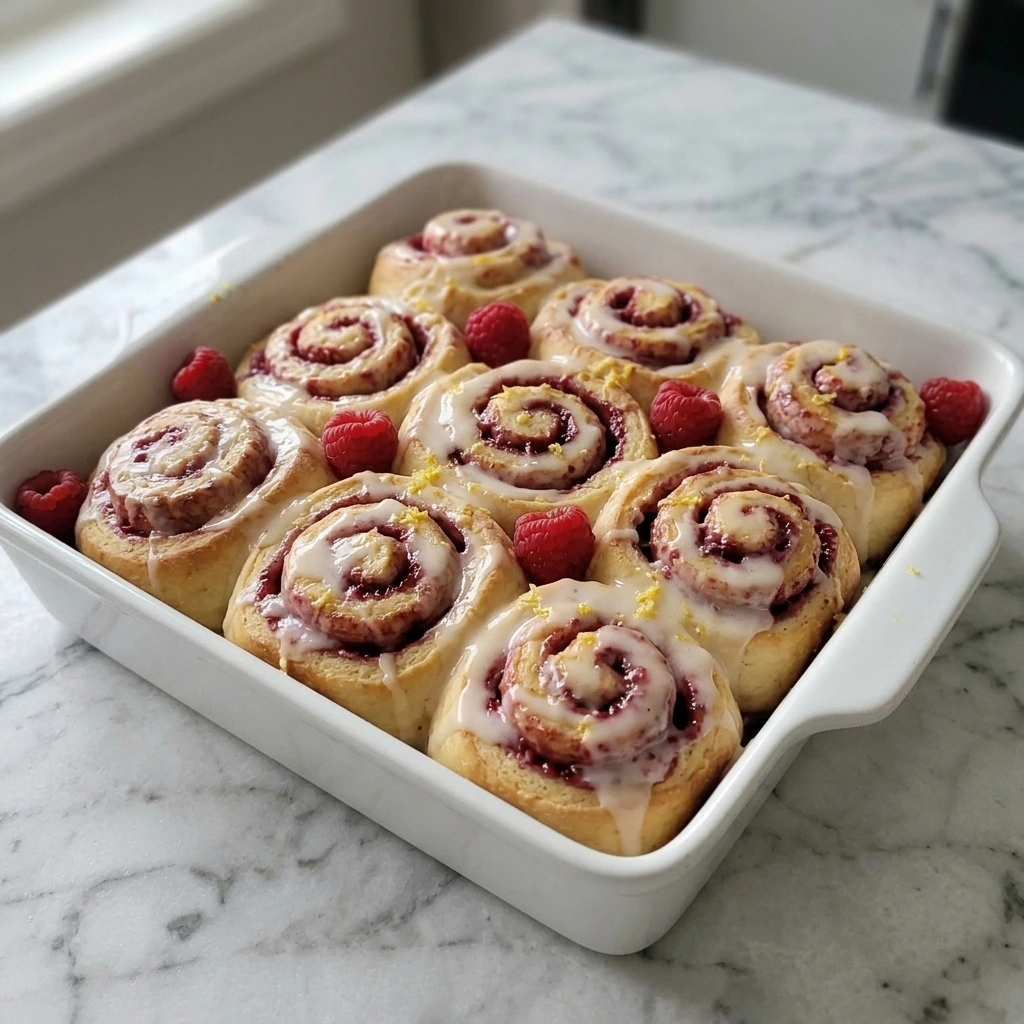
We love slow weekends because they mean that sweet breakfasts like these Raspberry Sweet Rolls and Homemade Cinnamon Rolls are back on the table. Comfort foods, especially those that feel fresh and homemade, are my favorite kinds of breakfasts.
Ingredients
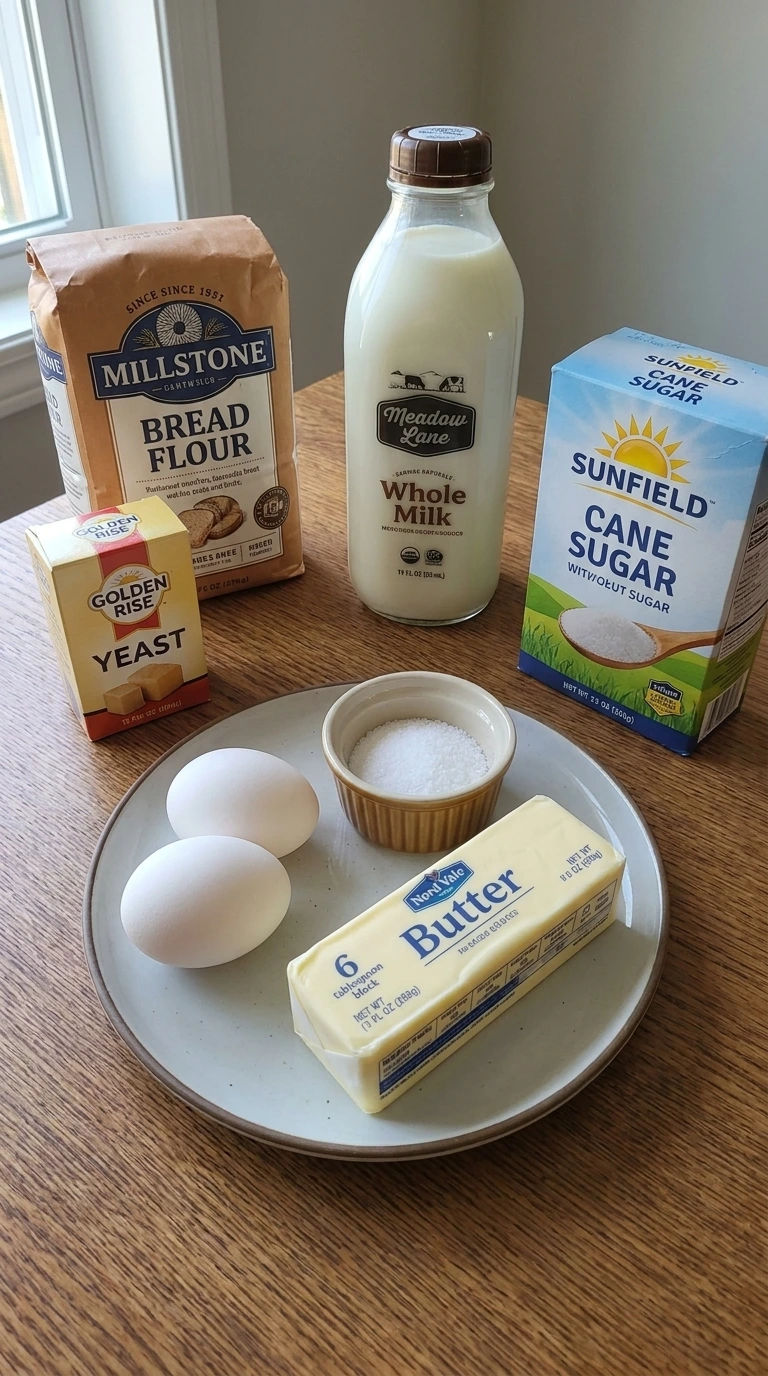
Here’s what I use for this recipe and you can always make substitutions if you prefer.
- Bread flour: Use 420 grams in the dough and reserve the extra amount for lightly dusting the rolling surface.
- Active dry yeast: Bloom it in warm whole milk so you can confirm the yeast is active before mixing.
- Whole milk: Warm the larger amount for the dough and reserve 2 tablespoons to loosen the glaze.
- Granulated cane sugar: Use the first amount in the dough and the second amount to sweeten and thicken the raspberry filling.
- Large egg: Bring both to room temperature so they blend into the enriched dough without chilling the butter.
- Unsalted European-style butter: Melt 4 tablespoons for the dough and soften 2 tablespoons for the filling layer.
- Fine sea salt: Use 1 teaspoon in the dough and a small pinch in the glaze to balance the sweetness.
- Avocado oil: Coat the proofing bowl lightly so the dough expands without sticking or drying.
- Fresh red raspberries: Cook 2 cups for the filling and reserve 1/4 cup for the final garnish.
- Cornstarch: Whisk it into the berries before heating so the filling thickens without dry lumps.
- Eureka lemon: Zest enough for 1 tablespoon and squeeze 2 tablespoons of juice for the filling, glaze and garnish.
- Full-fat block cream cheese: Soften it to 68°F so the glaze turns smooth instead of lumpy or loose.
- Powdered cane sugar: Sift it before mixing so the glaze stays glossy and free of hard sugar pockets.
- Pure vanilla extract: Add it to the glaze for a soft vanilla note behind the raspberry and lemon.
Tools You’ll Need
- 5-quart stand mixer: A 5-quart mixer kneads the enriched dough evenly, and a smaller weak motor may overheat before the gluten develops.
- Instant-read thermometer: A fast thermometer checks the 108°F milk, 205°F filling and 190°F roll center, while a slow dial model can miss each narrow window.
- 2-quart heavy-bottomed saucepan: A 2-quart heavy-bottomed saucepan thickens the raspberry filling without scorching, and a thin pan can burn the sugar before the berries soften.
- 9-inch square ceramic baking dish: A 9-inch square ceramic dish holds 9 rolls with room to expand, while a larger pan leaves dry gaps and a smaller pan underbakes the center.
- 18-inch rolling pin: An 18-inch rolling pin creates an even 14 by 18-inch rectangle, and a short pin can leave thick edges that bake unevenly.
- Unflavored dental floss: Unflavored dental floss cuts 9 clean spirals without crushing them, while a dull knife presses the raspberry filling out of the seam.
- Small offset spatula: A small offset spatula spreads the filling and glaze in thin layers, and a wide stiff spatula can tear the soft dough.
Instructions
Step 1: Knead the enriched dough
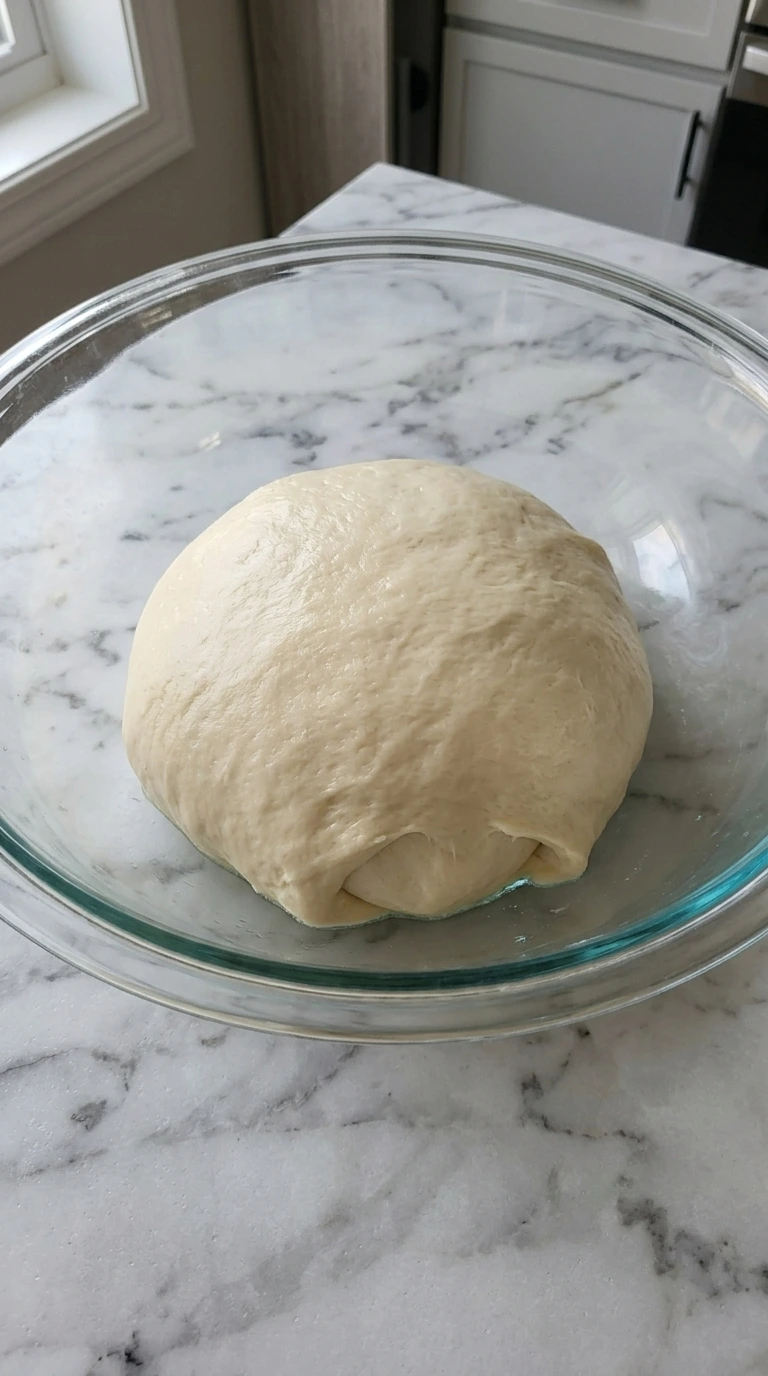
Warm the whole milk to 108°F and stir in the active dry yeast with 1 teaspoon of the granulated cane sugar. Let it stand for 5 minutes. Then add the remaining sugar, egg, egg yolk, melted unsalted European-style butter and fine sea salt. Add the bread flour gradually and knead at medium-low speed for 8 to 10 minutes.
Scrape the bowl halfway through. The dough should look smooth and pale with a soft sheen. It should feel tacky but shouldn’t cling heavily to your fingers. Stretch a small piece and look for a thin windowpane before it tears.
Milk above 120°F can weaken the yeast and extra flour makes dry rolls. Knead until elastic because strong gluten traps the yeast’s gas.
Tip: Measure the milk before warming it, since evaporation from an oversized cup can change the dough’s hydration by more than 1 tablespoon.
Step 2: Let the dough rise
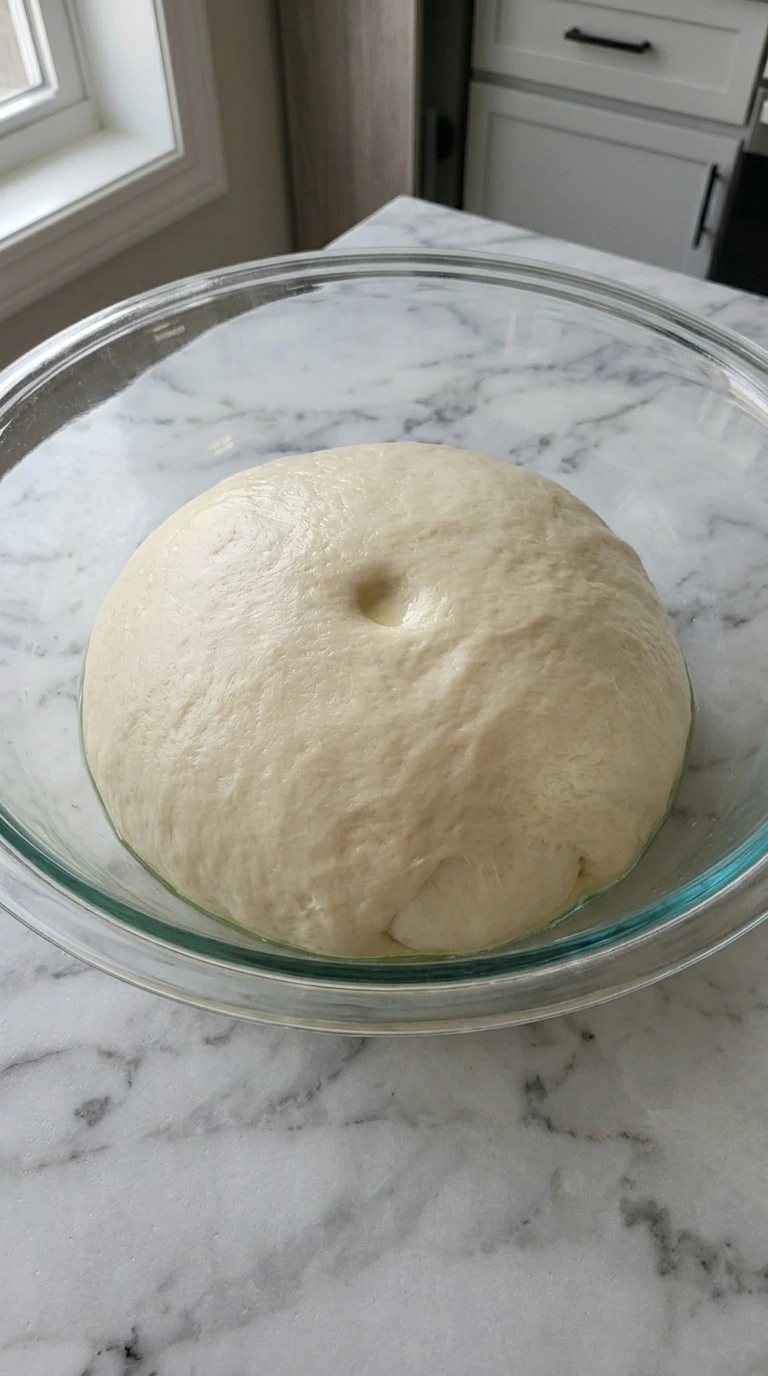
Coat the same bowl with 1 teaspoon of avocado oil and turn the dough once so every side gets a thin film. Cover it and let it rise at 78°F for 75 to 90 minutes. At minute 75, press one floured fingertip about 1/2 inch into the center.
The dent should return slowly and remain slightly visible. Next, look for a rounded dome and tiny bubbles just beneath the surface. The dough should nearly double and smell lightly sweet rather than sharply fermented.
Stop early and the rolls bake dense. Go much past 100 minutes and the structure can weaken before shaping. Steady warmth builds gas without weakening the dough’s structure.
Tip: Mark the bowl’s starting height with removable tape so you can judge a true doubling instead of guessing from the domed top.
Step 3: Cook the raspberry filling
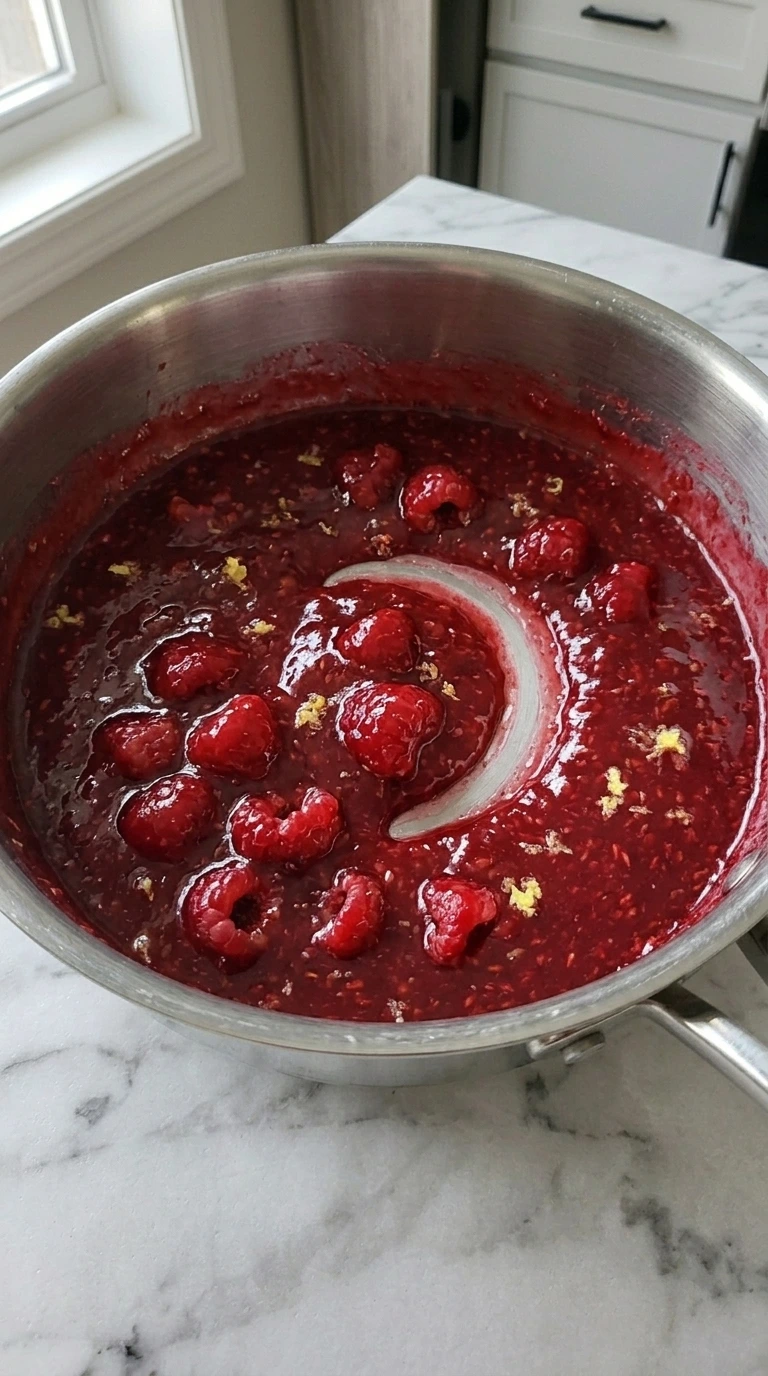
Combine 2 cups of fresh red raspberries with 1/3 cup granulated cane sugar, cornstarch, 1 tablespoon lemon juice and 1 teaspoon lemon zest. Cook over medium heat, about 5 on a 10-dial, for 6 to 8 minutes. Stir in slow circles and press only half the berries.
Bring the center to 205°F and then cool the filling for 20 minutes to about 75°F. The filling should turn glossy ruby and hold a clear trail for 2 seconds after each stir. You’ll smell bright raspberry and lemon while a few berry pieces stay visible.
Stop before 205°F and the filling stays watery. Spread it above 80°F and it melts the butter and leaks. Cooling sets the starch so the filling stays inside each spiral.
Tip: Use a wide saucepan if possible because the larger surface lets steam escape and shortens the reduction by about 2 minutes.
Step 4: Roll and slice the spirals
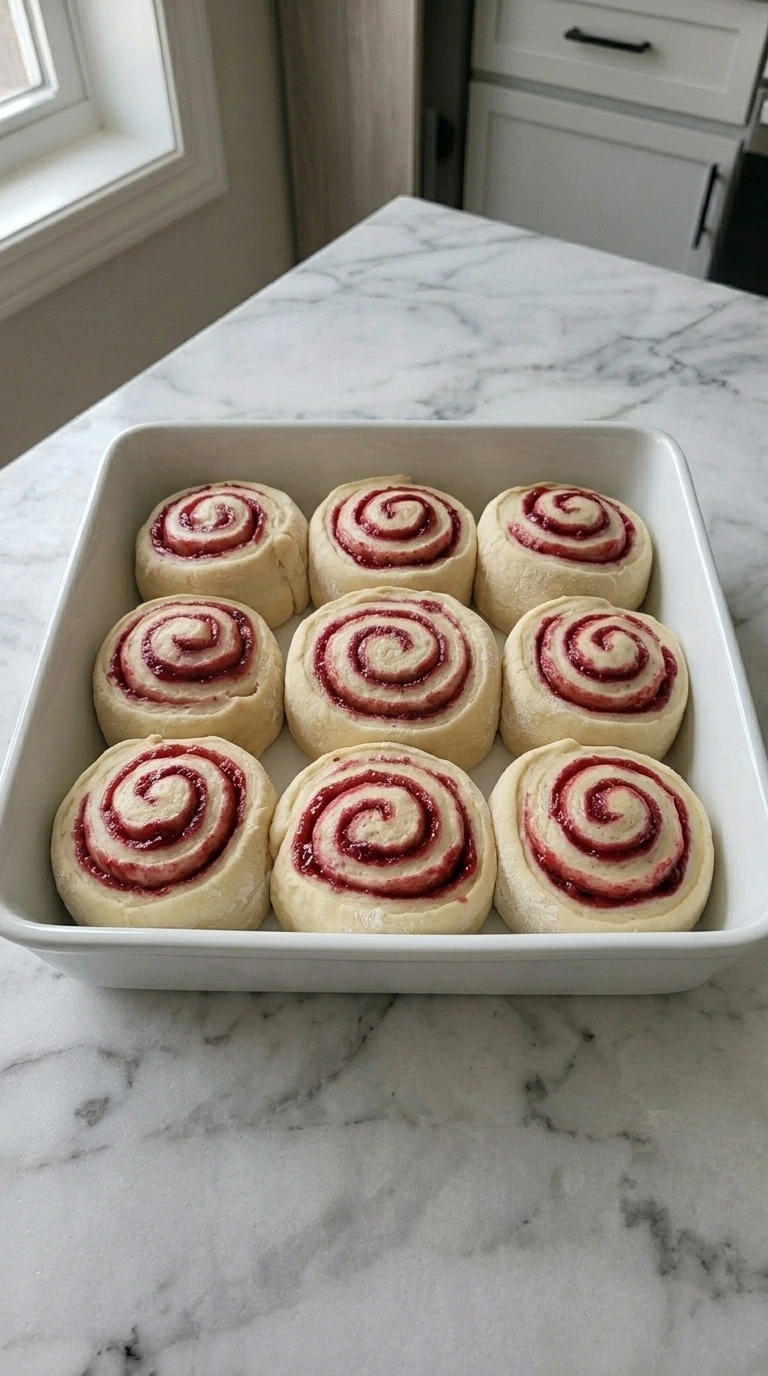
Press the risen dough three times to release large gas pockets. Dust the surface with up to 2 tablespoons bread flour. Roll it into a 14 by 18-inch rectangle and spread 2 tablespoons softened unsalted European-style butter across the surface. Add the cooled raspberry filling and leave a 1-inch border. Roll tightly from one long edge and pinch the seam.
Cut 9 pieces and arrange them in the baking dish. Proof at 78°F for 35 to 45 minutes. The spirals should look puffy and nearly touch in a loose 3 by 3 arrangement. A gentle fingertip dent should return halfway within 5 seconds. (I once sliced them with a knife and squeezed out half the filling.
Floss keeps the spirals round. ) Warm filling causes leaks and overproofed rolls flatten in the oven. A snug roll traps layers while the second rise softens the crumb.
Tip: Chill the rolled log for 8 minutes if the kitchen is above 80°F, which makes the 9 cuts cleaner without slowing the final proof.
Step 5: Bake until golden
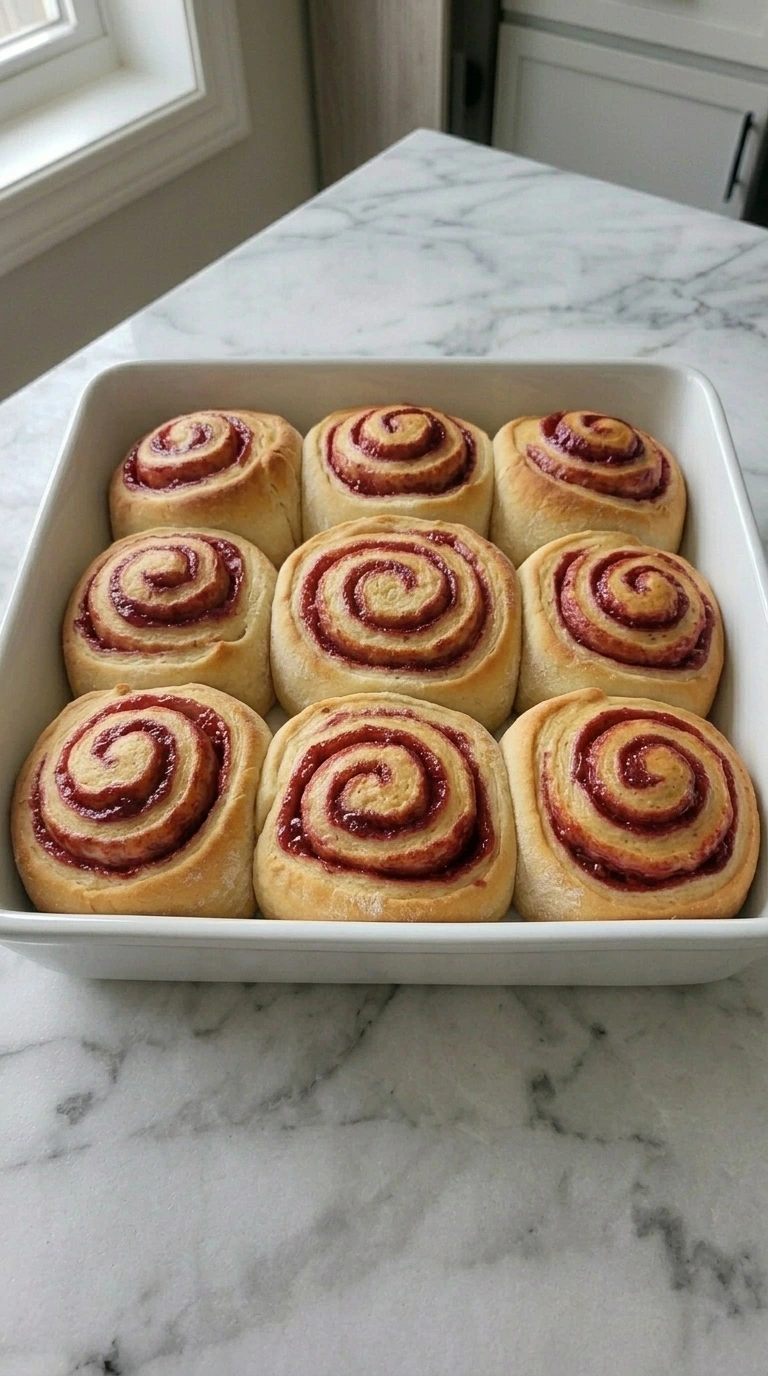
Bake the 9 rolls in a 350°F oven for 23 to 27 minutes. Rotate the dish once at minute 15. If the tops reach deep gold by minute 18, cover them loosely for the remaining time. Check the center roll at minute 23 and keep baking until it reaches 190°F.
Don’t pull the dish before the center coil feels set. The tops should be light golden with darker ridges and the raspberry seams should bubble gently. You’ll smell warm bread and tart berries. The center coil should spring back after a light touch.
Below 188°F the middle can stay gummy. Past 195°F the crumb starts drying. Moderate heat sets the centers before the berry sugars scorch.
Tip: Place the baking dish on the oven’s center rack so the tops and bottoms color evenly during the 23 to 27-minute bake.
Step 6: Glaze and plate one roll
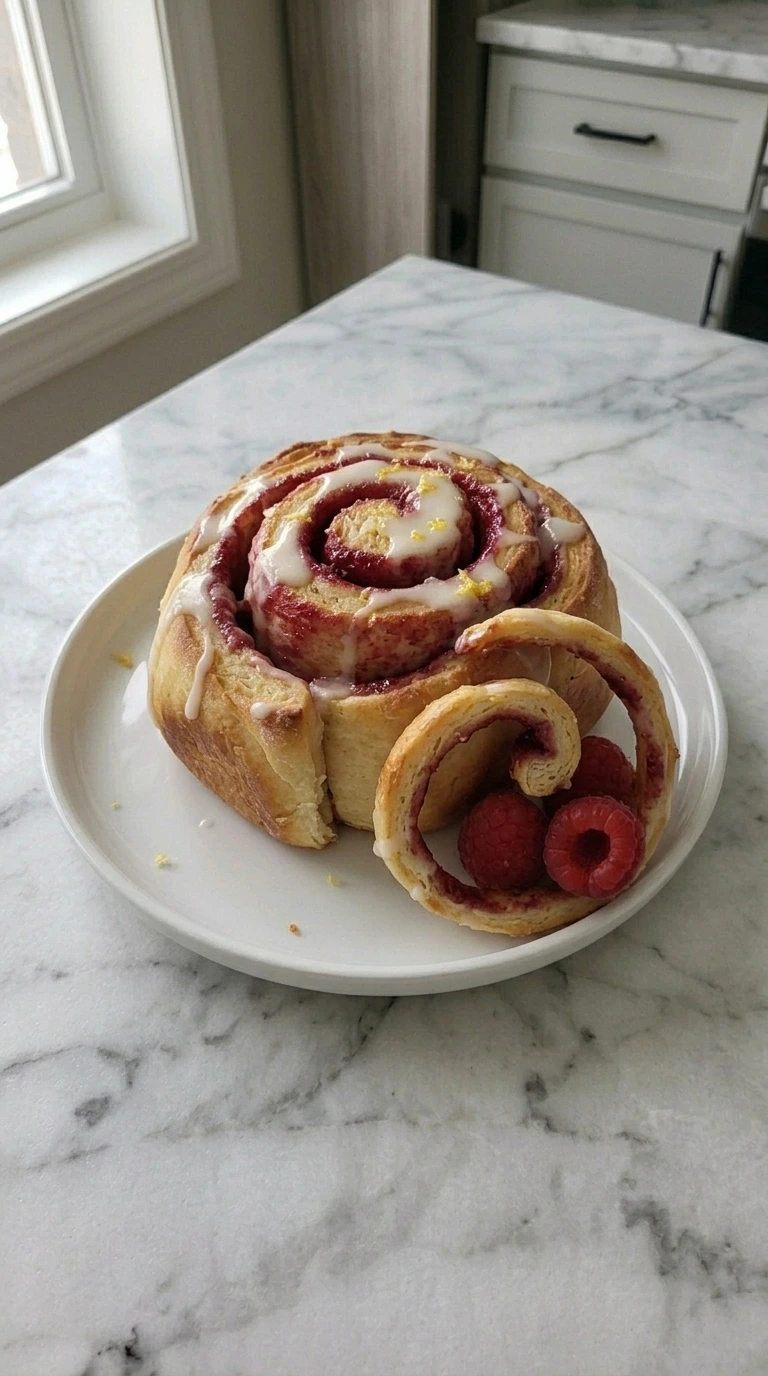
Beat the full-fat block cream cheese at 68°F for 30 seconds. Add the powdered cane sugar, 2 tablespoons whole milk, 1 tablespoon lemon juice, pure vanilla extract, 1 teaspoon lemon zest and one pinch fine sea salt. Beat for 90 seconds until smooth. Cool the rolls for 10 minutes and spread on the glaze.
Rest 5 minutes and add the reserved 1/4 cup raspberries and remaining zest. Plate one roll with 3 berries and gently open its front coil. The glaze should look glossy white and settle into soft drips without hiding the ruby spirals. It will loosen slightly on the warm roll but should still hold ridges.
Glaze before the 10-minute cooling window and most of it disappears into the pan. Wait longer than 25 minutes and it won’t melt into the grooves. Brief cooling keeps the glaze creamy instead of turning it transparent.
Tip: Sift the powdered cane sugar through a fine mesh before mixing because even one hard lump can leave white specks in the glaze.
Pro Tips
- Weigh the bread flour at 420 grams because a packed cup can add 30 grams and make the rolls dry.
- Use block cream cheese at 68°F. Tub-style cream cheese contains more water and can turn the glaze runny within 5 minutes.
- Cool the raspberry filling below 80°F before spreading it. Warmer filling melts the butter and pushes out during rolling.
- Cut the log into 9 pieces with unflavored dental floss. Each piece should measure about 2 inches wide before the second rise.
- Proof the dough near 78°F rather than on direct heat. Temperatures above 90°F can make the butter greasy and weaken the layers.
- Check the center roll at minute 23 with a thermometer. A 190°F center gives a soft crumb without a sticky raw spiral.
- Rub 1 teaspoon lemon zest into the powdered cane sugar for 20 seconds before mixing the glaze to release more citrus aroma.
- Replace 1 cup raspberries with 1 cup chopped blackberries for a darker mixed-berry filling with a slightly firmer bite.
- Add 1/2 teaspoon almond extract to the glaze and finish the rolls with 2 tablespoons toasted sliced almonds.
- Scatter 1/3 cup mini dark chocolate chips over the cooled raspberry filling before rolling for a chocolate raspberry version.
- Swap the Eureka lemon zest for 1 tablespoon orange zest and use orange juice in the glaze for a softer citrus flavor.
Storage Instructions
Store glazed rolls in a shallow airtight container in the refrigerator for up to 3 days. Place parchment between layers so the glaze doesn’t stick to another roll. For longer storage, freeze unglazed rolls individually for 1 hour and then wrap each one twice.
Keep them in a freezer bag for up to 2 months and freeze the glaze separately. Reheat one refrigerated roll at 300°F for 8 to 10 minutes under loose foil. Microwave reheating also works for 15 to 20 seconds, but the edges become softer.
Add 1 teaspoon of fresh glaze after warming if the surface looks dry. Let a frozen roll thaw overnight before reheating so the center warms evenly. Discard rolls with sour odors, gray spots or a wet and stringy crumb.
Print
Raspberry Sweet Rolls
- Total Time: 3 hours
- Yield: 9 servings 1x
Description
These easy Raspberry Sweet Rolls bring quick brunch ideas to the table with soft spirals, juicy berries and a simple lemon cream cheese glaze. The warm rolls smell like fresh bread and bright citrus while the centers stay fluffy and tender. The trick is cooling the raspberry filling before rolling, so every swirl stays clear instead of leaking away. They’re one of the best make-ahead treats for holiday brunch, a party or meal prep, with a healthy burst of real fruit.
Ingredients
- 3 1/2 cups plus up to 2 tablespoons Bread flour
- 2 1/4 teaspoons Active dry yeast
- 3/4 cup plus 2 tablespoons Whole milk
- 1/4 cup plus 1/3 cup Granulated cane sugar
- 1 large plus 1 large yolk Large egg
- 6 tablespoons Unsalted European-style butter
- 1 teaspoon plus 1 pinch Fine sea salt
- 1 teaspoon Avocado oil
- 2 1/4 cups Fresh red raspberries
- 1 tablespoon Cornstarch
- 2 large Eureka lemon
- 4 ounces Full-fat block cream cheese
- 1 cup Powdered cane sugar
- 1/2 teaspoon Pure vanilla extract
Instructions
- Warm the whole milk to 108°F and stir in the active dry yeast with 1 teaspoon of the granulated cane sugar. Let it stand for 5 minutes. Then add the remaining sugar, egg, egg yolk, melted unsalted European-style butter and fine sea salt. Add the bread flour gradually and knead at medium-low speed for 8 to 10 minutes. Scrape the bowl halfway through. The dough should look smooth and pale with a soft sheen. It should feel tacky but shouldn’t cling heavily to your fingers. Stretch a small piece and look for a thin windowpane before it tears. Milk above 120°F can weaken the yeast and extra flour makes dry rolls. Knead until elastic because strong gluten traps the yeast’s gas.
- Coat the same bowl with 1 teaspoon of avocado oil and turn the dough once so every side gets a thin film. Cover it and let it rise at 78°F for 75 to 90 minutes. At minute 75, press one floured fingertip about 1/2 inch into the center. The dent should return slowly and remain slightly visible. Next, look for a rounded dome and tiny bubbles just beneath the surface. The dough should nearly double and smell lightly sweet rather than sharply fermented. Stop early and the rolls bake dense. Go much past 100 minutes and the structure can weaken before shaping. Steady warmth builds gas without weakening the dough’s structure.
- Combine 2 cups of fresh red raspberries with 1/3 cup granulated cane sugar, cornstarch, 1 tablespoon lemon juice and 1 teaspoon lemon zest. Cook over medium heat, about 5 on a 10-dial, for 6 to 8 minutes. Stir in slow circles and press only half the berries. Bring the center to 205°F and then cool the filling for 20 minutes to about 75°F. The filling should turn glossy ruby and hold a clear trail for 2 seconds after each stir. You’ll smell bright raspberry and lemon while a few berry pieces stay visible. Stop before 205°F and the filling stays watery. Spread it above 80°F and it melts the butter and leaks. Cooling sets the starch so the filling stays inside each spiral.
- Press the risen dough three times to release large gas pockets. Dust the surface with up to 2 tablespoons bread flour. Roll it into a 14 by 18-inch rectangle and spread 2 tablespoons softened unsalted European-style butter across the surface. Add the cooled raspberry filling and leave a 1-inch border. Roll tightly from one long edge and pinch the seam. Cut 9 pieces and arrange them in the baking dish. Proof at 78°F for 35 to 45 minutes. The spirals should look puffy and nearly touch in a loose 3 by 3 arrangement. A gentle fingertip dent should return halfway within 5 seconds. (I once sliced them with a knife and squeezed out half the filling. Floss keeps the spirals round.) Warm filling causes leaks and overproofed rolls flatten in the oven. A snug roll traps layers while the second rise softens the crumb.
- Bake the 9 rolls in a 350°F oven for 23 to 27 minutes. Rotate the dish once at minute 15. If the tops reach deep gold by minute 18, cover them loosely for the remaining time. Check the center roll at minute 23 and keep baking until it reaches 190°F. Don’t pull the dish before the center coil feels set. The tops should be light golden with darker ridges and the raspberry seams should bubble gently. You’ll smell warm bread and tart berries. The center coil should spring back after a light touch. Below 188°F the middle can stay gummy. Past 195°F the crumb starts drying. Moderate heat sets the centers before the berry sugars scorch.
- Beat the full-fat block cream cheese at 68°F for 30 seconds. Add the powdered cane sugar, 2 tablespoons whole milk, 1 tablespoon lemon juice, pure vanilla extract, 1 teaspoon lemon zest and one pinch fine sea salt. Beat for 90 seconds until smooth. Cool the rolls for 10 minutes and spread on the glaze. Rest 5 minutes and add the reserved 1/4 cup raspberries and remaining zest. Plate one roll with 3 berries and gently open its front coil. The glaze should look glossy white and settle into soft drips without hiding the ruby spirals. It will loosen slightly on the warm roll but should still hold ridges. Glaze before the 10-minute cooling window and most of it disappears into the pan. Wait longer than 25 minutes and it won’t melt into the grooves. Brief cooling keeps the glaze creamy instead of turning it transparent.
Notes
Pro Tips:
- Weigh the bread flour at 420 grams because a packed cup can add 30 grams and make the rolls dry.
- Use block cream cheese at 68°F. Tub-style cream cheese contains more water and can turn the glaze runny within 5 minutes.
- Cool the raspberry filling below 80°F before spreading it. Warmer filling melts the butter and pushes out during rolling.
- Cut the log into 9 pieces with unflavored dental floss. Each piece should measure about 2 inches wide before the second rise.
- Proof the dough near 78°F rather than on direct heat. Temperatures above 90°F can make the butter greasy and weaken the layers.
- Check the center roll at minute 23 with a thermometer. A 190°F center gives a soft crumb without a sticky raw spiral.
- Rub 1 teaspoon lemon zest into the powdered cane sugar for 20 seconds before mixing the glaze to release more citrus aroma.
Storage: Store glazed rolls in a shallow airtight container in the refrigerator for up to 3 days. Place parchment between layers so the glaze doesn’t stick to another roll. For longer storage, freeze unglazed rolls individually for 1 hour and then wrap each one twice. Keep them in a freezer bag for up to 2 months and freeze the glaze separately. Reheat one refrigerated roll at 300°F for 8 to 10 minutes under loose foil. Microwave reheating also works for 15 to 20 seconds, but the edges become softer. Add 1 teaspoon of fresh glaze after warming if the surface looks dry. Let a frozen roll thaw overnight before reheating so the center warms evenly. Discard rolls with sour odors, gray spots or a wet and stringy crumb.
- Prep Time: 35 minutes
- Cook Time: 35 minutes
- Category: Breakfast
- Cuisine: American
Nutrition
- Serving Size: 1 serving (of 9)
- Calories: 337
- Sugar: 41g
- Sodium: 366mg
- Fat: 15g
- Carbohydrates: 51g
- Fiber: 5g
- Cholesterol: 95mg
Frequently Asked Questions
Yes. Shape the 9 rolls and refrigerate the covered baking dish for up to 14 hours. The next morning, let them stand at 72°F for 45 to 60 minutes until puffy. Then bake at 350°F for 23 to 27 minutes.
The rolls have their best texture during the first 2 refrigerated days. They remain usable for 3 days in an airtight container. Let one stand for 10 minutes before reheating because very cold cream cheese glaze can split under fast heat.
Use 2 cups of frozen red raspberries without thawing them. Cook the filling for 8 to 10 minutes instead of 6 to 8 minutes. Make sure the center reaches 205°F because extra berry water can loosen the finished roll spirals.
The filling was probably too warm or too thin when you rolled the dough. Cool it to 75°F and look for a trail that stays visible for 2 seconds. Also leave a 1-inch clean border so the filling can shift without spilling.
Double every ingredient by weight and divide the rolls between two 9-inch square dishes. Don’t crowd 18 rolls into one pan because the centers bake unevenly. Rotate both dishes at minute 15 and allow 2 to 4 extra baking minutes.
Thaw wrapped rolls overnight in the refrigerator. Warm them at 300°F for 10 to 12 minutes under loose foil and add fresh glaze afterward. Heating from solid frozen can dry the outside before the center reaches a soft serving temperature.
Final Thoughts
If you try this recipe, I really hope you love it as much as my family does. It has become one of those breakfasts we just keep coming back to, no matter the season.
Drop a comment below and let me know how yours turned out. And if you are looking for more easy breakfast ideas like Strawberry Cream Cheese Muffins or an Egg and Cheese Breakfast Sandwich, make sure to bookmark this page.
I am always adding new recipes that are simple, satisfying and perfect for busy mornings.