

Seriously, no joke, these are the best Fig Balsamic Pork Chops. It’s the kind of dinner families have made for cozy gatherings through the years. It’s a classic recipe with simple, delicious ingredients. Thick pork chops are paired with ripe figs, fresh thyme and a glossy balsamic pan sauce. Perfect with mashed potatoes or roasted green beans on the side. A skillet pork chop recipe is one of my go-to easy dinners.
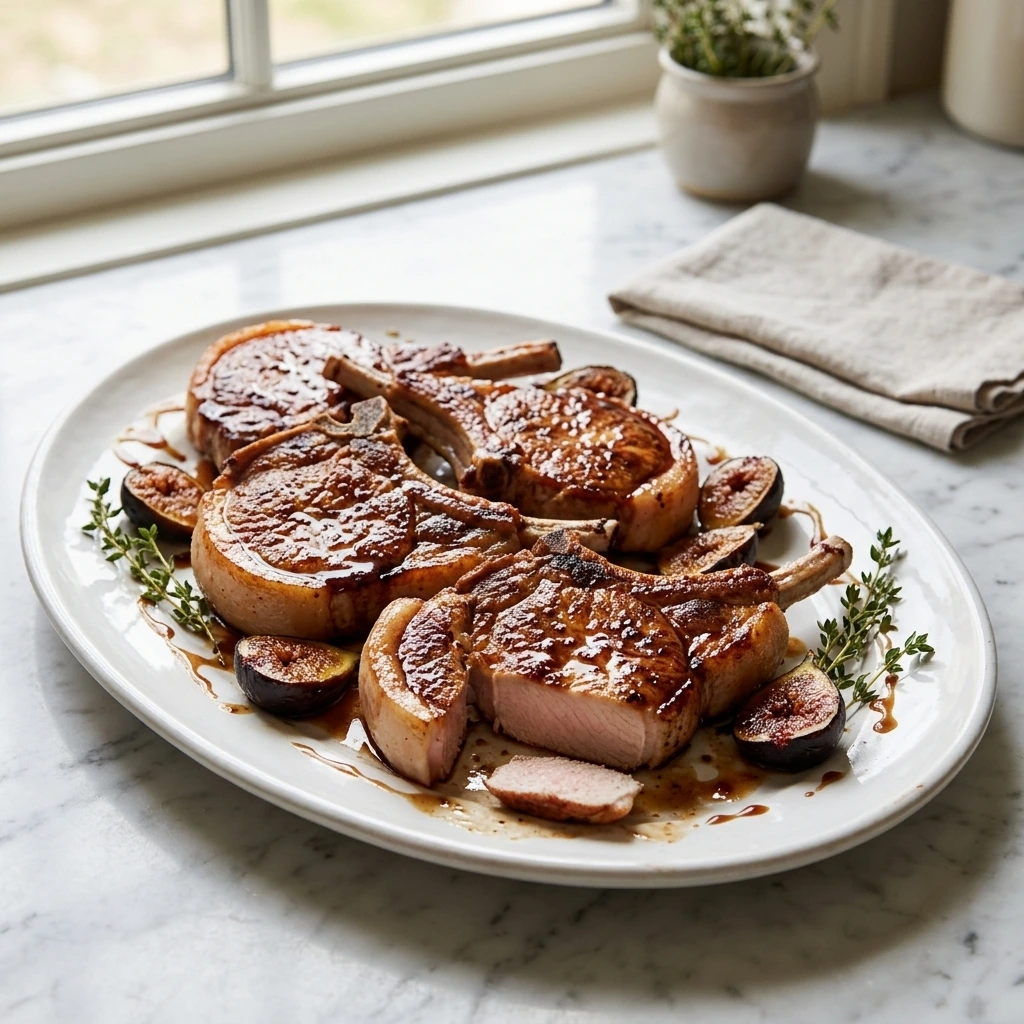
Not only does it make for a super delicious meal, but it’s packed with protein. It keeps everyone satisfied for hours. Also, there’s no complicated method or ingredient needed. And meal prep’s a cinch. I often make these on Sunday, just like my Chicken Fajita Bowl. Then we enjoy the leftovers on Monday and Tuesday.
With just a few basic ingredients probably already in the fridge and pantry, you can make a full dinner. You can also slice the pork for grain bowls. Or tuck it into warm rolls for a fancy lunch. The fig glaze tastes special, but it still feels familiar. And those sticky browned edges. They’re always the first bites gone every time.
Ingredients
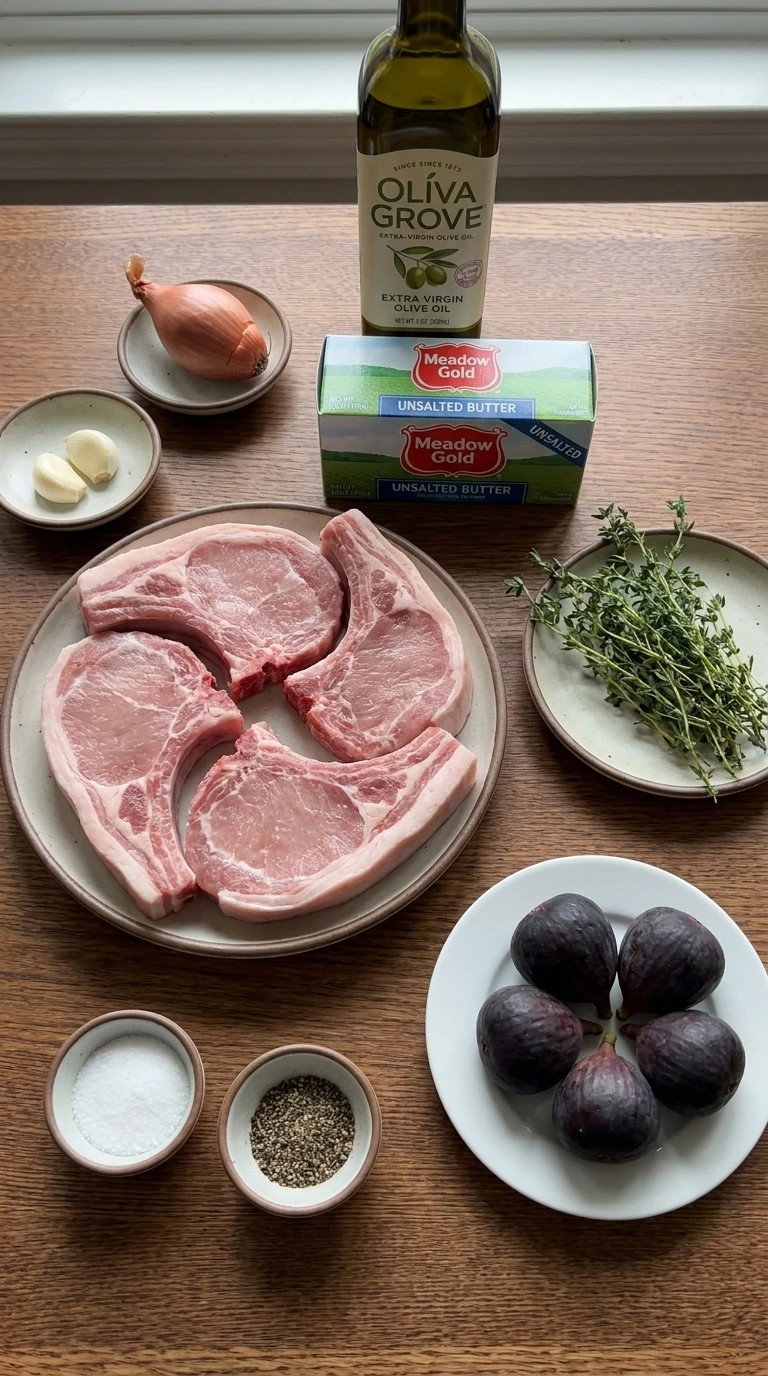
Here’s what I use for this recipe and you can always make substitutions if you prefer.
- Bone-in center-cut pork rib chop: Choose chops about 1 inch thick with a thin fat cap for better browning and moisture.
- Diamond Crystal kosher salt: Use for even surface seasoning without making the pan sauce harsh.
- Black pepper: Freshly ground so its warmth stays noticeable beneath the sweet glaze.
- Extra-virgin olive oil: Use a mild variety with enough heat tolerance for the initial sear.
- Unsalted butter: Adds roundness and helps the shallot soften in the pan sauce.
- Shallot: Finely chopped so it softens in 2 minutes and blends into the glaze.
- Garlic: Minced finely so it perfumes the sauce during its brief 30-second cook.
- Fig preserves: Choose a fruit-forward preserve that melts smoothly and gives the glaze body.
- Aged balsamic vinegar: Use a balanced vinegar with moderate sweetness and enough acidity to cut the preserves.
- Low-sodium chicken stock: Loosens the glaze and carries the browned skillet fond without adding excess salt.
- Dijon mustard: Whisked into the sauce to sharpen the fruit and support a glossy texture.
- Fresh thyme: Strip the leaves for the sauce and reserve the sprigs for finishing each plate.
- Black Mission fig: Halved into 8 pieces so the cut sides soften while the skins hold their shape.
Tools You’ll Need
- 12-inch cast-iron skillet: A heavy 12-inch skillet holds searing heat and leaves room for 4 chops, while a smaller pan crowds them and creates steam.
- Instant-read thermometer: A fast thermometer confirms the pork reaches 145°F, and a slow dial model can overshoot while you wait for a reading.
- Silicone-tipped tongs: Long 12-inch tongs flip the chops without piercing them, while short or sharp tools can release juices and crowd your hand near heat.
- Flat wooden spoon: A broad flat edge scrapes flavorful fond without damaging the skillet, while a rounded spoon leaves browned bits stuck behind.
- Chef’s knife: An 8-inch sharp knife slices the rested pork cleanly across the grain, while a dull blade tears the crust and squeezes out juices.
Instructions
Step 1: Sear the seasoned pork chops
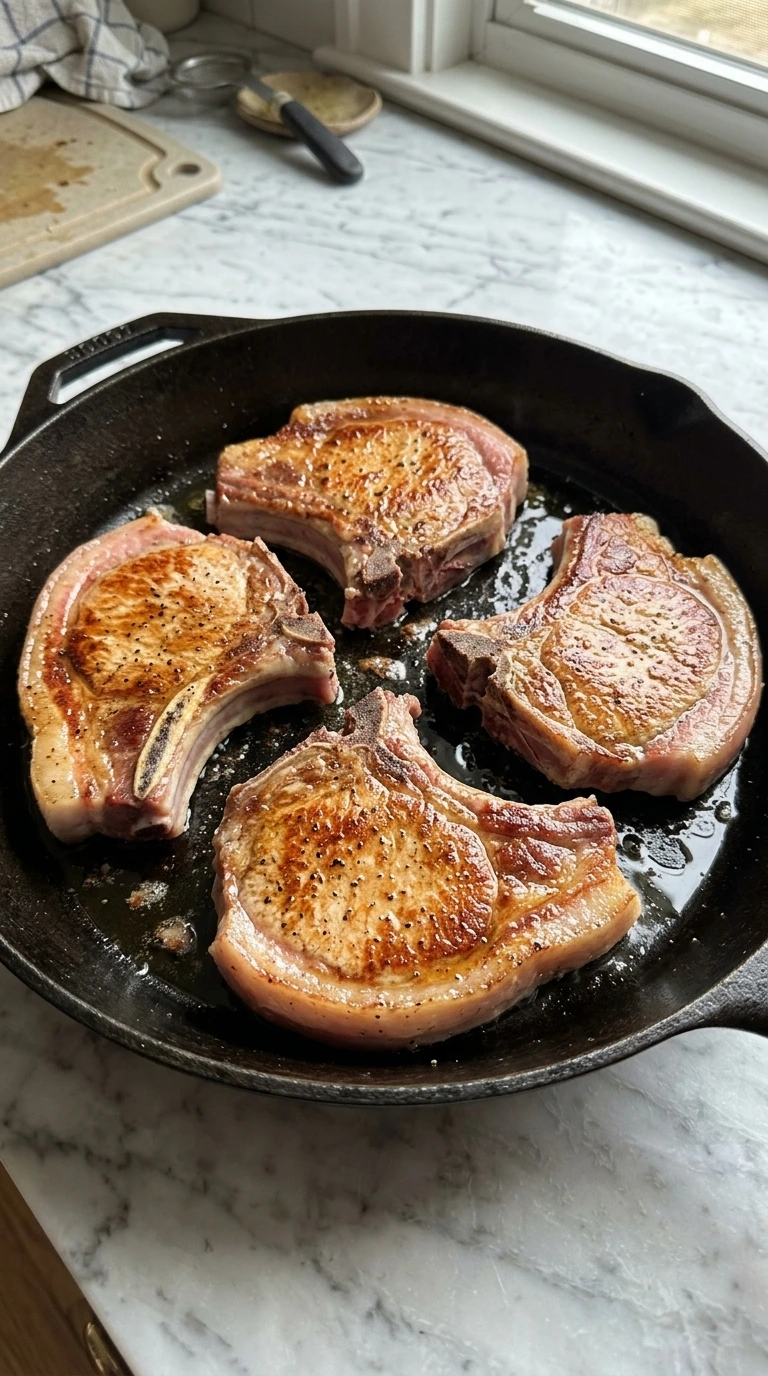
Pat the 4 pork chops very dry and season both sides with kosher salt and black pepper. Heat the extra-virgin olive oil over medium-high heat, about 7 on a 10-dial, until the skillet reaches roughly 425°F. Lay in the chops with space between them.
Press each one flat for 10 seconds and sear untouched for 3 minutes per side. The first side should release easily and show a deep golden crust with darker edges. You’ll hear a steady hard sizzle and smell toasted pork fat.
Transfer the chops after the second side browns, even though the centers remain pink. Go longer than 3 minutes per side and the lean loin starts drying out. The hot surface drives rapid browning before the center overcooks.
Tip: Choose 1-inch chops with at least a 1/8-inch fat cap because very lean pieces lose moisture faster.
Step 2: Reduce the fig balsamic glaze
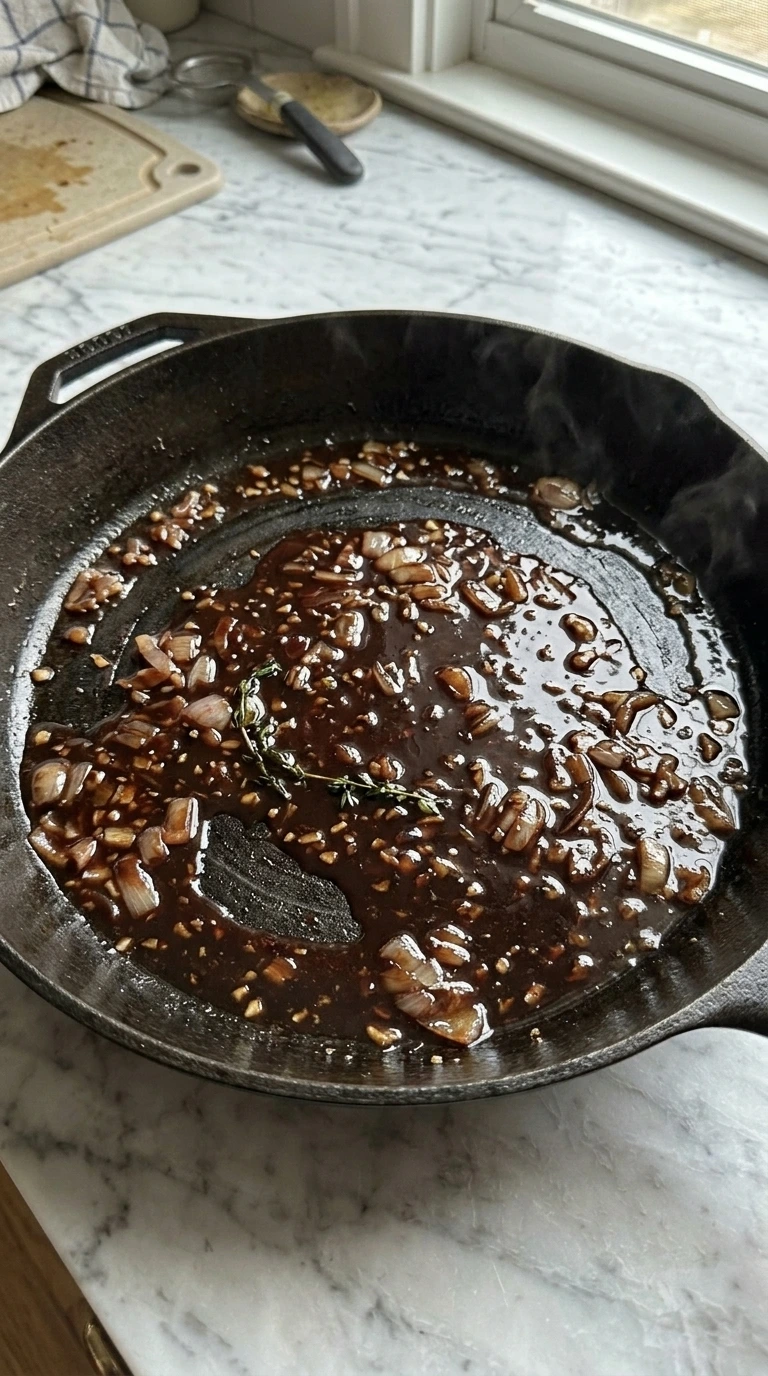
Lower the heat to medium, about 5 on a 10-dial, and melt the unsalted butter in the same skillet. Add the chopped shallot and stir from the edges toward the center for 2 minutes. Add the minced garlic for exactly 30 seconds.
Then whisk in fig preserves, balsamic vinegar, chicken stock, Dijon mustard and thyme leaves. Simmer the mixture for 5 to 7 minutes and scrape the browned bits from the skillet bottom every minute. The sauce should turn glossy mahogany and coat a spoon with a clear line after one finger swipe.
You’ll smell sharp vinegar soften into sweet fruit. Boil past 7 minutes and the sugars become sticky and bitter. Gentle reduction concentrates flavor without scorching the fig sugars.
Tip: Pick fig preserves with fruit listed first and at least 50 percent fruit for a cleaner glaze.
Step 3: Glaze the chops and warm the figs

Reduce the heat to medium-low, about 3 on a 10-dial. Return all 4 chops to the skillet and turn each one twice through the glaze. Tuck the 8 Black Mission fig halves between the chops. Spoon sauce over the meat every minute and simmer for 4 to 6 minutes until each center reaches 145°F.
Then transfer the chops and rest them for 5 minutes. The glaze should cling in uneven shiny ribbons while the fig edges soften and darken. The pork will feel springy when pressed and its juices will run clear. (I used to chase 160°F, the chops turned firm and dry.
Pulling them at 145°F fixed it. ) Miss the thermometer window and the loin loses moisture fast. Resting 5 minutes lets the juices redistribute through the meat.
Tip: Reserve 2 tablespoons of glaze before the pork returns if you want cleaner drizzles at plating.
Step 4: Slice and plate each pork chop

After the 5-minute rest, place one glazed chop on each warm plate at about 140°F. Slice one chop across the grain into 1/2-inch strips and keep the rib bone beside it. Arrange 2 softened fig halves near each chop.
Then spoon 2 tablespoons of warm glaze over each portion and add one fresh thyme sprig. The cut pork should look pale blush and juicy inside with a deep amber crust outside. The glaze should pool irregularly and the figs should look soft but still hold their shape.
Serve within 5 minutes while the sauce stays fluid. Cut before the rest ends and the juices flood the plate. Across-grain slicing shortens the muscle fibers for a tender bite.
Tip: Warm plates for 10 minutes in a 170°F oven so the glaze stays fluid through dinner.
Pro Tips
- Dry the pork for 30 seconds per side with paper towels because surface moisture blocks the deep 425°F sear.
- Choose Black Mission figs that yield slightly when pressed, but reject fruit with leaking skins or a fermented smell.
- Leave at least 1 inch between chops in the skillet so the edges brown instead of steaming.
- Measure the preserves with a lightly oiled 1/2-cup measure so the sticky fruit releases cleanly into the skillet.
- Scrape the fond once every minute during the 5 to 7-minute reduction so dark spots flavor the glaze without burning.
- Check temperature through the side of each chop and aim the probe into the thickest center, away from the bone.
- Finish each plate with exactly 2 tablespoons of glaze so the pork stays glossy without hiding its crust.
- Add 1/4 teaspoon crushed red pepper to the glaze for gentle heat that offsets the sweet fig preserves.
- Replace 2 tablespoons of chicken stock with orange juice and add 1 teaspoon orange zest for a brighter winter variation.
- Stir 1 tablespoon whole-grain mustard into the finished glaze for visible seeds and a sharper bistro-style finish.
- Use 1 teaspoon chopped fresh rosemary instead of thyme for a piney flavor, but don’t exceed that amount because rosemary dominates quickly.
Storage Instructions
Refrigerate cooled pork chops and glaze in a shallow airtight container for up to 3 days. Keep the figs tucked beside the meat so they don’t crush under the chops. For freezing, wrap each chop tightly in foil and place it in a freezer bag. Freeze the glaze separately for up to 2 months.
Fresh figs soften after freezing, so add new ones when serving. Reheat one chop with 2 tablespoons of glaze in a covered skillet over low heat for 6 to 8 minutes. Add 1 tablespoon of chicken stock if the sauce looks too thick. Stop when the center reaches 140°F so the pork doesn’t dry out.
Discard leftovers with a sour smell, slimy surface or glaze that bubbles while cold. Don’t keep reheated portions longer than 24 hours.
Print
Fig Balsamic Pork Chops
- Total Time: 45 minutes
- Yield: 4 servings 1x
Description
Need easy dinner ideas? These quick Fig Balsamic Pork Chops turn a simple weeknight dinner into something special. Juicy pork gets a deep golden crust and a glossy fig balsamic glaze with a sweet tangy smell and sticky finish. The trick is simmering the sauce before the chops return, so the best flavor clings without overcooking the meat. It’s a healthy choice for meal prep, holiday dinners or a relaxed party. Fresh thyme keeps every bite balanced and bright.
Ingredients
- 4 chops, about 10 ounces each Bone-in center-cut pork rib chop
- 1 1/4 teaspoons Diamond Crystal kosher salt
- 1/2 teaspoon Black pepper
- 1 tablespoon Extra-virgin olive oil
- 2 tablespoons Unsalted butter
- 1 medium Shallot
- 2 cloves Garlic
- 1/2 cup Fig preserves
- 1/3 cup Aged balsamic vinegar
- 1/2 cup Low-sodium chicken stock
- 1 teaspoon Dijon mustard
- 2 teaspoons leaves plus 4 sprigs Fresh thyme
- 4 large Black Mission fig
Instructions
- Pat the 4 pork chops very dry and season both sides with kosher salt and black pepper. Heat the extra-virgin olive oil over medium-high heat, about 7 on a 10-dial, until the skillet reaches roughly 425°F. Lay in the chops with space between them. Press each one flat for 10 seconds and sear untouched for 3 minutes per side. The first side should release easily and show a deep golden crust with darker edges. You’ll hear a steady hard sizzle and smell toasted pork fat. Transfer the chops after the second side browns, even though the centers remain pink. Go longer than 3 minutes per side and the lean loin starts drying out. The hot surface drives rapid browning before the center overcooks.
- Lower the heat to medium, about 5 on a 10-dial, and melt the unsalted butter in the same skillet. Add the chopped shallot and stir from the edges toward the center for 2 minutes. Add the minced garlic for exactly 30 seconds. Then whisk in fig preserves, balsamic vinegar, chicken stock, Dijon mustard and thyme leaves. Simmer the mixture for 5 to 7 minutes and scrape the browned bits from the skillet bottom every minute. The sauce should turn glossy mahogany and coat a spoon with a clear line after one finger swipe. You’ll smell sharp vinegar soften into sweet fruit. Boil past 7 minutes and the sugars become sticky and bitter. Gentle reduction concentrates flavor without scorching the fig sugars.
- Reduce the heat to medium-low, about 3 on a 10-dial. Return all 4 chops to the skillet and turn each one twice through the glaze. Tuck the 8 Black Mission fig halves between the chops. Spoon sauce over the meat every minute and simmer for 4 to 6 minutes until each center reaches 145°F. Then transfer the chops and rest them for 5 minutes. The glaze should cling in uneven shiny ribbons while the fig edges soften and darken. The pork will feel springy when pressed and its juices will run clear. (I used to chase 160°F, the chops turned firm and dry. Pulling them at 145°F fixed it.) Miss the thermometer window and the loin loses moisture fast. Resting 5 minutes lets the juices redistribute through the meat.
- After the 5-minute rest, place one glazed chop on each warm plate at about 140°F. Slice one chop across the grain into 1/2-inch strips and keep the rib bone beside it. Arrange 2 softened fig halves near each chop. Then spoon 2 tablespoons of warm glaze over each portion and add one fresh thyme sprig. The cut pork should look pale blush and juicy inside with a deep amber crust outside. The glaze should pool irregularly and the figs should look soft but still hold their shape. Serve within 5 minutes while the sauce stays fluid. Cut before the rest ends and the juices flood the plate. Across-grain slicing shortens the muscle fibers for a tender bite.
Notes
Pro Tips:
- Dry the pork for 30 seconds per side with paper towels because surface moisture blocks the deep 425°F sear.
- Choose Black Mission figs that yield slightly when pressed, but reject fruit with leaking skins or a fermented smell.
- Leave at least 1 inch between chops in the skillet so the edges brown instead of steaming.
- Measure the preserves with a lightly oiled 1/2-cup measure so the sticky fruit releases cleanly into the skillet.
- Scrape the fond once every minute during the 5 to 7-minute reduction so dark spots flavor the glaze without burning.
- Check temperature through the side of each chop and aim the probe into the thickest center, away from the bone.
- Finish each plate with exactly 2 tablespoons of glaze so the pork stays glossy without hiding its crust.
Storage: Refrigerate cooled pork chops and glaze in a shallow airtight container for up to 3 days. Keep the figs tucked beside the meat so they don’t crush under the chops. For freezing, wrap each chop tightly in foil and place it in a freezer bag. Freeze the glaze separately for up to 2 months. Fresh figs soften after freezing, so add new ones when serving. Reheat one chop with 2 tablespoons of glaze in a covered skillet over low heat for 6 to 8 minutes. Add 1 tablespoon of chicken stock if the sauce looks too thick. Stop when the center reaches 140°F so the pork doesn’t dry out. Discard leftovers with a sour smell, slimy surface or glaze that bubbles while cold. Don’t keep reheated portions longer than 24 hours.
- Prep Time: 15 minutes
- Cook Time: 30 minutes
- Category: Dinner
- Cuisine: American
Nutrition
- Serving Size: 1 serving (of 4)
- Calories: 349
- Sugar: 28g
- Sodium: 824mg
- Fat: 21g
- Carbohydrates: 39g
- Fiber: 3g
- Cholesterol: 68mg
Frequently Asked Questions
Season the 4 pork chops up to 8 hours ahead and refrigerate them uncovered on a plate. Chop the shallot and whisk the glaze ingredients together up to 2 days ahead, but keep the fresh figs separate. Bring the pork out for 20 minutes before searing so the skillet temperature doesn’t drop hard.
Store the pork and sauce in an airtight container for 3 days at 40°F or colder. Keep each chop coated with 1 to 2 tablespoons of glaze so the surface stays moist. Discard it sooner if the pork feels slimy or the sauce develops a fermented smell.
Yes, but choose boneless center-cut loin chops that are at least 1 inch thick. Sear them for about 2 minutes per side, then finish in the glaze until they reach 145°F. Thin chops cook too fast and can turn dry before the sauce reduces.
The skillet may be too cool or the chicken stock may not have reduced enough. Simmer the sauce uncovered at medium heat for another 2 to 4 minutes and scrape across the bottom every minute. It should coat a spoon and hold a clean finger line before the pork returns.
Double the sauce ingredients, but cook the 8 pork chops in two batches so they don’t steam. Keep the first batch on a plate while the second batch sears. Use a 14-inch skillet for the final glaze step or divide everything between two 12-inch skillets.
Freeze cooled chops and glaze separately for up to 2 months, then thaw them overnight in the refrigerator. Reheat one chop with 2 tablespoons of glaze in a covered skillet over low heat for 6 to 8 minutes. Stop at 140°F because higher heat dries the lean loin.
Final Thoughts
This is the kind of recipe I wish I had found years ago. It would have saved me so many stressful dinner nights.
But now that I have it, I make it all the time and I think you will too. If you enjoyed this, check out Rotel Pasta with Ground Beef, then leave a comment because I read every single one and it really makes my day.