

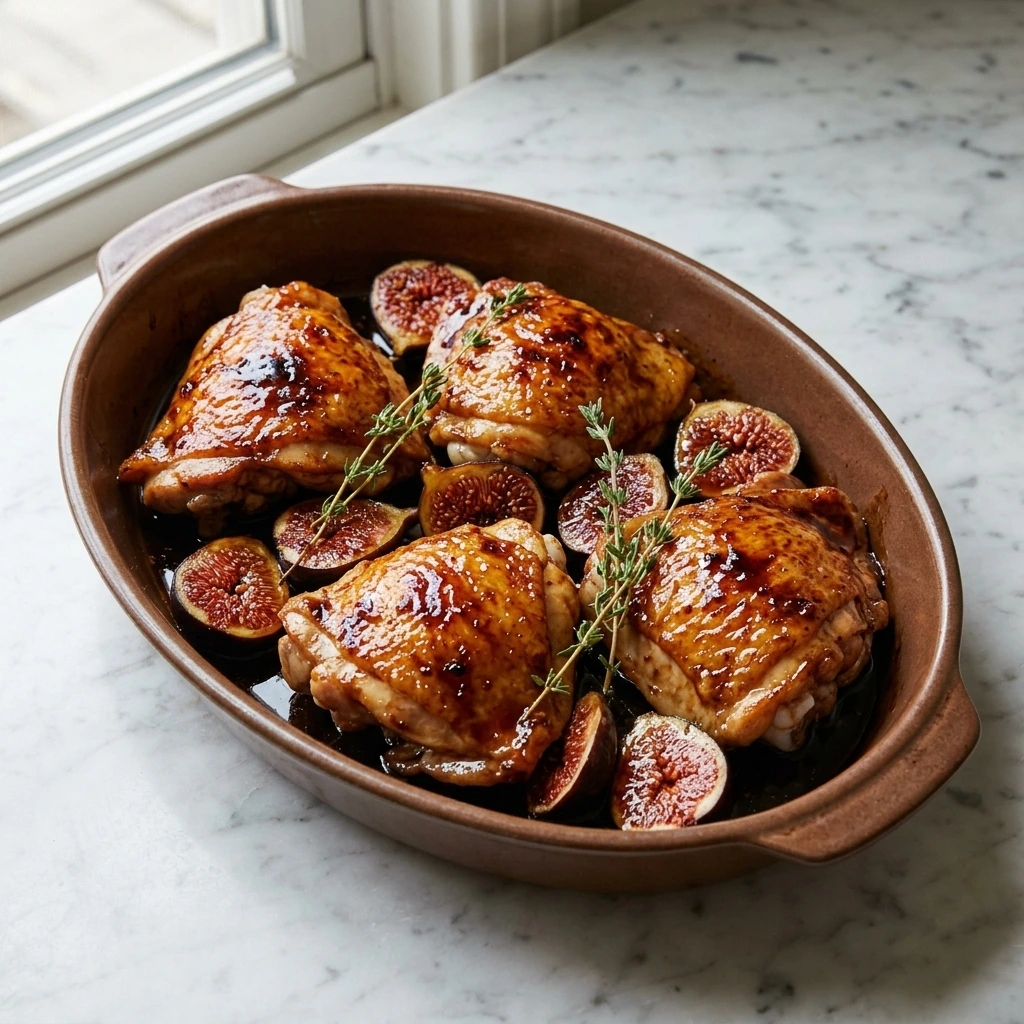
Seriously, no joke, this is the best Fig Glazed Chicken recipe. It feels like the kind of dinner a family keeps making for years. It’s a classic recipe with simple and delicious ingredients. Crisp chicken thighs meet Black Mission fig preserves and balsamic vinegar with garlic and fresh thyme. Then fresh figs soften around the edges.
Perfect with mashed potatoes or rice and green beans on the side. A classic Fig Glazed Chicken recipe is one of those go-to easy dinners. Not only does it make a super satisfying meal, but it’s packed with protein and keeps everyone happy for hours. Also, there’s no complicated method or hard-to-find ingredient needed. And meal prep’s a cinch.
Make a batch on Sunday and turn the leftovers into a Chicken Fajita Bowl style lunch on Monday. With just a few basic ingredients probably already in the fridge and pantry, you can make this chicken for a weeknight dinner or a relaxed party or even a small holiday meal. The sauce tastes rich without feeling heavy because balsamic vinegar balances the sweet Black Mission fig preserves. And those glossy edges look special. Still, the whole dish stays simple enough for a busy evening.
Ingredients
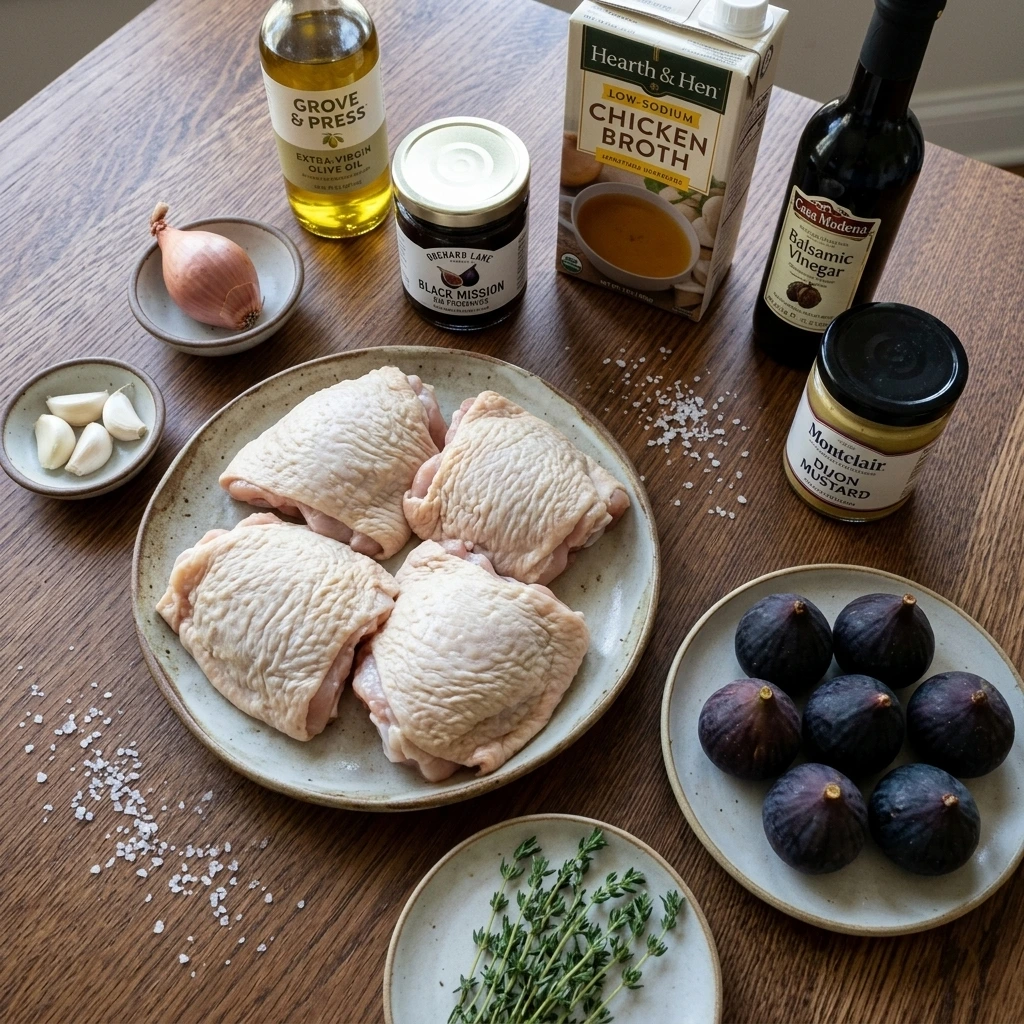
Here’s what I use for this recipe and you can always make substitutions if you prefer.
- Bone-in skin-on chicken thighs: Choose pieces weighing about 7 to 8 ounces each and pat them very dry before seasoning.
- Kosher salt: Season the chicken evenly so the meat tastes balanced beneath the sweet glaze.
- Ground black pepper: Use freshly ground pepper for a gentle bite that balances the Black Mission fig preserves.
- Extra-virgin olive oil: Use it for the initial sear and to help the skin release cleanly.
- Black Mission fig preserves: Bring to room temperature so the preserves whisk smoothly into the glaze.
- Balsamic vinegar: Choose a balanced vinegar with moderate acidity to sharpen the sweet fig flavor.
- Low-sodium chicken broth: Use 1/3 cup in the glaze and reserve 1 tablespoon to loosen it after resting if needed.
- Dijon mustard: Whisk it into the glaze to add tang and help the liquids stay evenly combined.
- Shallot: Slice it thinly so it softens during the short stovetop simmer.
- Garlic cloves: Mince them finely so their flavor spreads through the glaze without large sharp pieces.
- Black Mission figs: Halve them lengthwise to expose the seeded centers and help the cut sides caramelize.
- Fresh thyme: Use 6 sprigs during roasting and reserve 2 sprigs for serving.
Tools You’ll Need
- 12-inch cast-iron skillet: A heavy 12-inch cast-iron skillet holds all 4 thighs and moves from stovetop to oven without hot spots, while a smaller pan crowds the meat and steams the skin.
- Small clear glass mixing bowl: A 3-cup glass bowl gives enough room to whisk the sticky glaze and lets you see remaining lumps, while a narrow cup traps preserves along the sides.
- Instant-read thermometer: A fast thermometer confirms 165°F at the thickest part of each thigh, while slow dial models can overshoot and dry the meat before stabilizing.
- Heatproof spoon: A sturdy heatproof spoon scrapes fond and bastes the glaze without melting, while a thin plastic spoon can soften against the hot skillet.
- Warm white dinner plate: A 10-inch white plate holds one thigh and 3 fig halves with enough rim space, while a small plate crowds the sauce and hides the garnish.
Instructions
Step 1: Whisk the balsamic fig glaze
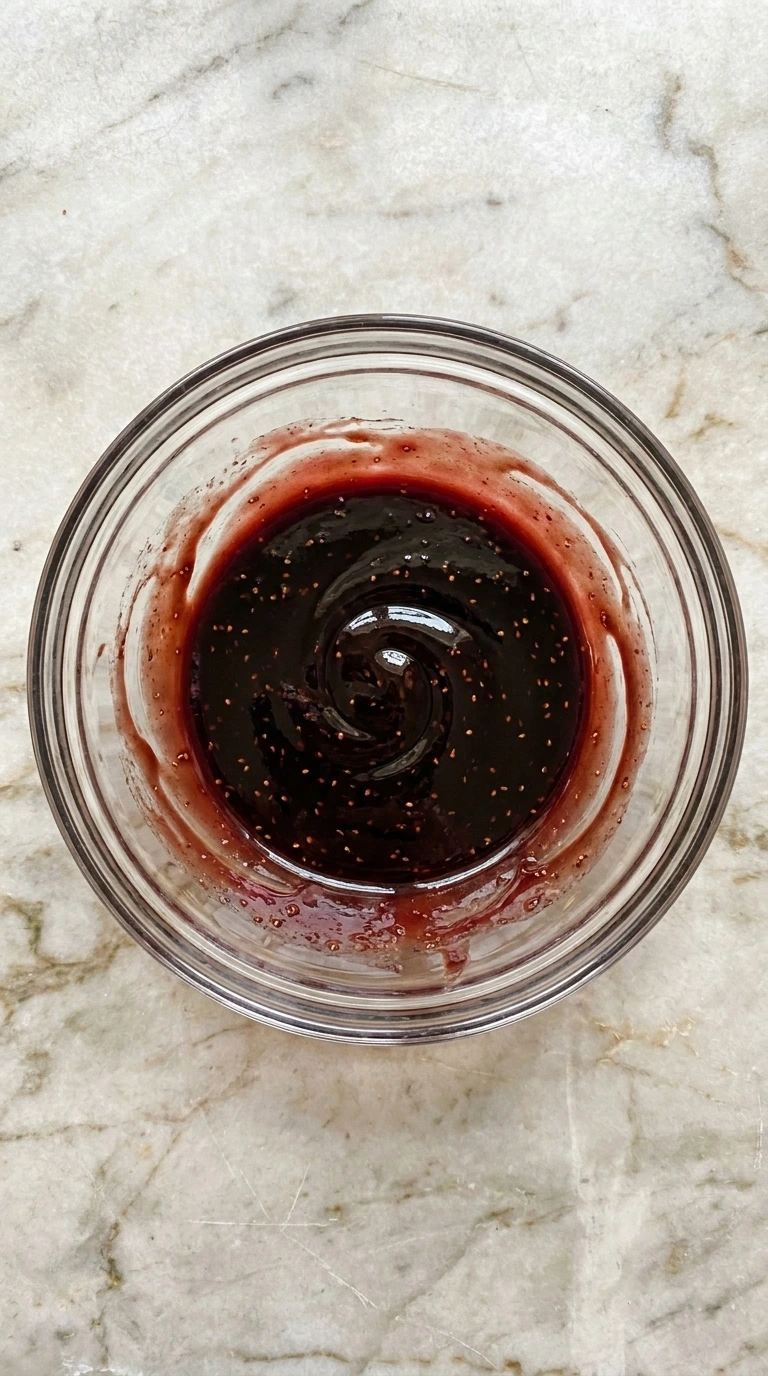
Keep the Black Mission fig preserves and balsamic vinegar and chicken broth at 68°F to 72°F. Whisk them with Dijon mustard for 90 seconds. Use tight circles at first and then widen the motion as the preserves loosen. Scrape the bowl twice during the full 2 minutes so no dense jam clings to the sides.
Cold preserves stay lumpy and leave bare patches later. The mixture should turn smooth and dark ruby with tiny fig seeds suspended throughout. Lift the whisk and watch for a thick ribbon that disappears after about 3 seconds. If the mixture falls in stiff clumps, whisk another 20 seconds.
Don’t overwork it for several minutes because trapped foam dulls the finished glaze. Whisk at room temperature because even dispersion prevents patchy glazing.
Tip: Set the preserves beside the stove for 20 minutes when your kitchen runs below 68°F so scooping stays clean.
Step 2: Sear the chicken thighs skin-side down
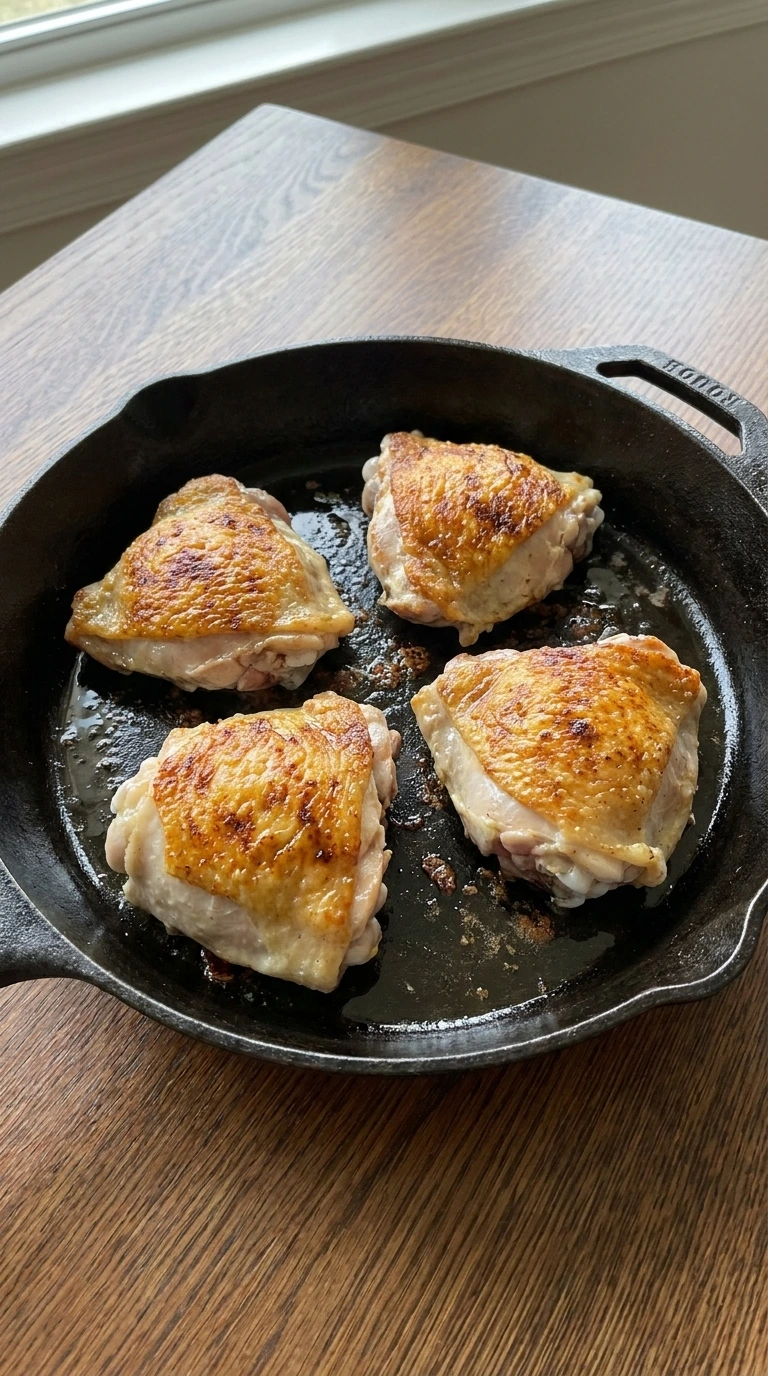
Pat 4 bone-in skin-on chicken thighs dry and season them with kosher salt and black pepper. Heat the extra-virgin olive oil over medium-high heat at about 7 on a 10-dial. Place the thighs skin-side down and press each one for 10 seconds. Sear without moving for 6 to 7 minutes and then flip for 90 seconds.
Crowding or shifting them too early tears the skin. You’ll hear a steady sizzle and smell toasted chicken fat by minute 4. The skin should become deep golden with darker amber freckles and the edges should release without force. If the pan smokes heavily, lower the heat to 6.
Pale skin means the surface still holds moisture. Sear without nudging because uninterrupted contact builds the fond and crisp skin.
Tip: Choose thighs weighing 7 to 8 ounces each so all four reach temperature within the same roasting window.
Step 3: Add the aromatics figs and glaze
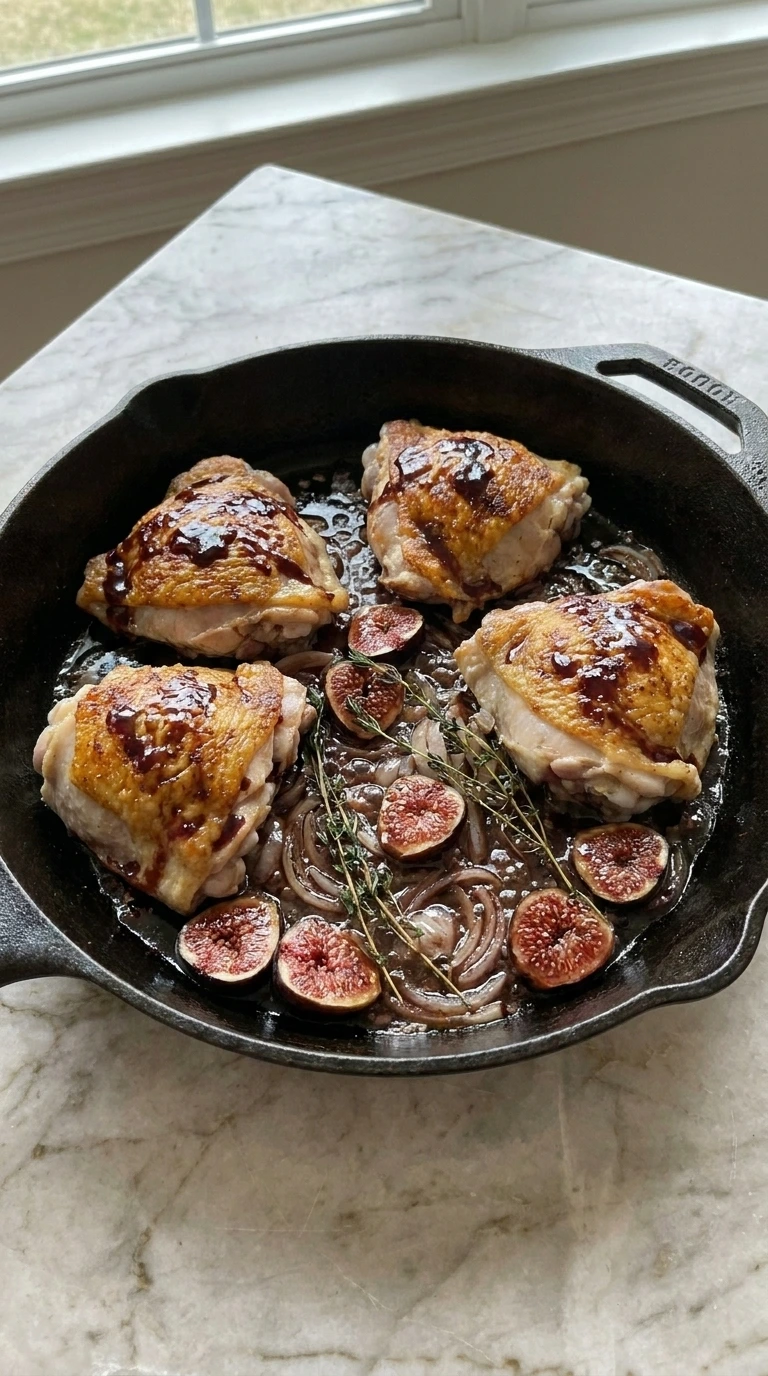
Lower the heat to medium-low at about 4 on a 10-dial. Shift the 4 thighs toward the skillet edges. Add the sliced shallot and minced garlic to the center and stir for 60 to 90 seconds. Pour in the balsamic fig mixture and scrape the browned fond with a heatproof spoon.
Nestle exactly 12 Black Mission fig halves and 6 thyme sprigs around the chicken. Simmer for 4 minutes. The sauce should bubble gently and deepen from ruby to dark burgundy. The shallot turns translucent and the garlic smells sweet rather than sharp.
Watch the glaze cling to the spoon and leave a clean trail for 1 second. A hard boil scorches the fig sugars and makes the garlic bitter. Reduce only four minutes because concentrated sugar burns quickly.
Tip: Place the cut sides of 6 fig halves against the skillet so they caramelize while the remaining halves keep their shape.
Step 4: Roast until glossy and deeply lacquered
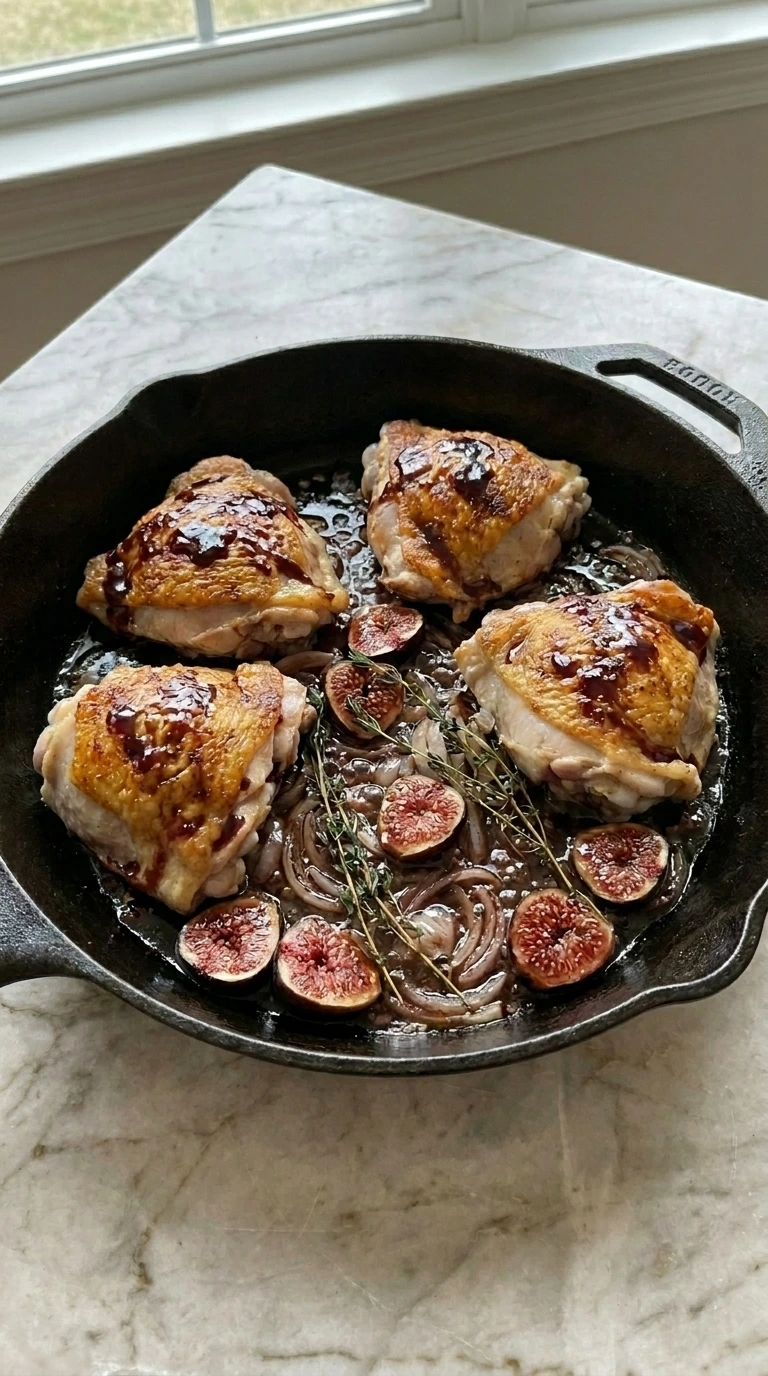
Transfer the skillet to a 400°F oven and roast for 16 to 20 minutes. At minute 10, spoon the bubbling glaze over each thigh once and rotate the skillet 180 degrees. (I don’t recommend 425°F here, the glaze can darken before the thickest thigh reaches temperature. ) Cook until the thickest thigh reaches 165°F on an instant-read thermometer.
The USDA lists 165°F as the safe minimum for poultry. Food Safety and Inspection Service Pull the skillet promptly at that point. The skin should turn glossy mahogany with irregular darker edges. The sauce thickens into slow bubbles and the fig halves slump slightly while keeping their seeded centers visible.
Remove the skillet when a spoon dragged through the glaze leaves a line for 2 seconds. Go past 175°F and the meat starts drying while the sugars taste bitter. Roast to 165°F because time alone can’t confirm poultry safety.
Tip: Check the smallest thigh at minute 16 and remove it early if it reaches 165°F before the others.
Step 5: Rest and plate one glazed thigh
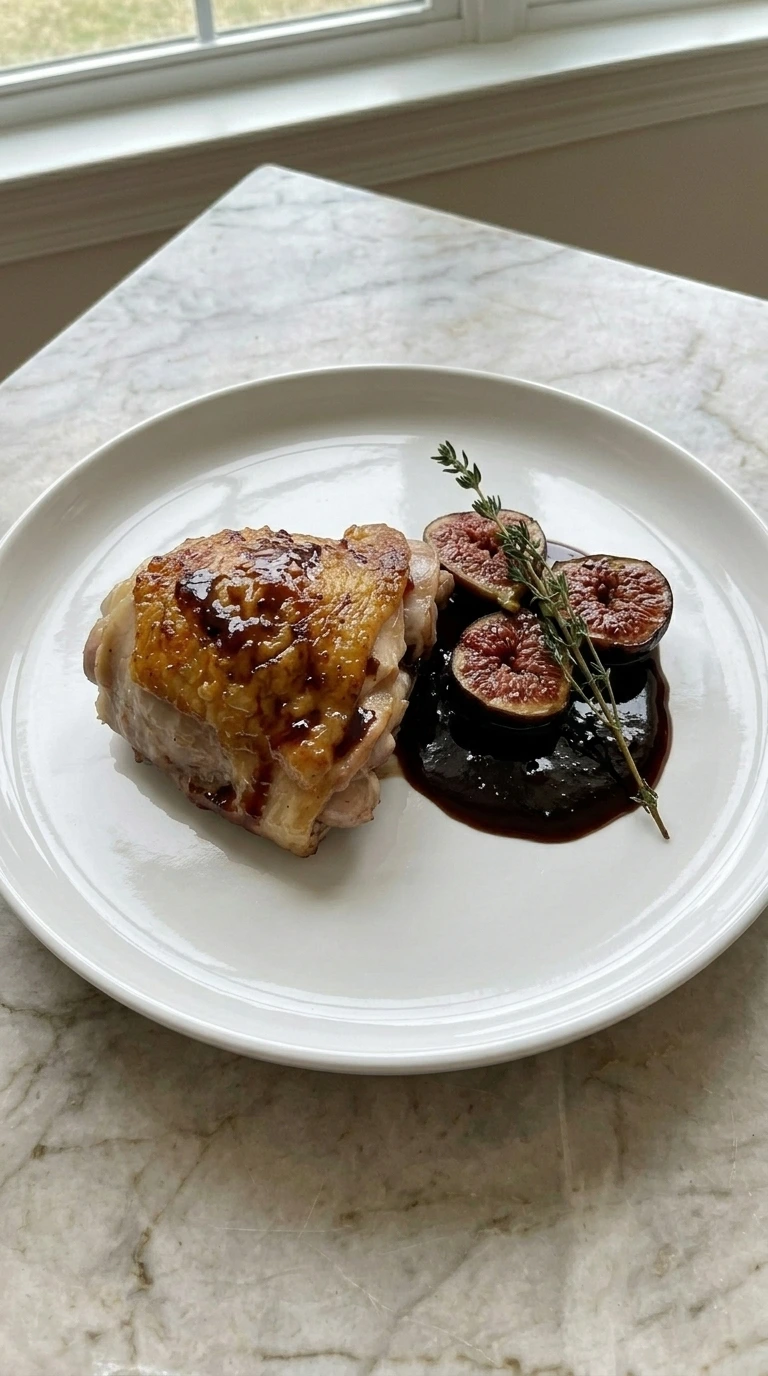
Rest the skillet off the heat for exactly 8 minutes while the serving plate warms at 170°F. Discard the 6 cooked thyme sprigs. Transfer 1 chicken thigh to the warm white plate and place 3 softened fig halves beside it. Spoon 2 tablespoons of thick glaze over the skin and add 1 reserved thyme sprig.
Keep the remaining thighs in the skillet until serving. Cutting before minute 8 sends the juices onto the plate instead of keeping them inside. The plated thigh should show a glossy mahogany top with uneven caramelized patches and a juicy opaque interior at the edge. The glaze should sit in a slow pool rather than run like broth.
You’ll smell balsamic sweetness and toasted thyme as the hot sauce meets the garnish. If the glaze stiffens, loosen it with 1 tablespoon warm chicken broth. Rest eight minutes because the juices need time to redistribute.
Tip: Use a 10-inch shallow plate so 2 tablespoons of glaze can pool without hiding the crisp skin.
Pro Tips
- Dry the chicken for a full 2 minutes with paper towels before seasoning because surface moisture blocks crisp skin.
- Use Black Mission figs that yield slightly under your thumb. Very soft figs collapse before the 16-minute roasting mark.
- Keep the skillet at about 7 on a 10-dial during searing and lower it if the rendered fat smokes heavily.
- Whisk the glaze for 90 seconds and scrape the bowl twice so dense preserves don’t remain stuck at the bottom.
- Baste only once at minute 10 because repeated oven opening can add 4 to 6 minutes to the cook time.
- Let the finished chicken rest 8 minutes before plating so the juices stay inside and the glaze thickens naturally.
- Finish each serving with 1 fresh thyme sprig and 2 tablespoons of glaze for a fragrant look without burying the crisp skin.
- Add 1/4 teaspoon crushed red pepper to the glaze for a gentle heat that cuts through the sweet Black Mission fig preserves.
- Replace 2 tablespoons of chicken broth with fresh orange juice for a brighter citrus edge and slightly faster caramelization.
- Use 6 fresh rosemary sprigs instead of thyme for a stronger piney aroma that suits a holiday dinner.
- Nestle 12 ounces of halved Brussels sprouts around the thighs and add 5 to 8 minutes of roasting time.
Storage Instructions
Refrigerate cooled Fig Glazed Chicken within 2 hours in a shallow airtight container. Keep the thighs and figs coated with sauce and use them within 3 to 4 days at 40°F or below. USDA guidance recommends that same window for cooked chicken. FSIS Freeze the chicken and glaze separately for up to 2 months.
Wrap each thigh tightly before placing it in a freezer container so the skin doesn’t dry out. Reheat thawed thighs covered at 325°F for 15 to 20 minutes and spoon 1 tablespoon of broth into the sauce first. Heat the center to 165°F before serving. FSIS Remove the cover for the final 3 minutes if you want the skin less soft.
Discard leftovers that smell sour or feel slimy or show bubbling in a cold sauce. Don’t taste food that looks questionable.
Print
Fig Glazed Chicken
- Total Time: 45 minutes
- Yield: 4 servings 1x
Description
This easy Fig Glazed Chicken is one of my best weeknight dinner ideas when I need something quick, simple and healthy without losing that cozy finish. Bone-in thighs turn crisp at the edges while a glossy balsamic fig sauce clings to every uneven curve and smells sweet, tangy and herby. The trick is searing first and roasting second, so the skin stays browned while the glaze thickens gently. It also works for meal prep, a holiday table, potluck or relaxed dinner party.
Ingredients
- 4 large Bone-in skin-on chicken thighs
- 1 1/4 teaspoons Kosher salt
- 3/4 teaspoon Ground black pepper
- 1 tablespoon Extra-virgin olive oil
- 1/2 cup Black Mission fig preserves
- 1/3 cup Balsamic vinegar
- 1/3 cup plus 1 tablespoon Low-sodium chicken broth
- 1 tablespoon Dijon mustard
- 1 medium Shallot
- 3 Garlic cloves
- 6 fresh Black Mission figs
- 8 sprigs Fresh thyme
Instructions
- Keep the Black Mission fig preserves and balsamic vinegar and chicken broth at 68°F to 72°F. Whisk them with Dijon mustard for 90 seconds. Use tight circles at first and then widen the motion as the preserves loosen. Scrape the bowl twice during the full 2 minutes so no dense jam clings to the sides. Cold preserves stay lumpy and leave bare patches later. The mixture should turn smooth and dark ruby with tiny fig seeds suspended throughout. Lift the whisk and watch for a thick ribbon that disappears after about 3 seconds. If the mixture falls in stiff clumps, whisk another 20 seconds. Don’t overwork it for several minutes because trapped foam dulls the finished glaze. Whisk at room temperature because even dispersion prevents patchy glazing.
- Pat 4 bone-in skin-on chicken thighs dry and season them with kosher salt and black pepper. Heat the extra-virgin olive oil over medium-high heat at about 7 on a 10-dial. Place the thighs skin-side down and press each one for 10 seconds. Sear without moving for 6 to 7 minutes and then flip for 90 seconds. Crowding or shifting them too early tears the skin. You’ll hear a steady sizzle and smell toasted chicken fat by minute 4. The skin should become deep golden with darker amber freckles and the edges should release without force. If the pan smokes heavily, lower the heat to 6. Pale skin means the surface still holds moisture. Sear without nudging because uninterrupted contact builds the fond and crisp skin.
- Lower the heat to medium-low at about 4 on a 10-dial. Shift the 4 thighs toward the skillet edges. Add the sliced shallot and minced garlic to the center and stir for 60 to 90 seconds. Pour in the balsamic fig mixture and scrape the browned fond with a heatproof spoon. Nestle exactly 12 Black Mission fig halves and 6 thyme sprigs around the chicken. Simmer for 4 minutes. The sauce should bubble gently and deepen from ruby to dark burgundy. The shallot turns translucent and the garlic smells sweet rather than sharp. Watch the glaze cling to the spoon and leave a clean trail for 1 second. A hard boil scorches the fig sugars and makes the garlic bitter. Reduce only four minutes because concentrated sugar burns quickly.
- Transfer the skillet to a 400°F oven and roast for 16 to 20 minutes. At minute 10, spoon the bubbling glaze over each thigh once and rotate the skillet 180 degrees. (I don’t recommend 425°F here, the glaze can darken before the thickest thigh reaches temperature.) Cook until the thickest thigh reaches 165°F on an instant-read thermometer. The USDA lists 165°F as the safe minimum for poultry. Food Safety and Inspection Service Pull the skillet promptly at that point. The skin should turn glossy mahogany with irregular darker edges. The sauce thickens into slow bubbles and the fig halves slump slightly while keeping their seeded centers visible. Remove the skillet when a spoon dragged through the glaze leaves a line for 2 seconds. Go past 175°F and the meat starts drying while the sugars taste bitter. Roast to 165°F because time alone can’t confirm poultry safety.
- Rest the skillet off the heat for exactly 8 minutes while the serving plate warms at 170°F. Discard the 6 cooked thyme sprigs. Transfer 1 chicken thigh to the warm white plate and place 3 softened fig halves beside it. Spoon 2 tablespoons of thick glaze over the skin and add 1 reserved thyme sprig. Keep the remaining thighs in the skillet until serving. Cutting before minute 8 sends the juices onto the plate instead of keeping them inside. The plated thigh should show a glossy mahogany top with uneven caramelized patches and a juicy opaque interior at the edge. The glaze should sit in a slow pool rather than run like broth. You’ll smell balsamic sweetness and toasted thyme as the hot sauce meets the garnish. If the glaze stiffens, loosen it with 1 tablespoon warm chicken broth. Rest eight minutes because the juices need time to redistribute.
Notes
Pro Tips:
- Dry the chicken for a full 2 minutes with paper towels before seasoning because surface moisture blocks crisp skin.
- Use Black Mission figs that yield slightly under your thumb. Very soft figs collapse before the 16-minute roasting mark.
- Keep the skillet at about 7 on a 10-dial during searing and lower it if the rendered fat smokes heavily.
- Whisk the glaze for 90 seconds and scrape the bowl twice so dense preserves don’t remain stuck at the bottom.
- Baste only once at minute 10 because repeated oven opening can add 4 to 6 minutes to the cook time.
- Let the finished chicken rest 8 minutes before plating so the juices stay inside and the glaze thickens naturally.
- Finish each serving with 1 fresh thyme sprig and 2 tablespoons of glaze for a fragrant look without burying the crisp skin.
Storage: Refrigerate cooled Fig Glazed Chicken within 2 hours in a shallow airtight container. Keep the thighs and figs coated with sauce and use them within 3 to 4 days at 40°F or below. USDA guidance recommends that same window for cooked chicken. FSIS Freeze the chicken and glaze separately for up to 2 months. Wrap each thigh tightly before placing it in a freezer container so the skin doesn’t dry out. Reheat thawed thighs covered at 325°F for 15 to 20 minutes and spoon 1 tablespoon of broth into the sauce first. Heat the center to 165°F before serving. FSIS Remove the cover for the final 3 minutes if you want the skin less soft. Discard leftovers that smell sour or feel slimy or show bubbling in a cold sauce. Don’t taste food that looks questionable.
- Prep Time: 15 minutes
- Cook Time: 30 minutes
- Category: Dinner
- Cuisine: American
Nutrition
- Serving Size: 1 serving (of 4)
- Calories: 375
- Sugar: 31g
- Sodium: 1040mg
- Fat: 22g
- Carbohydrates: 44g
- Fiber: 4g
- Cholesterol: 167mg
Frequently Asked Questions
Yes. Whisk the glaze and refrigerate it in a sealed glass jar for up to 5 days. Bring it to 68°F to 72°F for 20 minutes and whisk for 30 seconds before using because cold preserves stay thick and won’t pour evenly.
Store the chicken and sauce in a shallow airtight container for 3 to 4 days at 40°F or below. USDA guidance uses that same 3-to-4-day window for cooked chicken. FSIS Keep the figs tucked in sauce so their cut surfaces don’t dry out.
Yes, but use 2 breasts weighing about 8 ounces each and split them horizontally into 4 cutlets. Sear for 2 minutes per side and simmer with the glaze until they reach 165°F, usually 6 to 9 more minutes. Skip the oven because thin cutlets dry quickly.
The skillet probably stayed below a gentle simmer or the figs released extra juice. Keep the sauce at medium-low for 4 to 6 minutes and look for a spoon trail that remains visible for 2 seconds. Don’t add more preserves until the sauce has reduced because extra sugar can scorch.
Yes, but sear 8 thighs in two batches and divide them between two 12-inch skillets. Double every sauce ingredient and rotate both skillets at minute 10. Crowding all 8 pieces in one pan traps steam and leaves the skin pale.
Serve each thigh with 3/4 cup mashed potatoes or cooked wild rice and about 1 cup roasted green beans. The starch catches the thick glaze while the vegetables balance its sweetness. For a colder side, a lightly dressed pasta salad also works well.
Freeze cooled thighs and sauce in separate airtight containers for up to 2 months. Thaw overnight and reheat covered at 325°F for 15 to 20 minutes until the center reaches 165°F, which USDA also recommends for leftovers. FSIS Check the center with a clean thermometer before serving.
Final Thoughts
This is the kind of recipe I wish I’d found years ago because it would’ve made so many dinner nights easier. Now that it’s here, it deserves a regular spot in the weeknight rotation and I think you’ll agree.
If you enjoyed this, check out Rotel Pasta with Ground Beef on the blog. And leave a comment or share your plate because every note really makes the day.